The meal here was provided by the restaurant. No money changed hands, nobody read this before it went up, and the prices below are the ones on the board.
At Yeongjong Seolban, I tried both the clear ugal-tang and spicy singal-tang. Both came with large bone-in ribs, but the clear soup was the one I liked with rice and kkakdugi. If you and your companion want different levels of chilli, you can order a bowl each rather than share one hot pot.
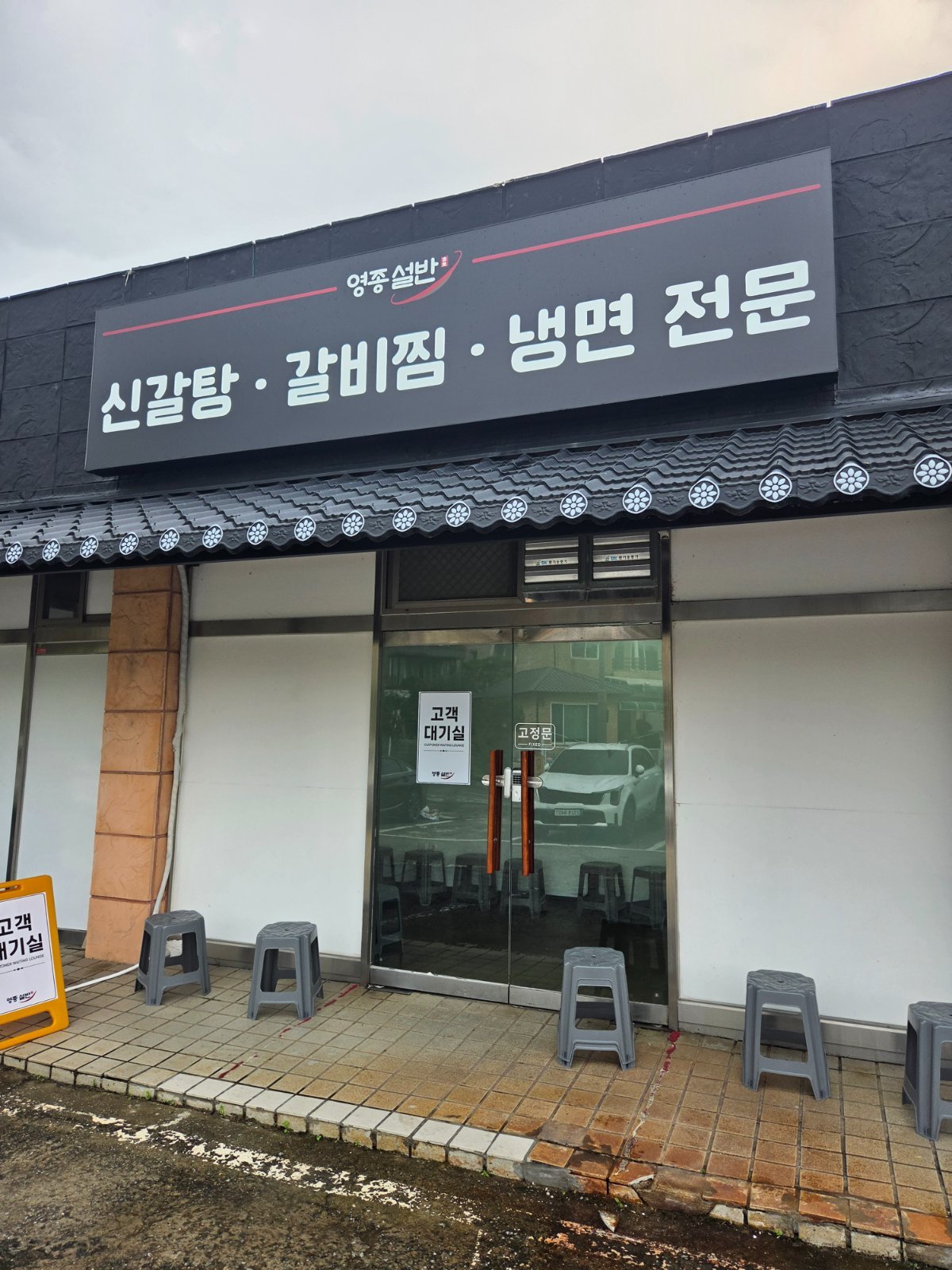
The restaurant is 영종설반 (Yeongjong Seolban), on the eastern side of Yeongjong island near Unnam-dong (운남동), 16 minutes by taxi from Terminal 1. The sign over the door reads 신갈탕 · 갈비찜 · 냉면 전문 — spicy short-rib soup, braised short ribs, cold noodles. That is the whole proposition.
Does it fit in your layover?
Before leaving, work backwards from your airline’s check-in and boarding deadlines. Allow for the return journey, security and departure immigration, plus any baggage errands and waits for transport or a table. The airport arrival and return guide keeps the shared planning assumptions in one place; the route and menu below describe this particular restaurant.
The drive is short by the standards of this island. What decides it, as always, is the arrivals queue.
Do not bring a suitcase to a short-rib soup. You will be working meat off a bone with both hands. Luggage storage prices and hours at T1 and T2 are worth the ten-minute detour on the way out.
The two bowls, and which one you want
Everything here runs off a tablet bolted to each table, so you order without flagging anybody down. The photographed tablet screen shows Korean text and dish photographs, which is enough to point at. There is a 직원호출 button in the corner that calls a member of staff if you need one.
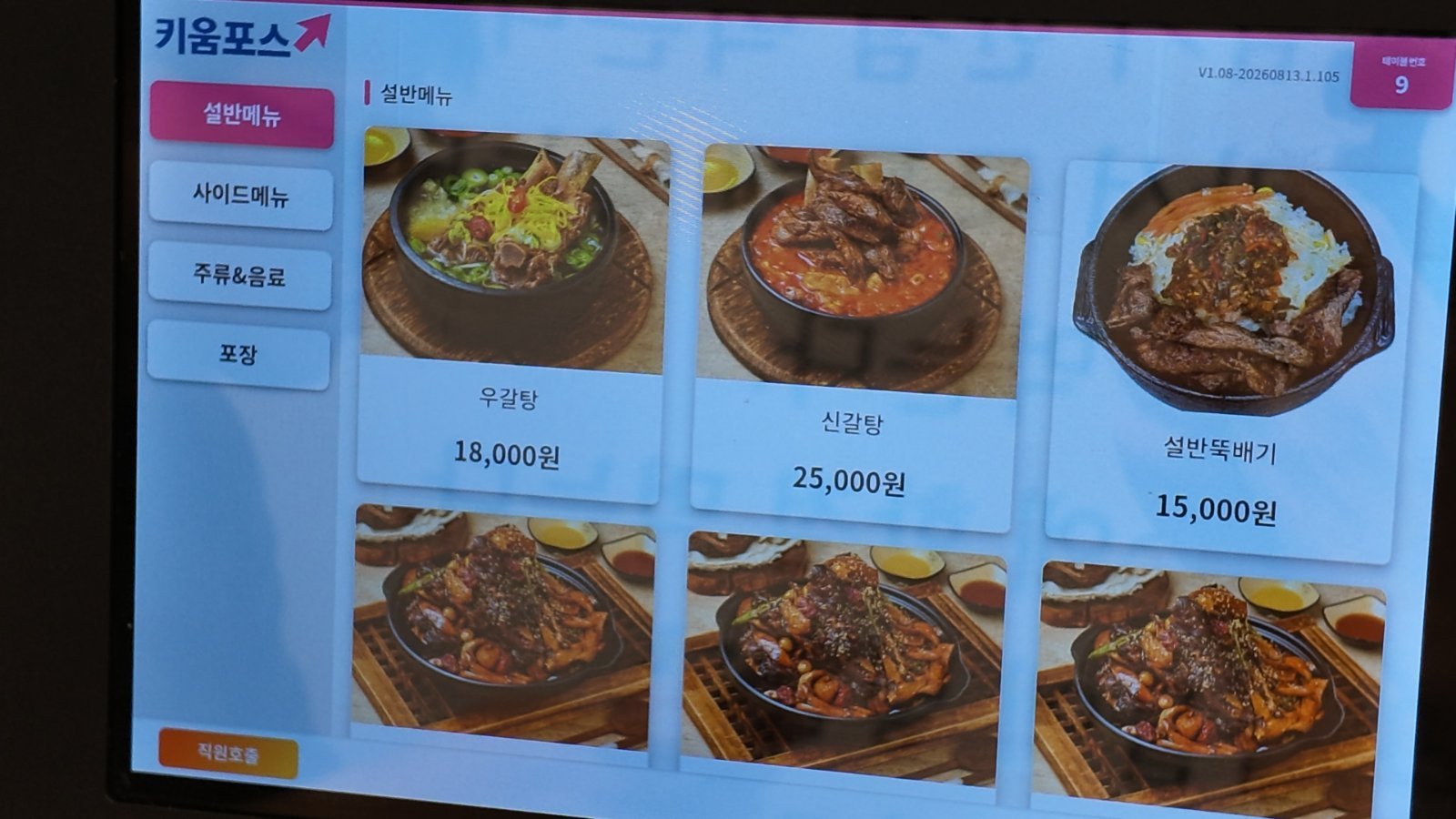
| On the tablet | What it is | Price |
|---|---|---|
| 우갈탕 ugaltang | Clear short-rib soup | ₩18,000 |
| 신갈탕 singaltang | Spicy short-rib soup | ₩25,000 |
| 설반뚝배기 seolban ttukbaegi | Served with rice | ₩15,000 |
| 왕갈비찜 wang galbijjim | Braised short ribs, small / medium / large | ₩59,000 / 69,000 / 79,000 |
| 갈곱전골 galgop jeongol | Hot pot, listed for 3–4 people | ₩59,000 |
| 물냉면 / 비빔냉면 | Cold noodles, broth or mixed | ₩12,000 each |
| 냉면 곱배기 | Cold noodles, large portion | ₩15,000 |
| 만두 mandu | Dumplings | ₩10,000 |
| 볶음밥 / 공기밥 | Fried rice / bowl of rice | ₩3,000 / 1,000 |
Those are the board prices as of September 2026, and both soups can be ordered to take away. We ordered the two soups and nothing else, so the braised ribs, the hot pot and the cold noodles are listed here rather than reviewed.
신갈탕 — the spicy one, ₩25,000
This one came out first. A deep red broth with a bone-in rib standing up in it, grilled beef laid across the top and a heap of spring onion. Lift the bone with your chopsticks and the meat comes away with it in one piece rather than shredding — that is the point of the dish. The broth is properly spicy and keeps getting deeper as you go, and once you have stripped the bone back into it, it thickens enough that rice stirred in becomes a second course.
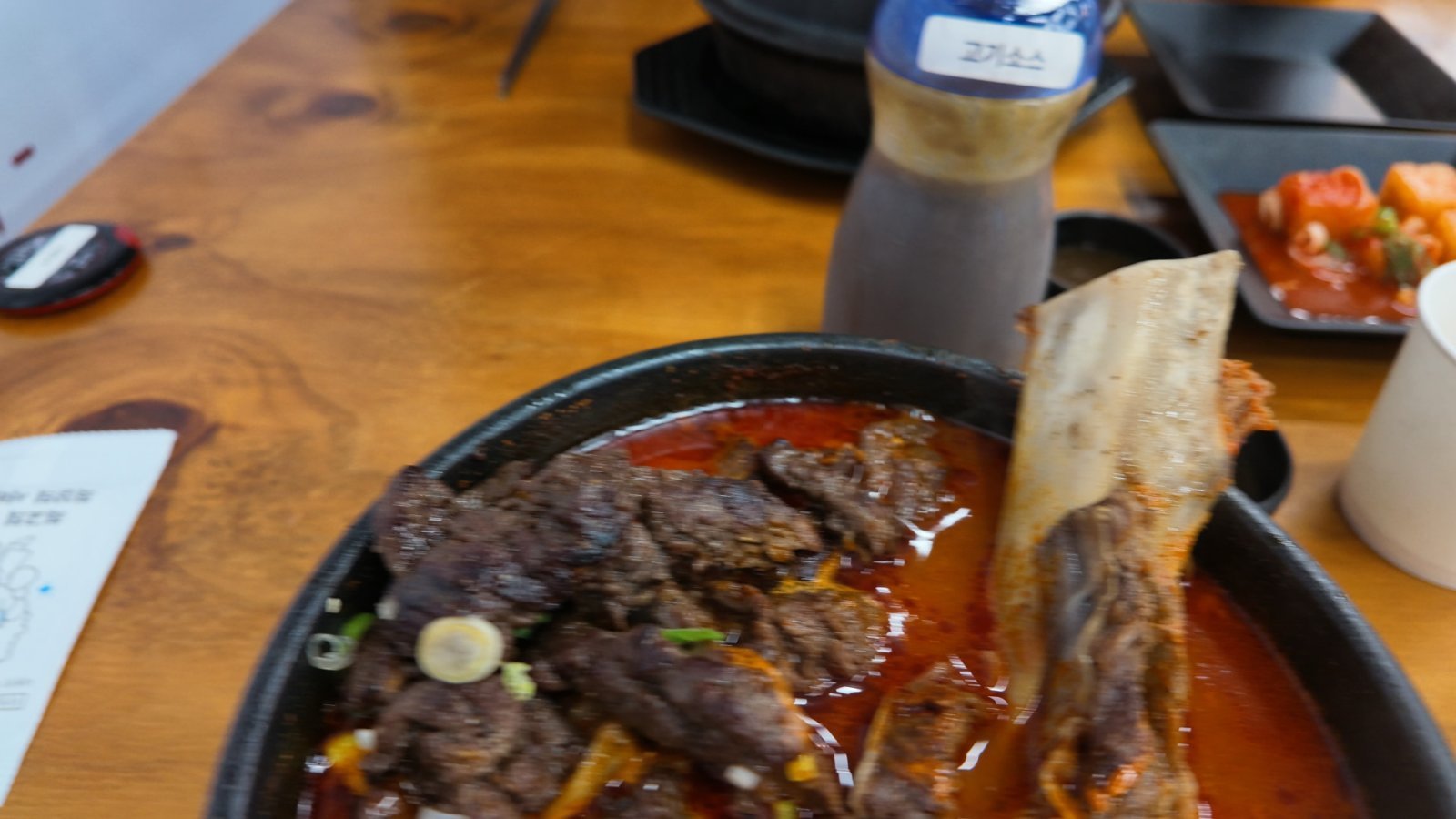
There is a card stuck to the table explaining the order of operations, and it is worth following: eat one large piece dipped in the sauce, cut the rest of the meat into the broth, then finish by stirring rice in at the end. A bottle marked 고기소스 (meat sauce) stands on the table. The grilled beef on top has been over flame, and dragging it through the broth for a second carries a little of that smoke into the soup.
우갈탕 — the clear one, ₩18,000
Completely different bowl. Clear amber broth, not the milky white of a long-boiled gomtang, with strips of egg garnish, a dried jujube and sliced green chilli on top, and a whole marrow bone sitting in it alongside the rib. It arrives deliberately under-seasoned — this is a bowl you are meant to salt yourself. Ask for salt if none is out, and season a spoonful at a time; you cannot take it back out.
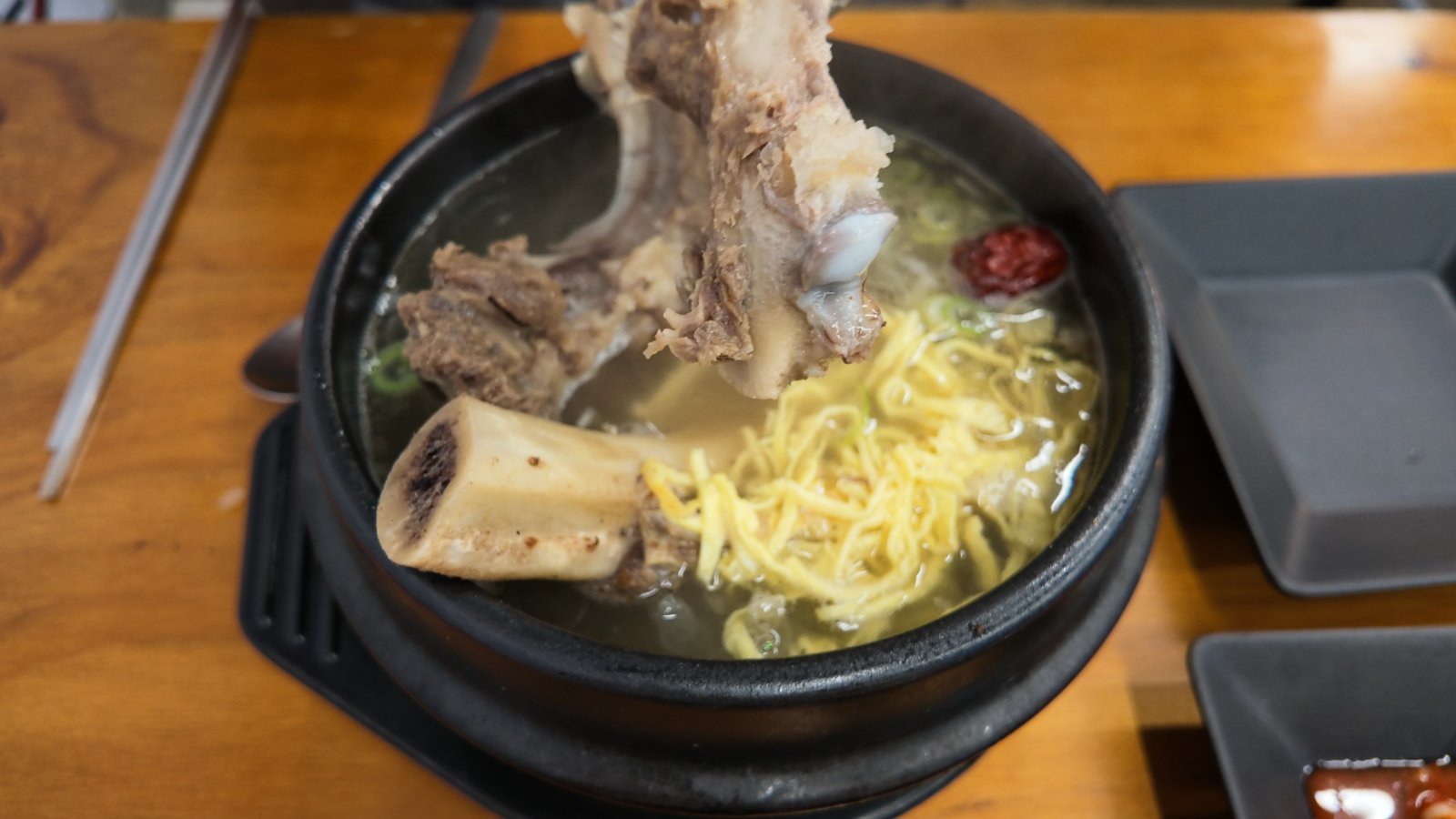
Lifting the rib out shows how much is hiding under the surface: the marrow bone is large enough that the portion is bigger than it first looks. The best way to eat it is rice in the broth with a piece of kkakdugi on top, which is how we liked it best. It is ₩7,000 cheaper than the spicy one, and the difference is chilli and a little more meat rather than quality.
What comes with it
Side dishes are laid out before the soup: kkakdugi (깍두기, cubed radish kimchi), mul-kimchi (물김치, kimchi in a cold clear brine) and a couple of salty pickled things. The kkakdugi is the one that matters — the radish is still crisp and the brine is not sweet, which is what you want against beef broth.
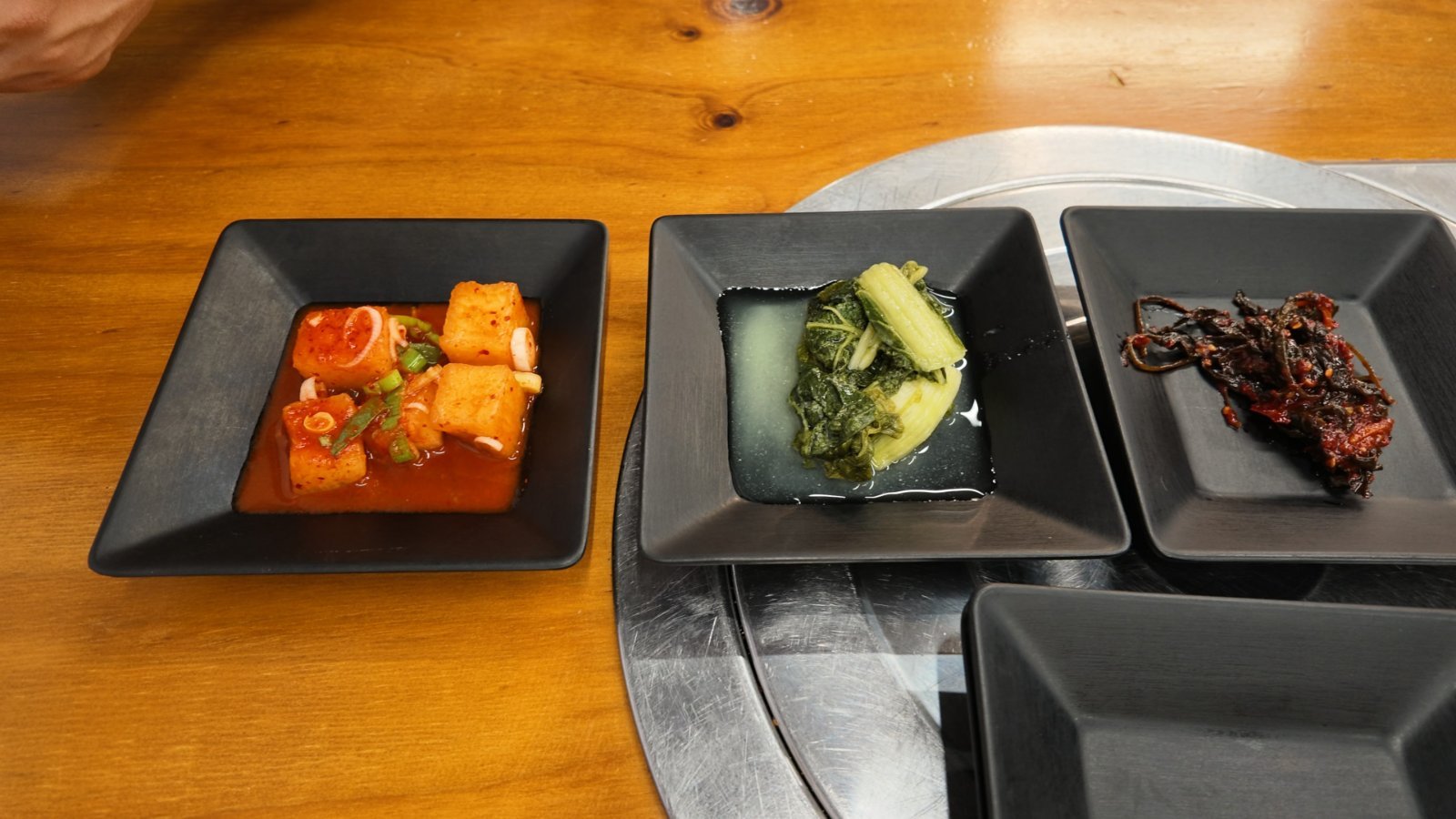
Refills are free, as they are everywhere in Korea, and so is the water. Cutlery and bowls sit at a self-serve corner along one wall rather than being brought to you — that is normal in Korea and nobody is ignoring you. Cards work, there is no tipping and no service charge.
The room
Tables are spaced far apart, there are a lot of them, and some are marked as reserved. Outside the door is a row of stools under a sign reading 고객 대기실 (customer waiting lounge), which tells you this place does get queues even if we walked straight in on a wet day. There is parking directly in front of the building.
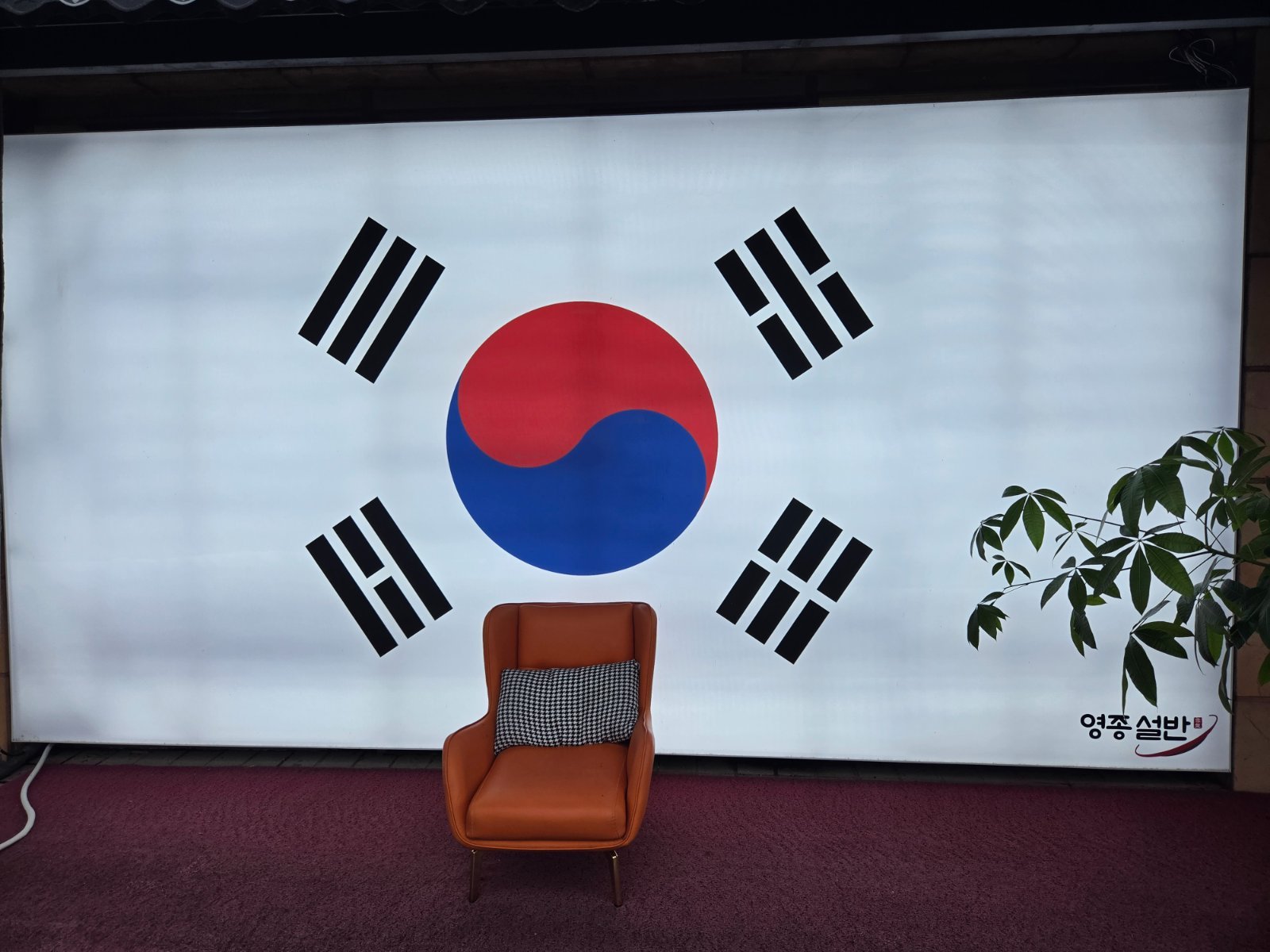
Inside there is also a photo corner — a wall-sized Korean flag with a single leather armchair in front of it. It is aimed at Korean families, but if you want one photograph that says you left the airport, it is right there and it costs nothing.
Getting there
The address is 인천광역시 영종구 전소로 14 1층 and the restaurant is 영종설반. Show either line to a taxi driver or paste it into Naver Map. Naver Map is the one that routes properly in Korea and shows same-day opening hours; Google Maps will put you roughly in the right field but will not get you to the door.
By taxi it is 16 minutes and about ₩12,600 from Terminal 1, or 18 minutes and ₩16,700 from Terminal 2 — 5.6 km further for two extra minutes, which is the usual Yeongjong pattern. If you are already out on the island, the useful number is 영종역 (Yeongjong station): 5 minutes and ₩5,800. From 운서역 (Unseo station) it is 11 minutes and ₩10,000. Yeongjong station is much the closer of the two here, which is the reverse of most places on this site.
Public transport is possible and slow. From Terminal 1 the best run is about 33 minutes and ₩2,500: the AREX train 11 minutes to 영종역 (Yeongjong), then bus 영종9 for 16 minutes to the stop called 영종교회, then a four-minute walk. Island buses run infrequently and we could not get a dependable timetable, so check the next departure on Naver Map while you are still on the platform instead of assuming one is due. You will need a T-money card, available at participating convenience stores, if you take the bus. On a five-hour layover, take the taxi.
We do not have confirmed opening hours or a confirmed afternoon break for this restaurant, and a lot of Korean soup houses shut between lunch and dinner. Check on Naver Map on the day, before you get in a taxi.
Frequently asked
Is galbitang spicy?
The clear 우갈탕 is not spicy at all — it is beef broth, salt and not much else, and it was the milder of the two soups I tried. The red 신갈탕 is genuinely spicy. Ordering one of each is the normal move for a mixed table.
Can one person eat here?
Yes. Both soups are single-portion dishes and a solo diner ordering one bowl is completely unremarkable in Korea. The braised ribs and the hot pot are the shared dishes; ignore those if you are alone. If you would rather have a solo meal with no bones in it at all, the bean-sprout rice soup that comes with the egg on the side is the simpler order.
Is there an English menu?
We did not see one. The tablet photographs can help you identify a dish; ask staff if you need help with the options. Saying ugaltang or singaltang out loud will also get you the right bowl — the two words are the whole decision.
Is there anything for a vegetarian?
No. Both soups are beef broth with beef in them, and the cold noodles and dumplings are not safe assumptions either. What a vegetarian can actually eat near Incheon Airport covers the alternatives.
Who this is for
Choose this restaurant if you want to compare clear and spicy beef-rib soups. Both were part of my meal; the larger braised-rib dishes are listed for reference, not reviewed. The clear soup suits someone who would rather season their own bowl.
Skip it on a layover under five hours, or whenever your remaining time does not cover the return trip and departure procedures. The spicy bowl was ₩25,000 compared with ₩18,000 for the clear soup; choose by the broth you want, not an assumption that the more expensive bowl is better. Both involve working meat off the bone.
If what you actually want is the same idea with pork and a lower bill, the pork-spine stew where ₩2,000 more gets you the bones taken out is the closer comparison. If you want the beef but over fire rather than in broth, the barbecue place where staff grill the first round for you is the other way to spend the same money.
On timing, our five-hour layover breakdown shows where the slack sits if five hours is exactly what you have.
Updated 17 September 2026: layover advice revised to distinguish planning scenarios from a guaranteed return time. This guide recommends staying inside the airport on connections under five hours.