Five hours is not a guarantee; check your remaining time after arrival formalities before leaving. Stay inside on connections under five hours. Hyundaeok is 17 minutes from Terminal 1 by taxi — ₩14,100, 14.2 km — and it opens at 6am every day, which matters more than the distance if your flight landed before the rest of the island woke up. Every version of the bowl costs ₩9,500.
Kongnamul gukbap (콩나물국밥) is bean sprouts, rice and broth, usually with an egg somewhere in the arrangement. It is the Korean hangover bowl, and the Jeonju version — which is what this is — comes with the egg served on the side rather than cooked into the soup. That side dish is the part that confuses people, and it is worth understanding before the food arrives.
Does it fit your layover?
Before leaving, work backwards from your airline’s check-in and boarding deadlines. Allow for the return journey, security and departure immigration, plus any baggage errands and waits for transport or a table. The airport arrival and return guide keeps the shared planning assumptions in one place; the route and menu below describe this particular restaurant.
This is a one-bowl meal that arrives fast, so the restaurant is not what eats your time. The arrival queue is. Before you commit to leaving the terminal at all, read what the rules actually are for leaving Incheon Airport between flights.
Check the restaurant’s opening hours against your actual arrival time, and reserve the return journey before ordering. The five-hour layover guide explains why a short connection may leave no time for a meal outside.
Getting there
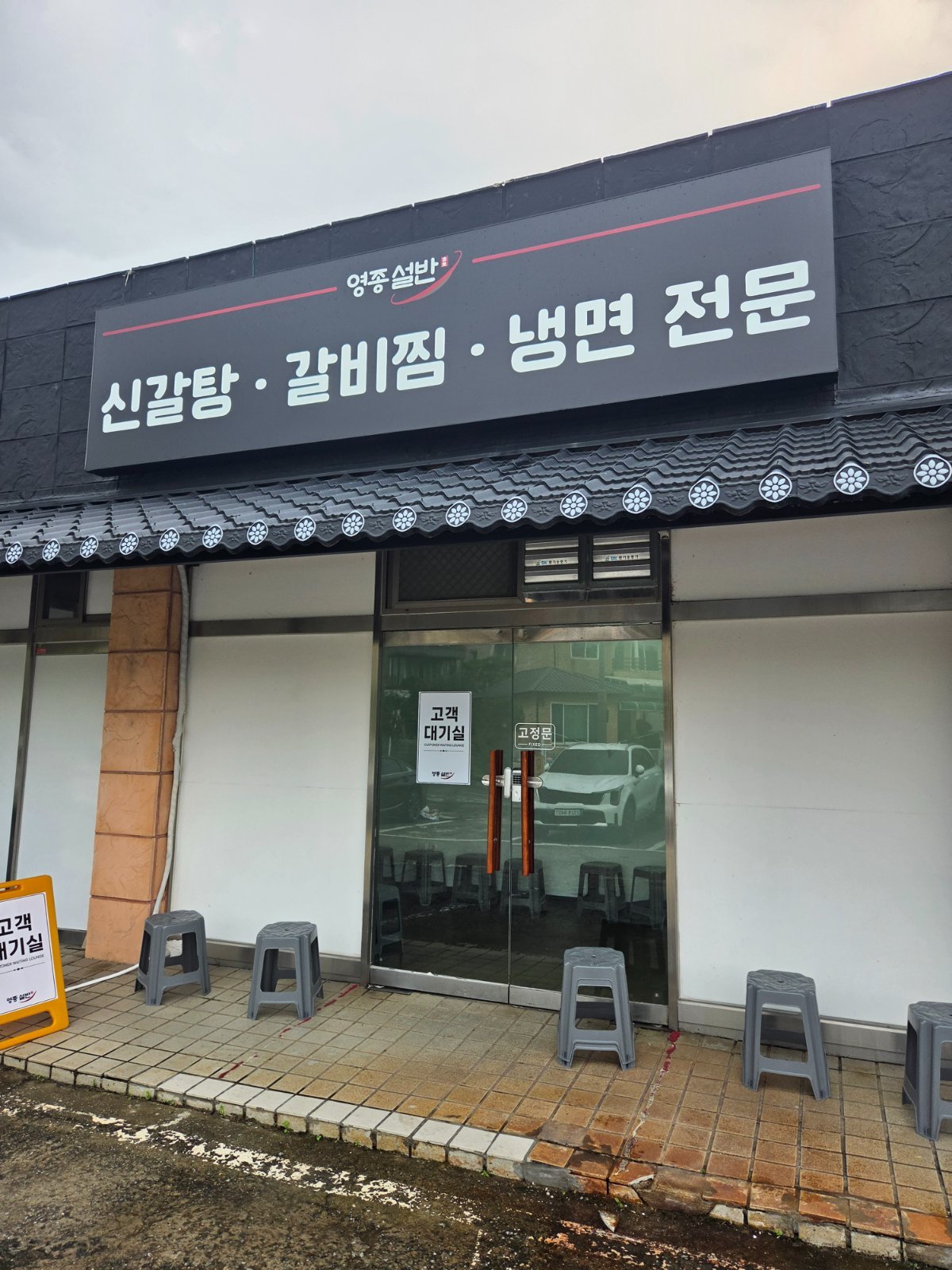
The address is 인천 영종구 하늘별빛로65번길 7-24, in the Haneul Doshi (하늘도시) district. Show that line to a taxi driver or paste it into Naver Map. The restaurant is 현대옥 영종하늘도시점 — Google lists it as Jeonju Hyundaeok, and its pin on Google Maps is correct if you only want to see where it sits. For driving directions and same-day opening hours, Naver Map is the one that works in Korea.
Taxi from Terminal 1 is 17 minutes and ₩14,100. From Terminal 2 it is 20 minutes and ₩18,200 — further in distance, barely different in time, as usual. If you are already on the island, it is 12 minutes and ₩11,500 from Unseo station, and 10 minutes and ₩7,400 from Yeongjong station.
There is a bus. The 202 leaves from stop 13B on the first floor of Terminal 1, runs 40 minutes, costs ₩1,500 and needs no transfer, but with the walk at either end you are looking at about 47 minutes door to door. That is half an hour more than the taxi in each direction — an hour of your layover — for a saving of ₩12,600. Take it only if you have eight hours or more and want to see the island go by. You will need a T-money card, available at participating convenience stores, or exact change.
Opening hours are 6am to 10pm, every day, with no afternoon break — unusual for a Korean restaurant, and the reason this is one of the few places on the island that can feed a 7am arrival. Confirm it on Naver Map on the day anyway.
Four bowls, one price
The menu lists four kongnamul gukbap, all ₩9,500, and the names are long and bracketed even in Korean. The differences are real, though, and they come down to two questions: how hot the broth arrives, and where the egg is.
전주남부시장식 (Jeonju Nambu Market style) — the broth is ladled over the rice repeatedly until it is warm rather than boiling. Egg served separately. This is the traditional one and the restaurant’s most-ordered dish.
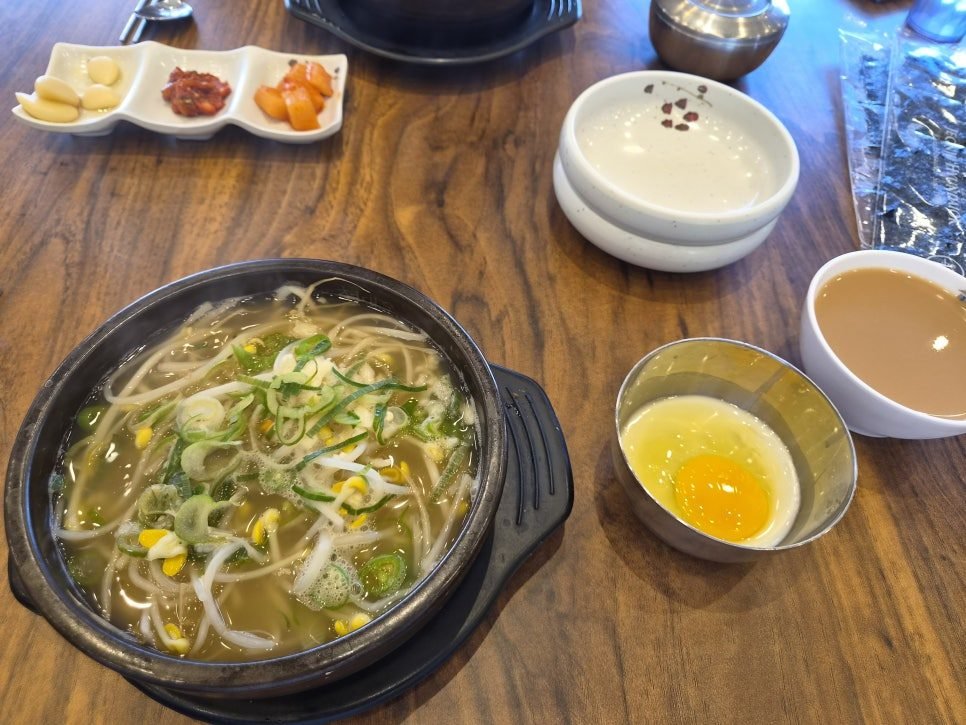
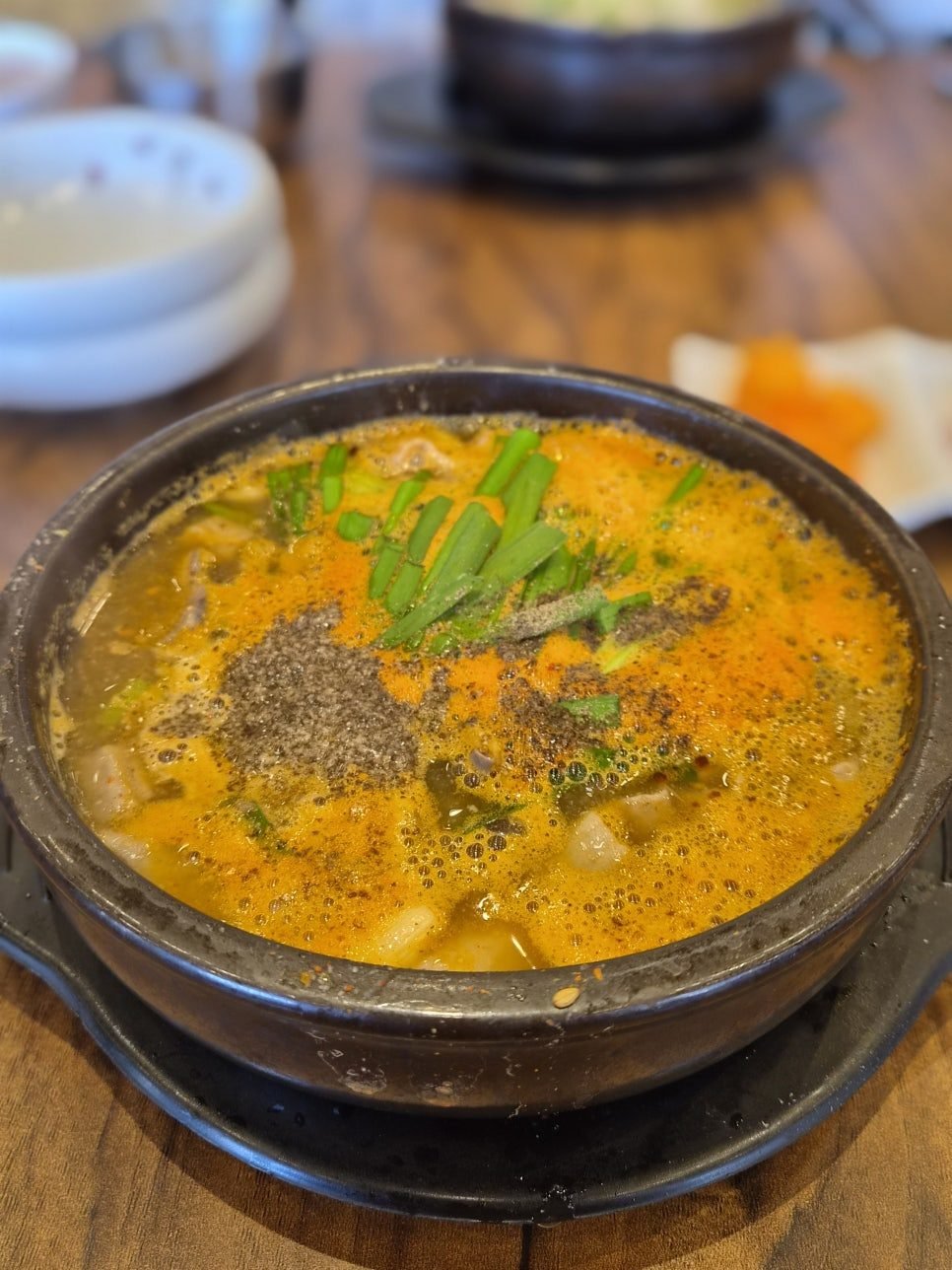
맑은탕식 (clear) — boiled, arrives bubbling, egg served separately. Clean-tasting. This is the bowl in the photograph above.
전통직화식 (traditional direct-fire) — boiled, egg cracked into the pot. Thicker and nuttier as a result.
매운탕식 (spicy) — the same boiled bowl with the egg in it, made hot.
If you have never had this before, order the 남부시장식 or the 맑은탕식. Both give you the egg on the side, which is the part of the ritual worth doing.
What to do with the egg
A small steel bowl arrives holding one egg that looks raw. The white is barely set and the yolk is whole and liquid. This is not a mistake and it is not undercooked by accident — it is suran (수란), and it is meant to finish cooking at your table.
Spoon three or four spoonfuls of hot broth from your bowl into the steel dish. Crumble the dried seaweed that comes with the meal into it. Stir, and eat it as a first course before you start on the soup — or tip the whole thing back into the bowl, which people also do. Either is normal. What nobody does is leave it sitting there untouched.
The side dishes that come with it are pickled garlic, radish kimchi, and a red seasoned salted squid called ojingeo jeotgal (오징어젓갈). The squid is salty and strong and is meant to go on top of a spoonful of bean sprouts, not eaten alone. Side dishes and water are free, and so are refills.
Things worth knowing before you go
The clear bowl still has chili in it. Those green rings floating on the surface are sliced cheongyang chili, not spring onion — both are in there. “Clear” describes the broth, not the heat. The children’s version of the bowl is listed as the one made without the chili, which tells you how much is in the adult one. If you cannot handle heat, fish the rings out before the broth pulls too much of them.
The sweet drink is alcohol. Moju (모주) is makgeolli boiled down with cinnamon, ginger and jujube until most of the alcohol cooks off. Most, not all. It tastes like spiced apple juice and it is still a drink, so skip it if you are flying somewhere that cares or you simply do not want to board with it on your breath.
This is a bean sprout bowl, not a vegetarian one. There is an egg in it, the salted squid on the side is seafood, and we have not confirmed what the broth is built on. If that question matters to you, we went through what a vegetarian can actually eat around Incheon Airport separately.
Bring the suitcase or don’t. The restaurant has parking and the room is large, but a big case in a busy soup house at lunchtime is no fun for anybody. The staffed storage counters at both terminals are the better answer for anything over cabin size.
If bean sprouts sound too light after a long flight, the spicy pork soup above is ₩12,000 and is the heaviest thing on the menu. It is a different animal from the pork soups we have written about elsewhere on the island — thickened with perilla seed powder rather than left milky.
Our verdict
Go if you land early and want something hot that is not pork. Almost everything open at 6am near Incheon Airport is a meat broth — blood sausage and head meat in milky pork stock, or clear beef gomtang two stops down the airport line. This is the one that isn’t, and at ₩9,500 it undercuts every other soup bowl we have written up near the airport.
Skip it if you have four hours or fewer, or if what you want from a layover meal is something you will remember. This is comfort food. It is very good comfort food and the egg ritual is genuinely fun the first time, but it is a bowl of bean sprouts and rice, and you should know that going in.
FAQ
How far is Hyundaeok from Incheon Airport?
Seventeen minutes by taxi from Terminal 1, ₩14,100 over 14.2 km. Twenty minutes and ₩18,200 from Terminal 2. The 202 bus from stop 13B at Terminal 1 takes about 47 minutes door to door for ₩1,500.
Is the egg raw?
It is lightly poached and arrives barely set, which to most people looks raw. You finish cooking it yourself by spooning hot broth from your bowl into the steel dish it comes in, then crumbling dried seaweed over the top.
Which of the four versions should I order?
The 남부시장식 if you want the original and a broth that is warm rather than scalding, the 맑은탕식 if you want it boiling hot and clean-tasting. Both come with the egg on the side. All four are ₩9,500.
Is it spicy?
The clear versions are mildly so — there are sliced green chilies in the bowl by default. Only the 매운탕식 is built to be hot. The children’s bowl is made without the chili, so that is the honest answer for a very low spice tolerance.
Can I go at 6am?
Yes. It opens at 6am and closes at 10pm every day, with no afternoon break. That makes it one of the few options on Yeongjong for a pre-dawn arrival, though you should still check the day’s hours on Naver Map before you get in a taxi.
Will anyone speak English?
Assume not, and point at the Korean menu names above — they are printed on the board exactly as written. We put together the phrases and the pointing that work in Korean restaurants if you want a fuller script.
Updated 17 September 2026: layover advice revised to distinguish planning scenarios from a guaranteed return time. This guide recommends staying inside the airport on connections under five hours.