The meal here was provided by the restaurant. No money changed hands, nobody read this before it went up, and the prices below are the ones on the board.
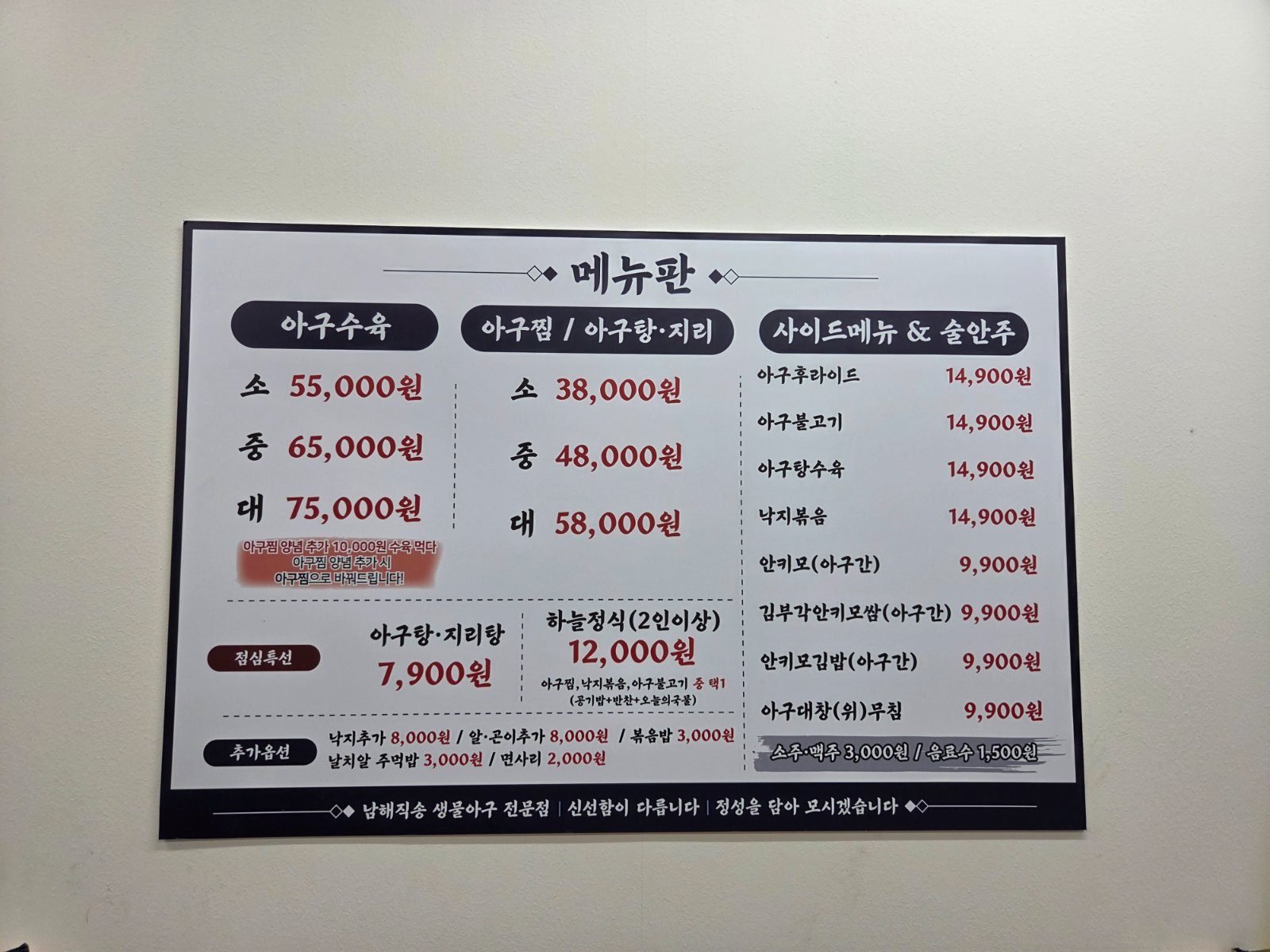
The short answer: Haneul Agu is two different meal plans on one menu. For a solo lunch, the photographed board lists monkfish soup at ₩7,900. For a shared meal, the poached monkfish platter starts at ₩55,000. I came for the platter and stomach salad; the lunch offer is a menu option, not a separate lunch visit described here.
What I liked was the contrast: soft white fish, almost jelly-like skin, and a chewy, sweet-sharp salad. If those textures appeal to you, the platter gives you something to explore. If you only want a bowl of soup, there is no reason to order the largest meal on the page.
Which order makes sense for your visit?
| Your plan | What the photographed menu offers | What that means |
|---|---|---|
| One person at lunch | 점심특선 아구탕·지리탕 — ₩7,900 | A separately priced soup rather than a shared platter. Confirm when the lunch offer is served. |
| A shared monkfish meal | 아구수육 소 — ₩55,000 | The smallest poached platter shown. Split between two, the platter alone is ₩27,500 each; this is cost arithmetic, not a stated two-person minimum. |
| A contrasting side dish | 아구대창(위)무침 — ₩9,900 | The stomach salad I tried. The reason to add it is its chewy texture and tangy dressing, not more of the same fish. |
| A lower-priced lunch set for a group | 하늘정식 — ₩12,000, 2인 이상 | The board explicitly marks this set for two or more. This is a different minimum from the poached platter. |
Prices are from the menu photograph used for this September 2026 guide, not a promise of today’s bill. The board also lists monkfish-liver rice, 안키모덮밥, at ₩9,900 and other side dishes. My earlier version wrongly treated the lunch soup as the only possible solo order. It is the clearly marked lunch option, not the entire menu.
What did the poached monkfish actually taste like?
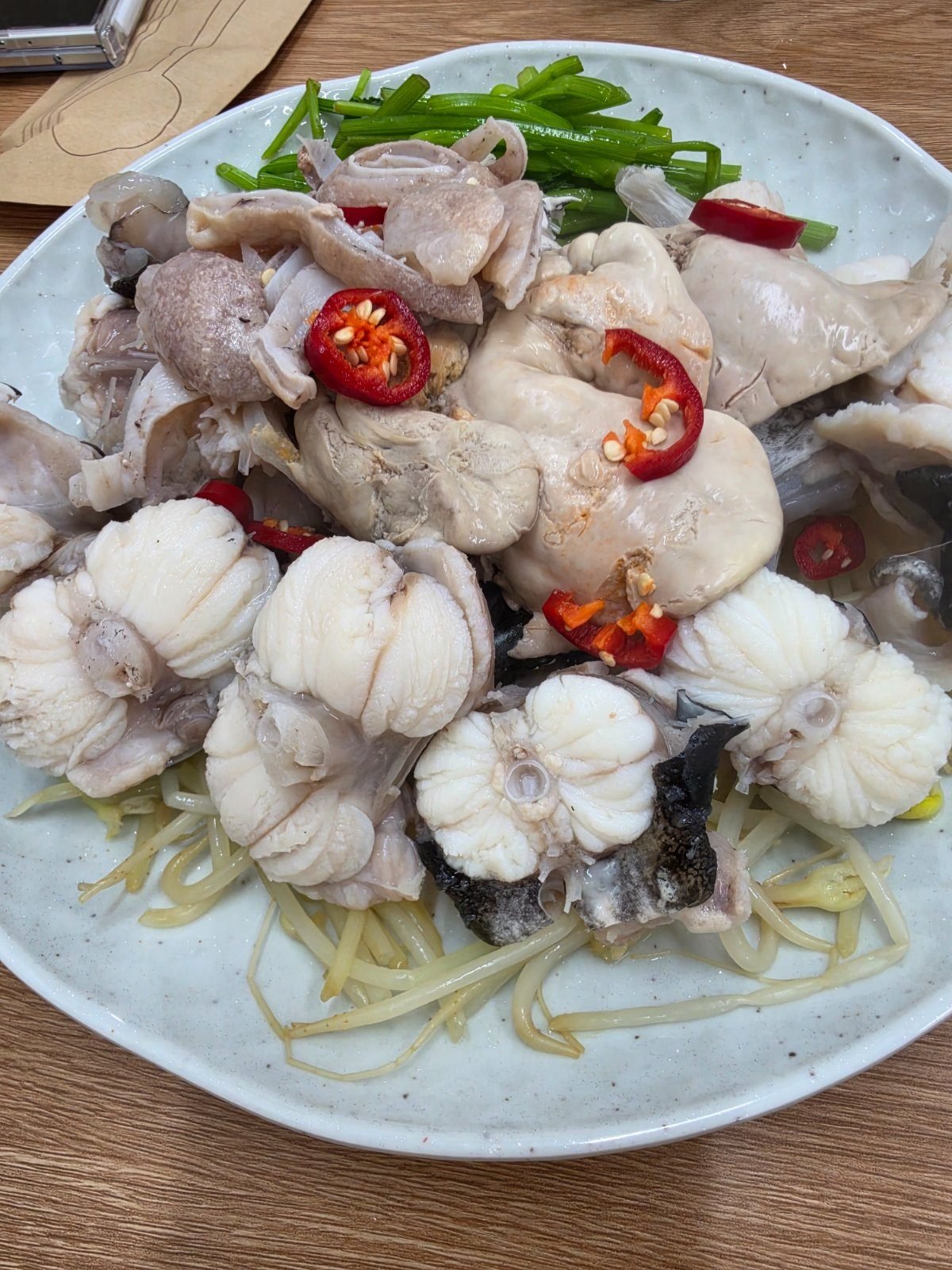
The platter came over bean sprouts with white flesh, skin, innards and monkfish liver, 안키모. The flesh was soft and mild, without the fishy smell I had wondered about before trying it. The skin was much more gelatinous. Those are different mouthfuls; calling the whole plate simply “tender fish” misses the part that may decide whether you enjoy it.
I put a ring of green chilli on a piece and dipped it in the wasabi soy. There was also a citrusy yuzu sauce that reminded me of ponzu. I preferred the soy-based sauces with the mild fish to the red chojang sauce available at the restaurant. That is a preference from this meal, not a rule about how to eat monkfish.
A pot of clear 아구탕 came with the platter on my visit. It was refreshing rather than fiery. That broth is why the separate lunch soup caught my attention, but tasting the included pot is not the same as reviewing the ₩7,900 lunch portion.
Is the stomach salad worth adding?
The 아구대창(위)무침 was the dish I was most curious about. It was my first time trying monkfish stomach this way. It reminded me of the springy chew of pufferfish-skin salad, with a sweet-and-sour dressing. Beside the soft poached flesh, it felt like a different dish rather than an extra serving of the platter.
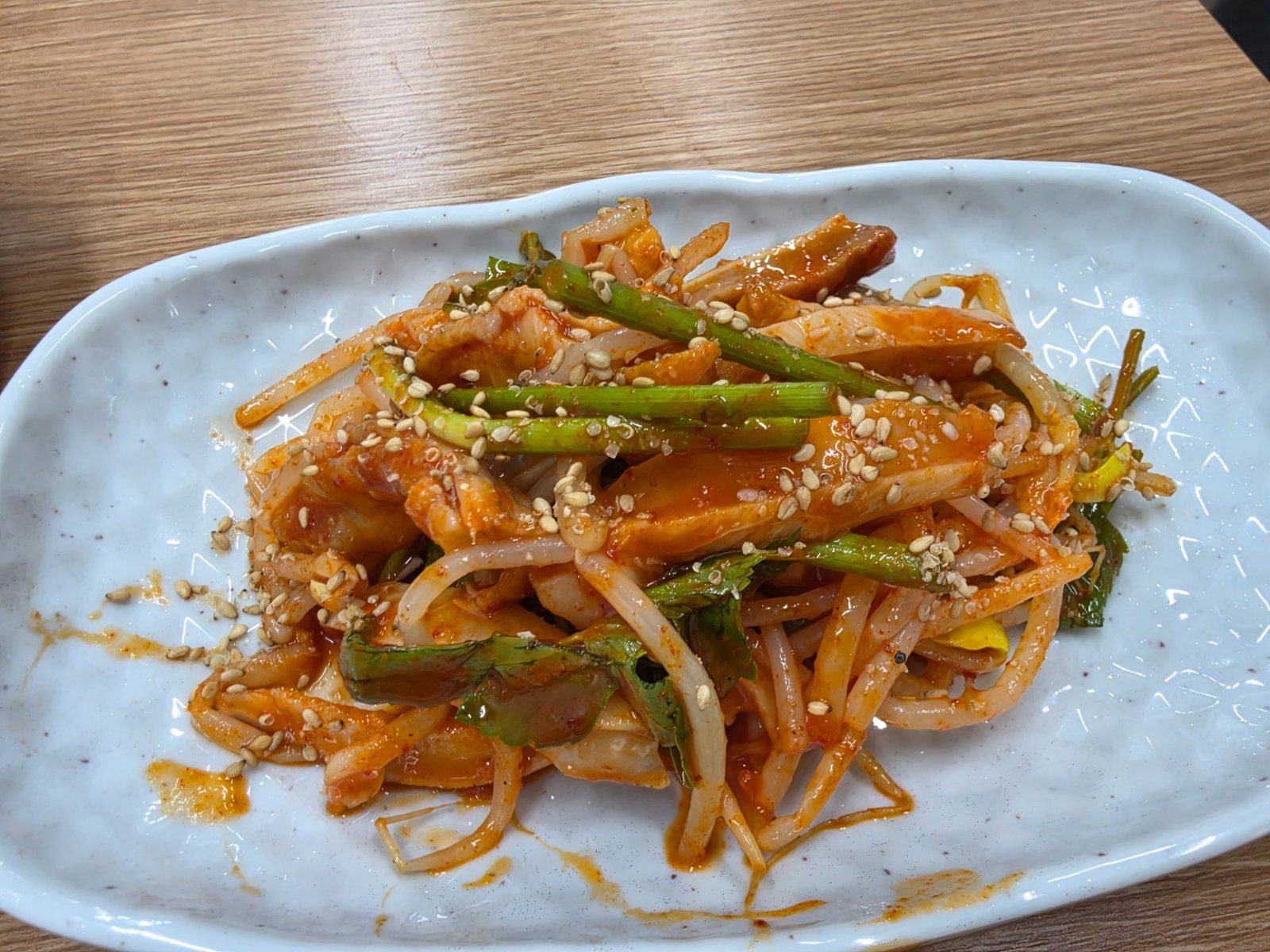
I would add it for someone who likes chewy seafood. I would not use it to persuade someone who already dislikes skin or innards: the texture is the attraction, not something the dressing hides.
What is included, and what is just a menu option?
Our table had green noodles with sesame sauce, squid salad and pickled cucumber. Cold cucumber soup was at the self-service counter. Water, bottled drinks and alcohol were self-serve too; the recorded prices were ₩3,000 for soju or beer and ₩1,500 for a soft drink. I finished with the self-serve soft ice cream by the exit.
The board says you can add ₩10,000 of spicy seasoning to turn the remaining poached platter into 아구찜. My Korean write-up mentions this as an option to consider with a group; it does not describe tasting that conversion. The review here is of the poached platter, accompanying clear soup and stomach salad.
Where is Haneul Agu, and is the trip worth it?
하늘아구 영종 하늘도시점
인천 영종구 하늘중앙로 193 2층 211호
The restaurant is on the second floor, unit 211. Paste the Korean name and address into Naver Map and check the day’s opening hours and lunch offer before setting off.
The recorded September 2026 taxi lookup was about 22 minutes, 14.6 km and ₩15,100 from T1, or 23 minutes, 20.2 km and ₩19,300 from T2. Those are one-way route estimates, not a measured airport-to-table journey. Doubling the quoted fares gives roughly ₩30,200 or ₩38,600 for a taxi return, before traffic changes. A ₩7,900 soup does not make this a ₩7,900 airport outing.
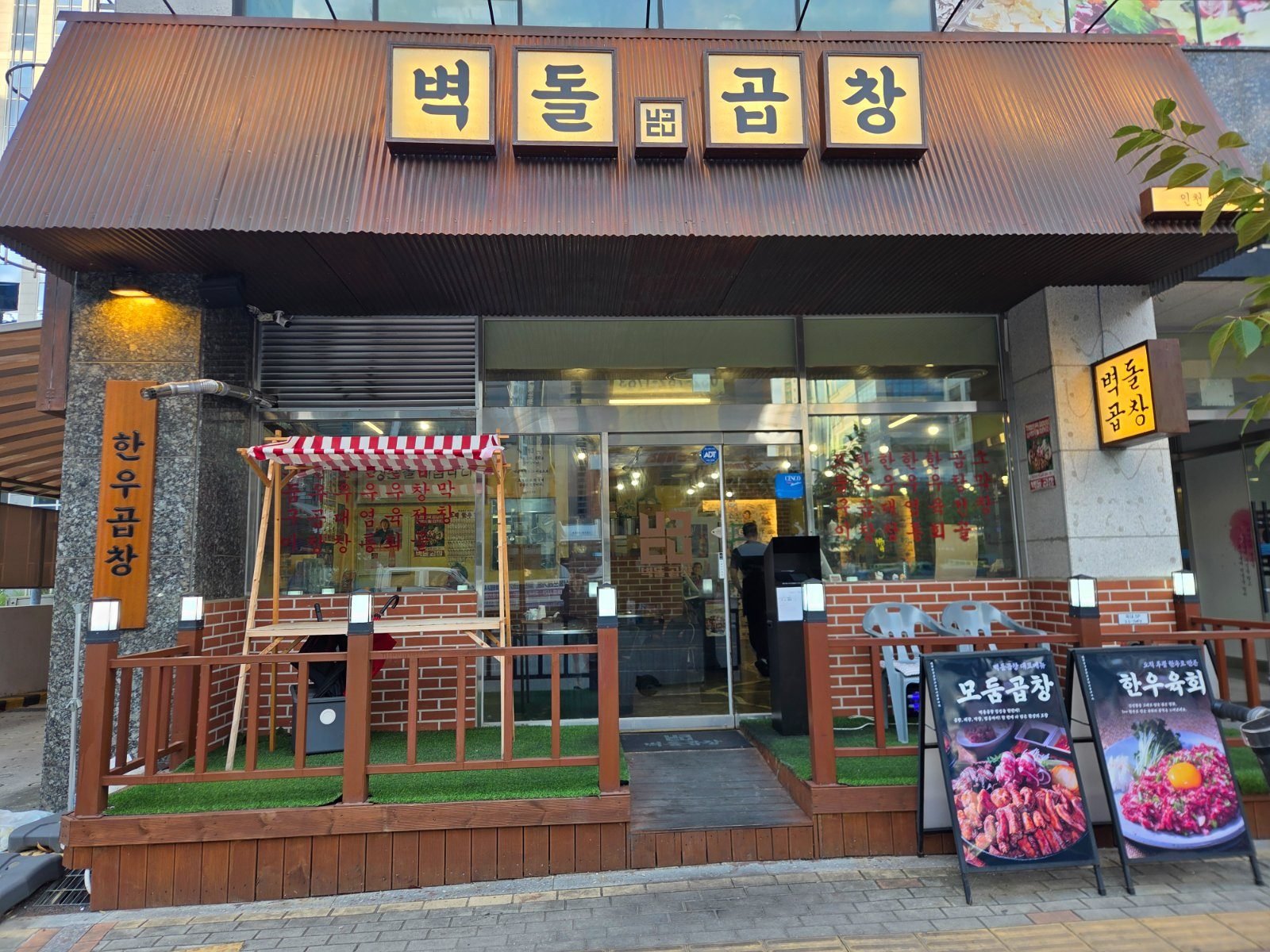
My choice would depend on the meal, not the low number on the lunch sign. For the poached platter and contrasting textures, this is a specific place to visit. For a quick solo bowl during a tight connection, start with the Unseo gomtang option reached by train instead. For another shared-table meal, Byeokdol Gopchang offers a different offal experience.
On a layover under five hours, stay inside the airport. With more time, check entry permission and your airport return deadline before choosing either restaurant. Time for bags, transport waits, ordering and boarding is separate from the short taxi ride.
A few questions before ordering
Is agusuyuk the same as agujjim? No. The dish I ate was poached monkfish, agusuyuk. Agujjim is the spicy braised version offered elsewhere on the menu and as the additional-seasoning option.
Can I order the platter alone? The menu shows small, medium and large platters, starting at ₩55,000; it does not show a solo size. That does not prove the restaurant refuses a solo diner. The explicitly printed two-person minimum belongs to the ₩12,000 lunch set.
How do I point to the right dish? Show 아구수육 소 for the small poached platter, 아구대창(위)무침 for the stomach salad, or 점심특선 아구탕·지리탕 for the lunch soup. The menu photograph above shows those exact lines.
Reworked 17 September 2026 from my Korean visit write-up and original menu photograph. The previous version overstated solo-order restrictions and blurred a menu option with the dishes reviewed; those distinctions are corrected here.