For a layover, consider this only after checking your actual remaining time and return deadlines. A bowl of chueotang (추어탕) is ground freshwater loach simmered with doenjang and dried greens, and it is the kind of thing most visitors leave Korea without ever trying — partly because nobody explains it in English, and partly because “ground fish soup” reads like a dare. It is not. There is no fishy taste in it at all. The soup is thick, nutty and deeply savoury, closer to a dark bean-paste stew than to anything from the sea.
The restaurant is 남도추어탕 하늘도시점, in Jungsan-dong on the eastern side of Yeongjong, 19 minutes by taxi from Terminal 1. They say they use domestic loach and grind it in-house. Stay inside on a layover under five hours; a longer connection still needs a return-time check.
Does it fit in your layover?
Before leaving, work backwards from your airline’s check-in and boarding deadlines. Allow for the return journey, security and departure immigration, plus any baggage errands and waits for transport or a table. The airport arrival and return guide keeps the shared planning assumptions in one place; the route and menu below describe this particular restaurant.
The drive is short. What decides this is the arrival queue, as always.
Do not drag a suitcase to a soup restaurant. Luggage storage prices and hours at T1 and T2 are worth the detour on the way out.
What you are actually ordering
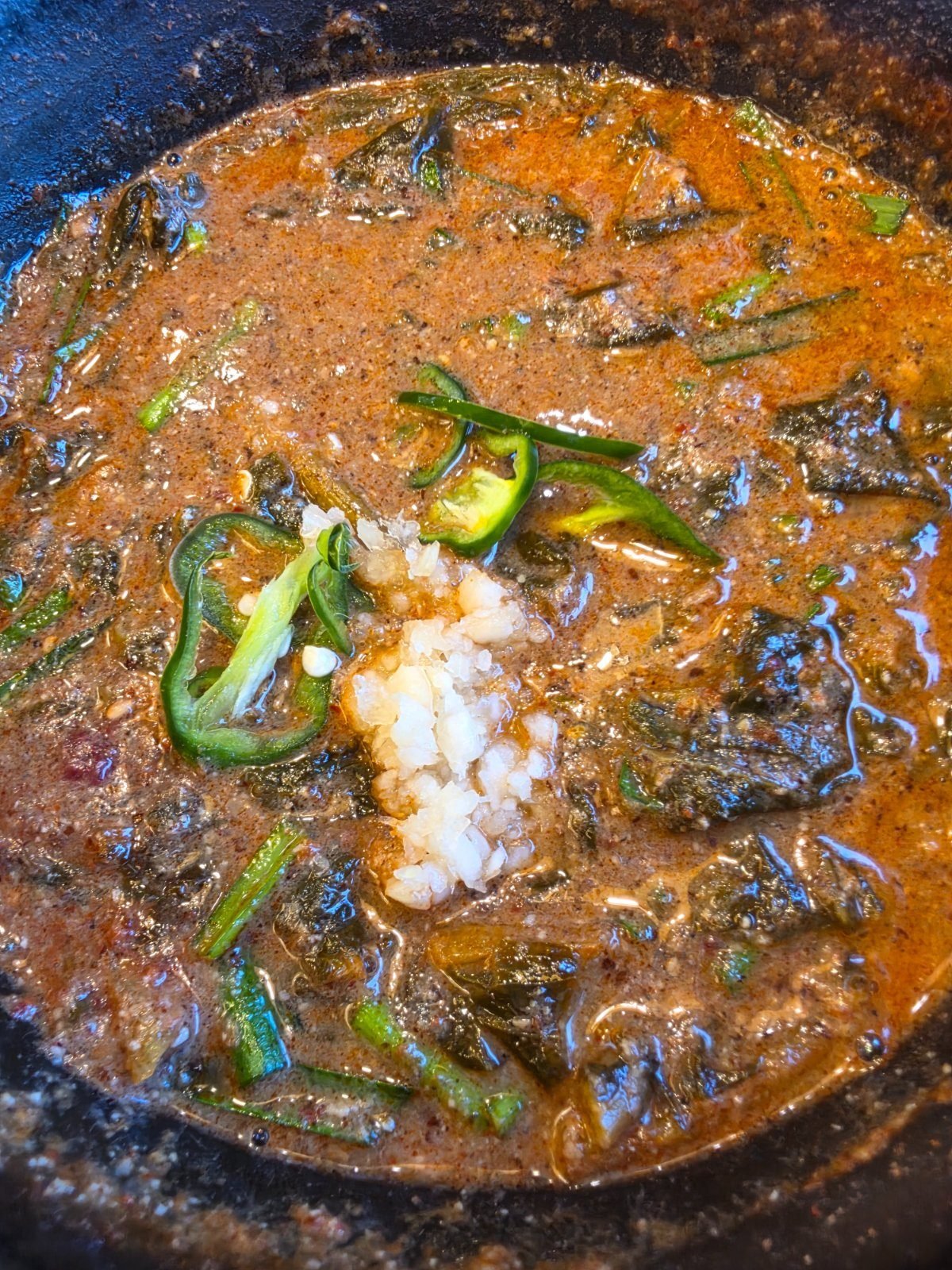
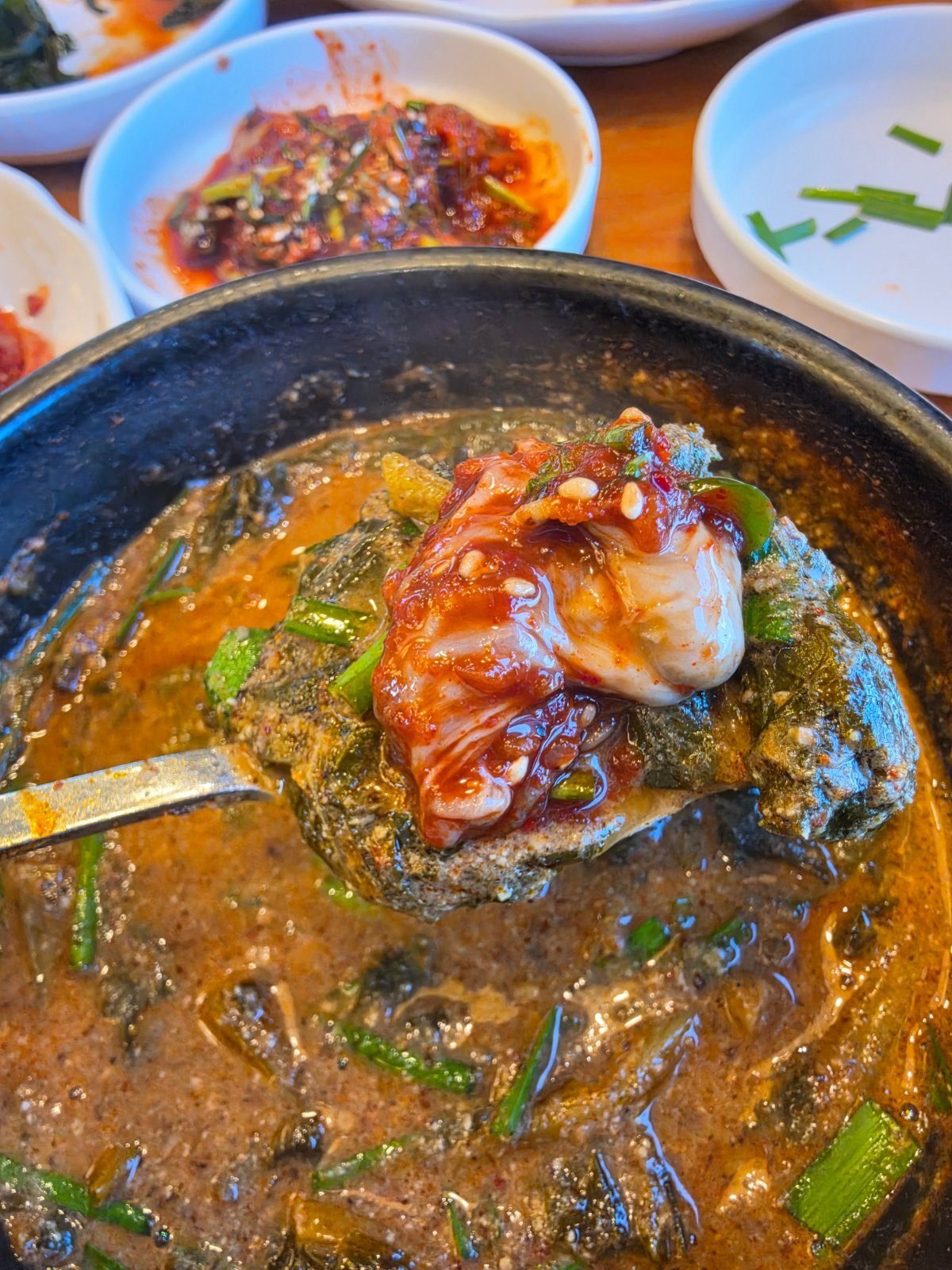
Mikkuraji (미꾸라지), the loach, is a small freshwater fish. It gets boiled and then ground — bones, skin and all — into a purée that is cooked down with doenjang and a heap of dried vegetables. What lands in front of you is opaque and brown-green, thick enough to coat the spoon, with siraegi (시래기, dried radish tops) and ugeoji (우거지, outer cabbage leaves) filling most of the bowl. There is real texture in it; this is not a purée you drink.
Koreans eat it as boyangsik (보양식), restorative food — the same category as samgyetang, eaten to put strength back. There are boards on the wall explaining what loach, sancho and siraegi are each supposed to do for you. They are in Korean only.
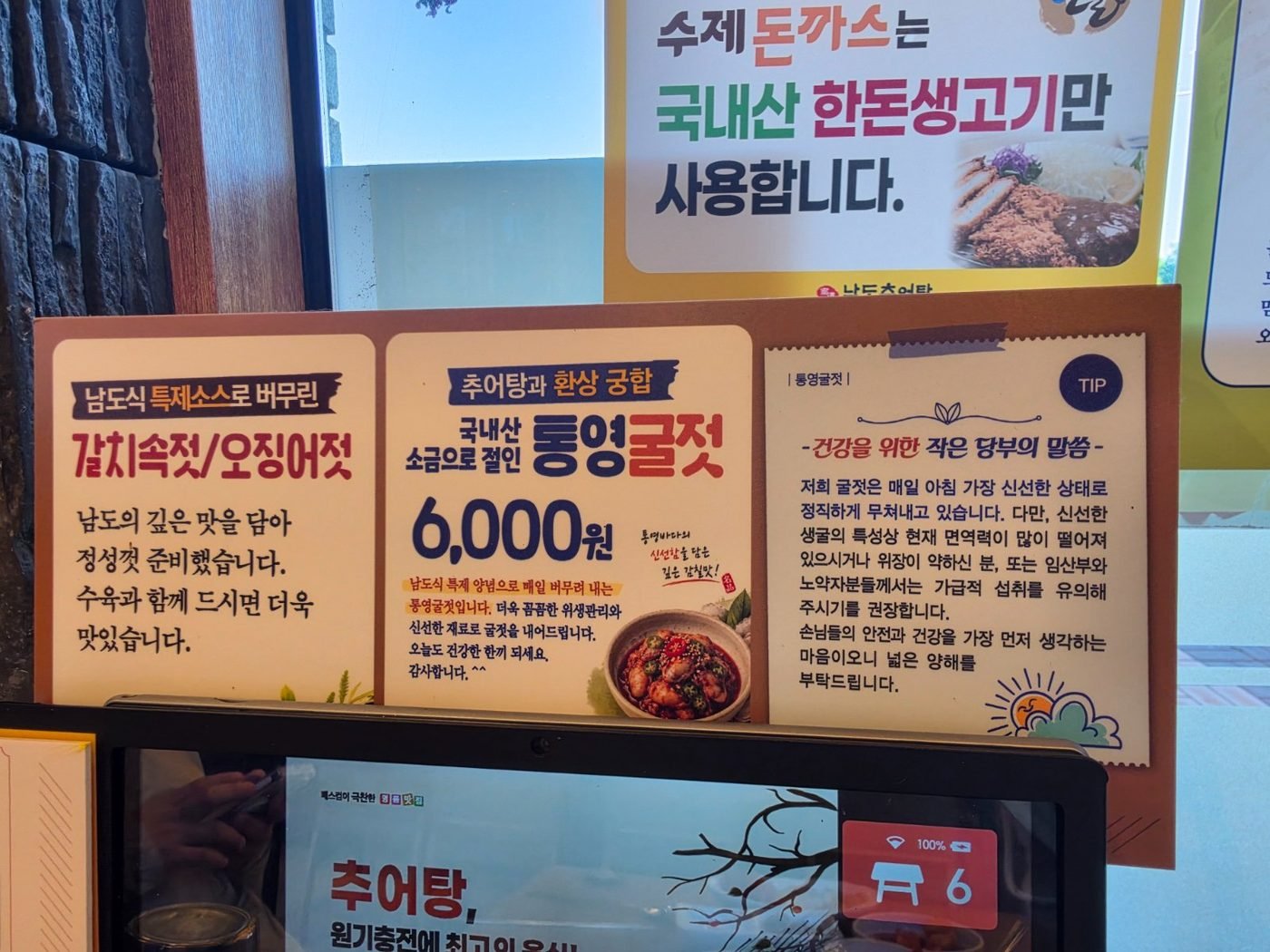
Prices we can confirm from the boards, as of September 2026: 인삼추어탕 (ginseng chueotang) ₩18,000, 홍어삼합 (hongeo samhap) ₩13,000, 수제돈까스 (handmade pork cutlet) ₩11,000, and 통영굴젓 (Tongyeong salted oysters) ₩6,000 as an add-on. The board lists more than these — those four are the ones we can put a number to, so check the rest on the day.
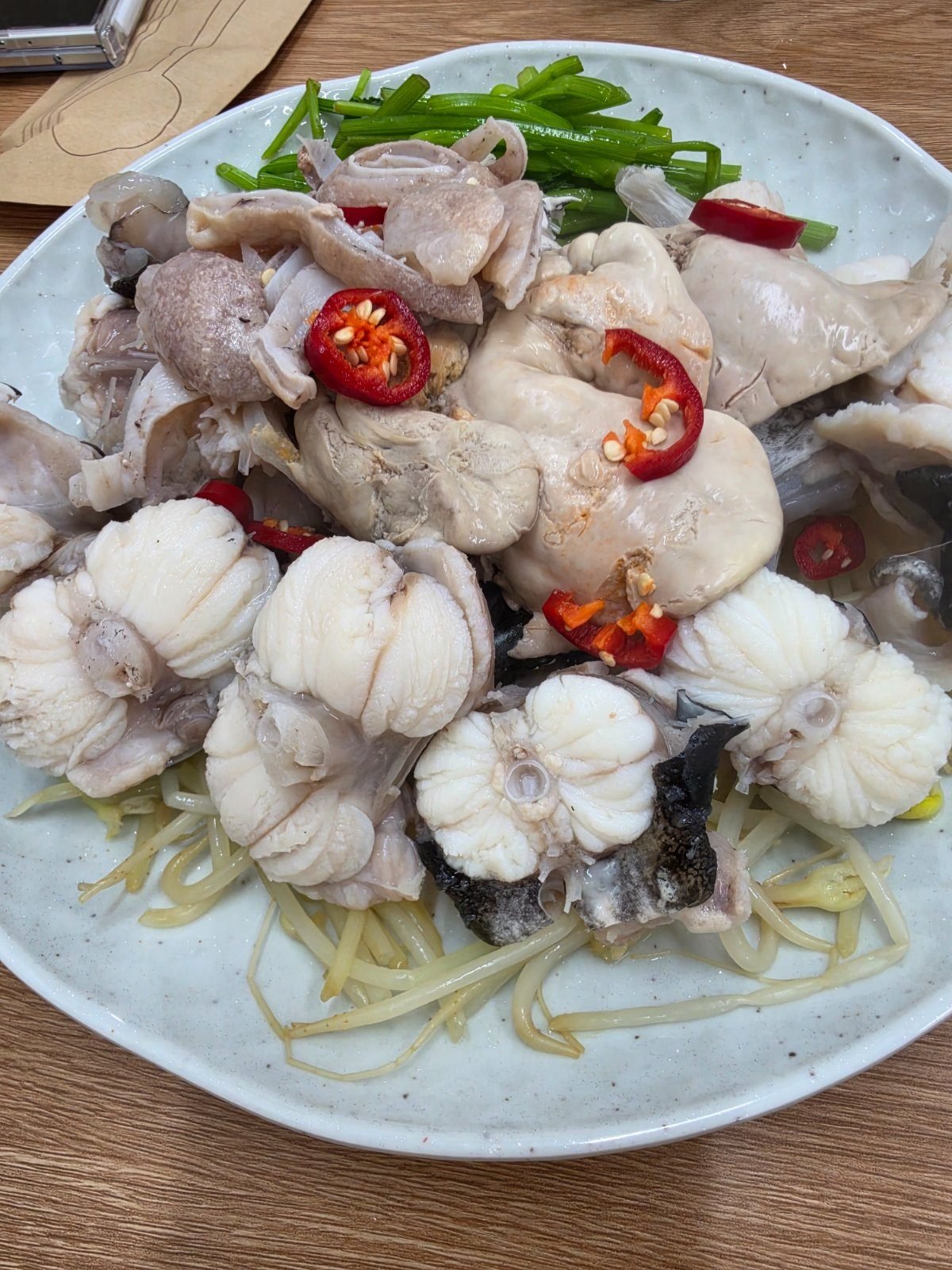
Two notes on the other menu items. The pork cutlet is a genuine second act here rather than a children’s option — large groups were ordering it, and a sign says it is made with domestic pork. And the restaurant is also a hongeo samhap specialist: fermented skate, served with boiled pork and kimchi. Fermented skate is ammonia-sharp and is one of the few Korean dishes that regularly defeats Korean people too. We did not order it. Do not order it by accident on your way to a flight.
What arrives before you order anything
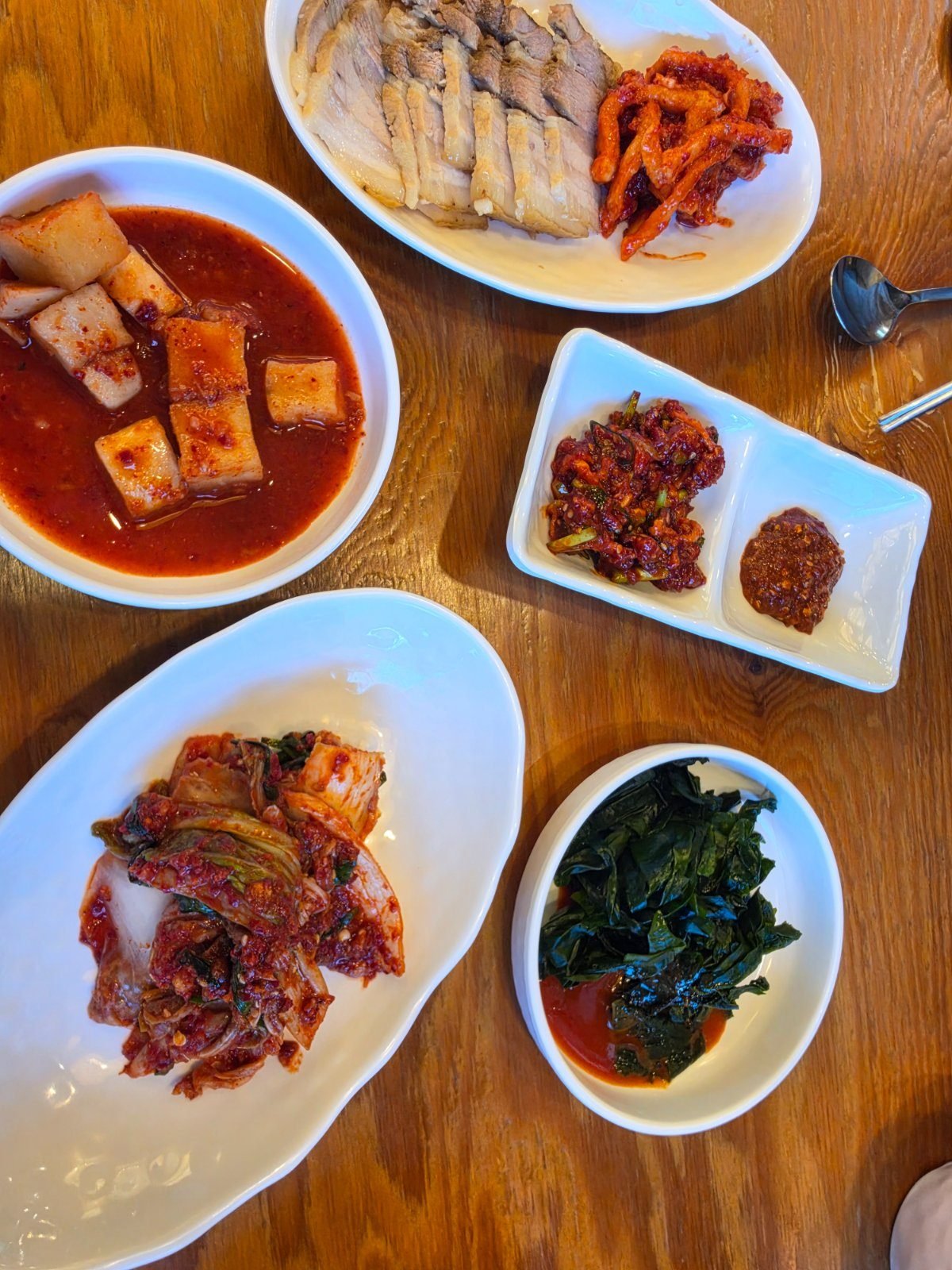
The thing worth flagging: suyuk (수육), sliced boiled pork, comes as one of the free side dishes. Layered fat and lean, soft, not greasy. In most restaurants that is a paid dish, and here it turns up with the kimchi. Alongside it are a sharp just-made cabbage kimchi, a spicy dressed salad, blanched perilla leaves, and two salted seafood side dishes — galchi sokjeot (갈치속젓, salted hairtail) and ojingeo jeot (오징어젓, salted squid). Those two are intensely salty and are meant to go on a spoonful of rice, not eaten on their own.
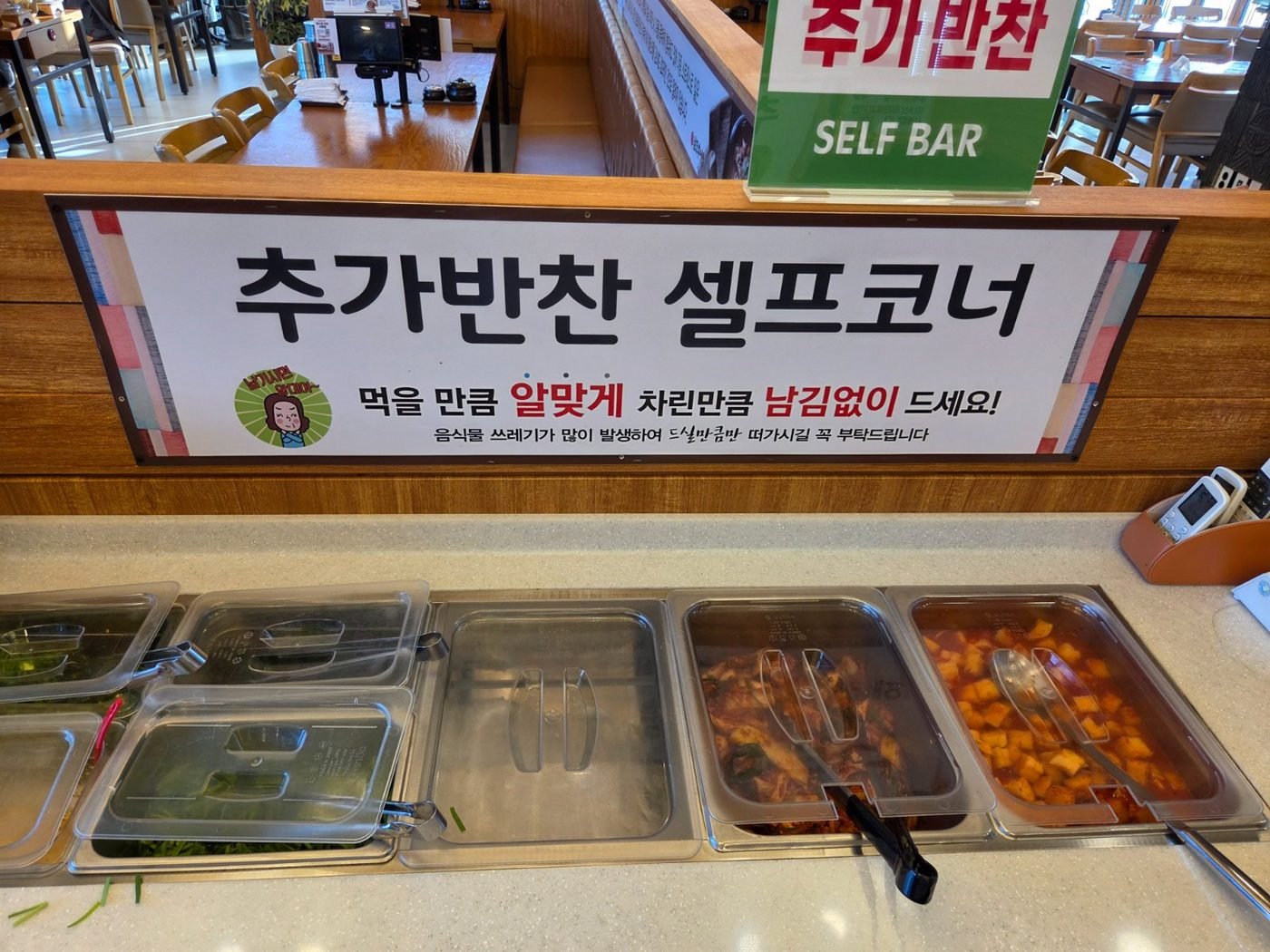
Refills are free and you fetch them yourself from the counter marked 추가반찬 셀프코너. Nobody will bring them to you and nobody minds you going up. The sign asks you to take only what you will eat, which is worth honouring — in Korea untouched side dishes get thrown away, not reused.
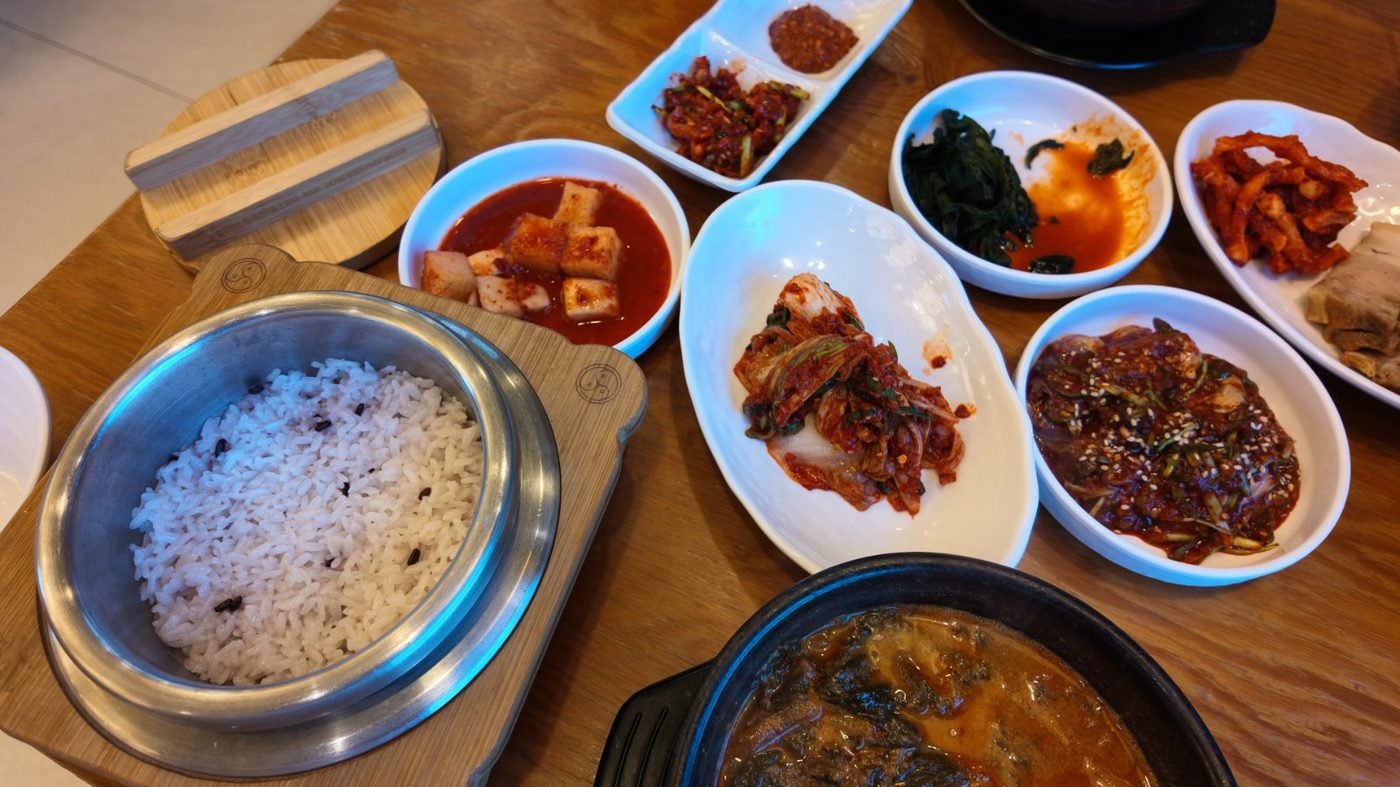
The rice comes as dolsotbap (돌솥밥), in a stone pot, flecked with black rice and freshly cooked. When you have scraped the rice out, pour your water into the empty pot and leave it while you finish the soup. The toasted crust at the bottom loosens into sungnyung (숭늉), a nutty rice tea, and that is how the meal ends. If the stone pot is the part you like, there is a dolsotbap set with grilled fish elsewhere on the island.
The sachet on the table
There is a small paper sachet sitting on the table marked 초피 — chopi, and this restaurant’s is labelled 100% domestic. It is not chilli and it is not black pepper. It is a close relative of the Sichuan peppercorn: citrus-sharp, resinous, and it prickles rather than burns. Chueotang and chopi go together the way pepper goes with egg — the whole point of it is to cut through the richness.
Tip in half the sachet first. A whole one is a lot if you have never had it, and you cannot take it back out. Taste, then add the rest if you want it.
Separately from that, chopped chives, sliced cheongyang chilli and minced garlic come on a side plate for you to stir in. Adding all three is the normal way to eat this, and it does lift the bowl considerably — the chives in particular make it taste cleaner. The cheongyang chilli is genuinely hot, so it is the one to hold back if heat is not your thing. None of the three is compulsory.
Getting there
The address is 인천광역시 영종구 영종진로11번길 10, 101호, and the restaurant is 남도추어탕 하늘도시점. Show either line to a taxi driver or paste it into Naver Map. Naver Map is the one that gives working directions and same-day opening hours in Korea; Google Maps will show you roughly where it sits but will not route you well.
By taxi it is 19 minutes and about ₩15,900 from Terminal 1, or 22 minutes and ₩20,100 from Terminal 2 — further in distance, barely different in time, which is the usual pattern on this island. If you are already out here, it is 15 minutes and ₩8,800 from 영종역 (Yeongjong station) and 15 minutes and ₩13,300 from 운서역 (Unseo station). Note that Yeongjong station is the closer one for this restaurant, which is the reverse of most places we write about.
Public transport works but costs you time. From Terminal 1 it is about 48 minutes and ₩2,850 all in: the AREX train 11 minutes to 영종역, then bus 203 for 31 minutes to the stop called 영종진공원, then a four-minute walk. The catch is that island buses run infrequently and we could not get a reliable timetable, so check the next departure on Naver Map before you leave the station rather than assuming one is coming. For a five-hour layover, take the taxi. You will need a T-money card, available at participating convenience stores, if you do take the bus.
We do not have confirmed opening hours or a confirmed afternoon break for this restaurant, and plenty of Korean soup houses close between lunch and dinner. Check on Naver Map on the day before you get in a taxi.
The things worth knowing before you go
The oysters carry a printed warning. The ₩6,000 Tongyeong salted oysters are raw and dressed the same morning, and the restaurant’s own sign asks anyone elderly, pregnant or with a weak stomach to think twice. They are very good with the boiled pork. They are also raw shellfish, and you are about to get on a plane. Skip them if that combination bothers you at all.
The pot is hotter than it looks. It comes to the table still boiling and stays that way for several minutes. The first spoonful straight off the tray will burn you.
There is no English menu that we saw. The wall boards do carry photographs of the dishes, which is enough to point at. If you want the plain bowl, say chueotang — it is the restaurant’s name, so you will be understood. Insam chueotang is the ₩18,000 ginseng version.
The ordinary Korean things apply and are worth saying once: cards work everywhere, side dishes and water are free including refills, there is no tipping and no service charge, and water and cutlery are usually self-serve from a stand near the tables.
Who this is for
Go if you want one properly Korean meal that is not barbecue and not fried chicken, if you like dark savoury soups, or if you are travelling alone — a single bowl of chueotang with rice is a completely normal solo order here and nobody will look at you. It also suits anyone who has been on a long-haul flight and wants something warm and heavy rather than something exciting.
Skip it if you have four hours or fewer; airport procedures and the return journey need more margin. Skip it if you dislike bitter greens, because siraegi is most of the bowl. Skip it if the idea of a whole fish ground up bothers you on principle — it will not taste fishy, but knowing is not the same as not minding, and there is no point spending an hour of a layover talking yourself into a bowl of soup. And if what you actually want is the restorative-soup experience in a form that is easier to picture, the perilla-broth samgyetang near the airport is the gentler introduction.
On timing, our five-hour layover breakdown shows where the slack sits if five hours is exactly what you have.
Questions people ask
Does chueotang taste like fish?
No. There was no fishy smell or taste in the bowl at all. The loach is ground and cooked down with doenjang, and what you taste is the fermented soybean, the greens and the nuttiness. If you have had doenjang jjigae, it is in that family, just thicker.
Can I eat here on my own?
Yes. Soup and rice is the standard one-person meal in Korea and solo diners are unremarkable. Two people can share the soup and add the boiled pork and oysters to make it a bigger meal, but one bowl on its own is a complete lunch.
Is it spicy?
The soup as it arrives is not spicy. The heat is entirely in what you add — the cheongyang chilli on the side plate is hot, and the chopi sachet prickles without being chilli-hot. Leave both out and you have a mild bowl.
What else is on the menu if I do not want loach?
The handmade pork cutlet at ₩11,000 is the obvious alternative and appears to be a lot of people’s reason for coming. There is also hongeo samhap at ₩13,000, which is fermented skate and is not a beginner’s dish.
How much should I budget in total?
Taxi both ways from Terminal 1 is about ₩31,800. Add the meal on top. The ginseng version is ₩18,000 and the oysters ₩6,000 if you want them, so roughly ₩50,000 to ₩56,000 for one person door to door, with the taxi as the bigger half.
Do they take cards?
Yes. Cards work essentially everywhere in Korea, including small neighbourhood restaurants, and you do not need to find an ATM before you come out.
Updated 17 September 2026: layover advice revised to distinguish planning scenarios from a guaranteed return time. This guide recommends staying inside the airport on connections under five hours.