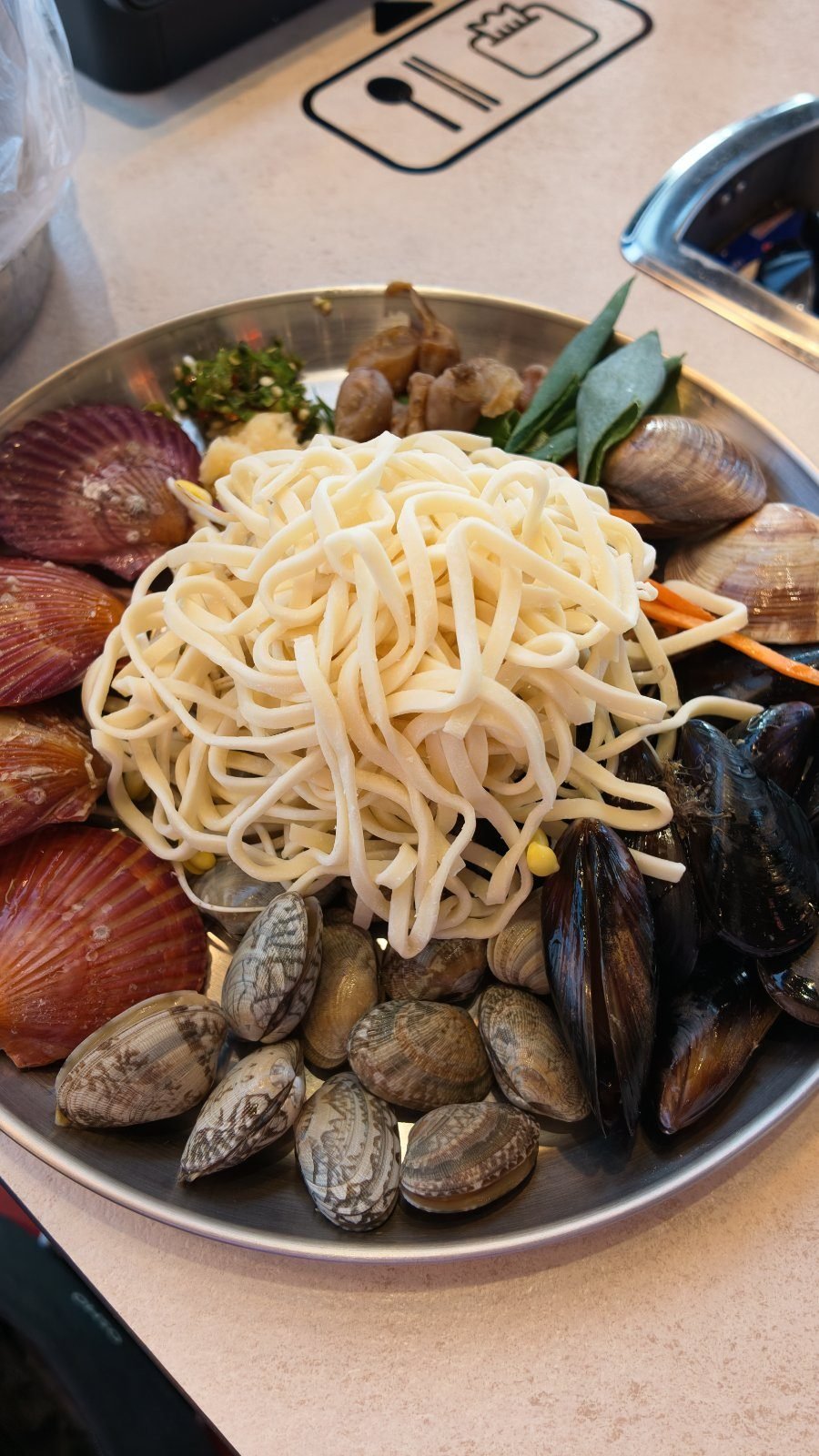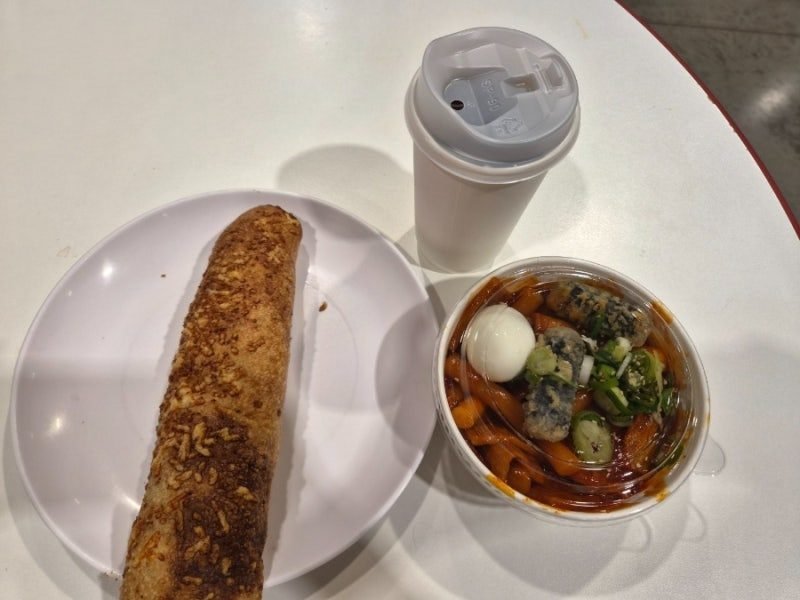
Irionora (이리오너라) is a grilled fish house on Masiran-ro, the road that runs down to Masian Beach, about twelve minutes and ₩9,000 by taxi from Terminal 1. The answer first: if you are two people with seven hours or more, the ₩35,000 set is the best full Korean meal I know of this close to the terminals. If you are alone, you are not shut out the way you usually are at a place like this, because the stone pot rice is sold as a single order at ₩15,000. And if you land on a Monday, stop reading — it is closed.
What it costs
The menu is a single board on the wall, Korean only, with the numbers large enough to read from a table. Almost everything on it is priced for two or three people, which is normal at this kind of restaurant and is usually where a solo traveller gets stuck. The two lines at the bottom are the exception.
| Dish | Price | Serves |
|---|---|---|
| Grilled fish set 1 생선구이+영양굴밥 | ₩40,000 | 2 |
| Grilled fish set 2 생선구이+돌솥밥 | ₩35,000 | 2 |
| Braised hairtail 갈치조림+돌솥밥 | ₩40,000 / ₩55,000 | 2 / 3 |
| Grilled hairtail 갈치구이+돌솥밥 | ₩40,000 / ₩55,000 | 2 / 3 |
| Braised mackerel 고등어조림+돌솥밥 | ₩40,000 / ₩55,000 | 2 / 3 |
| Seafood kalguksu 해물칼국수+보리밥 | ₩13,000 | 2 minimum |
| Oyster rice 영양굴밥 | ₩17,000 | 1 |
| Stone pot rice 돌솥밥 | ₩15,000 | 1 |
| Oyster pancake 굴전 / spring onion pancake 파전 | ₩20,000 each | share |
| Extra fish 고등어 / 가자미 / 볼락 | ₩10,000 / ₩8,000 / ₩8,000 | — |
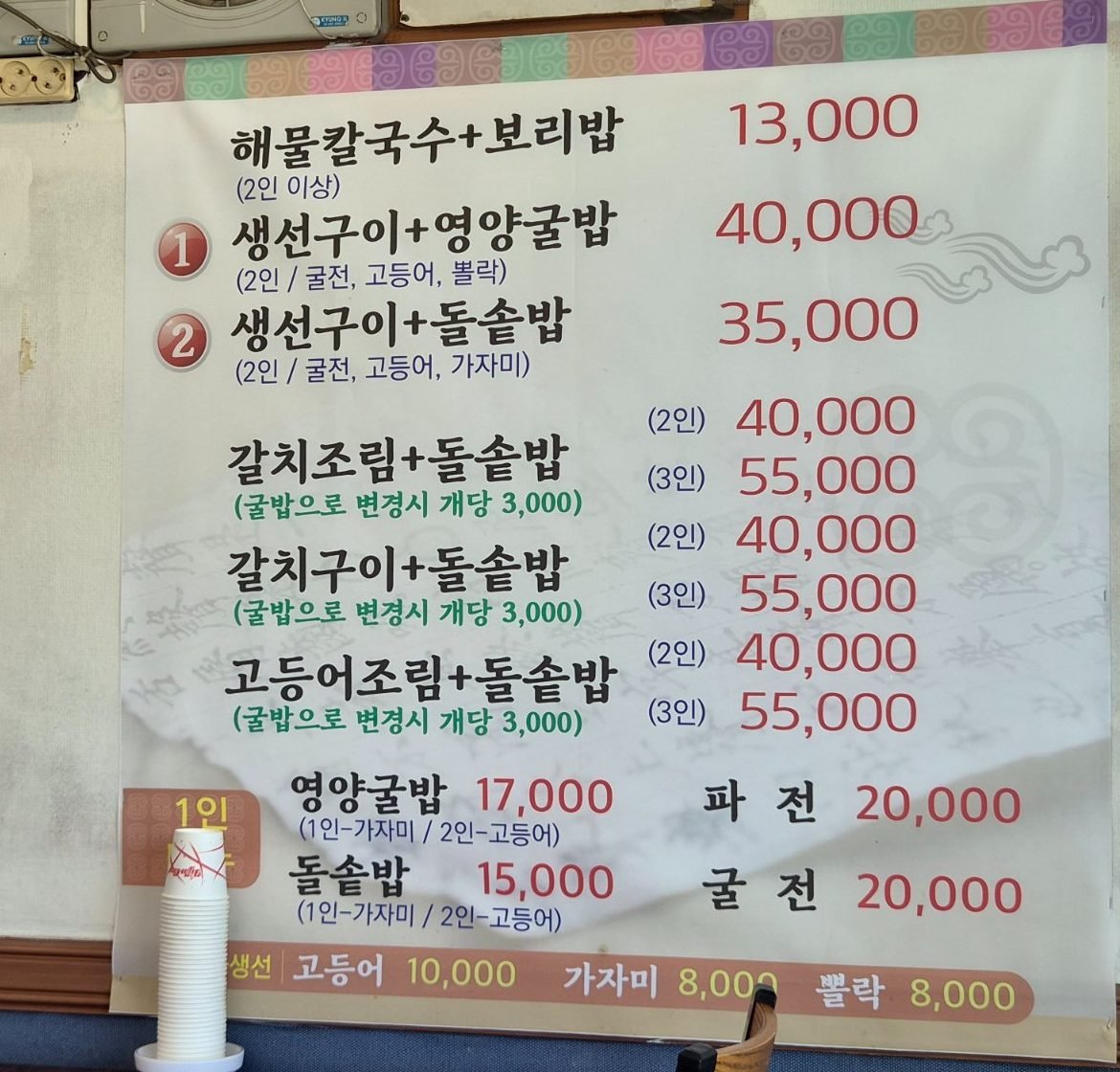
Two things on that board are worth reading twice. The small print under 영양굴밥 and 돌솥밥 says 1인-가자미 / 2인-고등어, which means the single order comes with flatfish and the two-person order comes with mackerel — a fish is part of the price, not an extra. And the ₩20,000 pancakes: the set lines list 굴전 in brackets alongside the fish, but the oyster pancake we ate came as its own ₩20,000 order. I do not know whether the bracket means the set includes one or just names what is available, so if you want it, point at that line and ask rather than assume.
Can one person eat here?
Yes, and that is unusual enough to be the reason this post exists. Korean restaurants built around a shared set almost always start at two, and a solo traveller off a long flight ends up eating convenience store food instead. Here the ₩15,000 stone pot rice is a full meal — the rice, the fish that comes with it, and the same run of side dishes everyone else at the table gets. Nobody will look at you sideways for sitting alone.
If there are two of you, order set 2 at ₩35,000 rather than set 1. It is the same grilled fish, and the difference is only which rice arrives.
What actually arrives
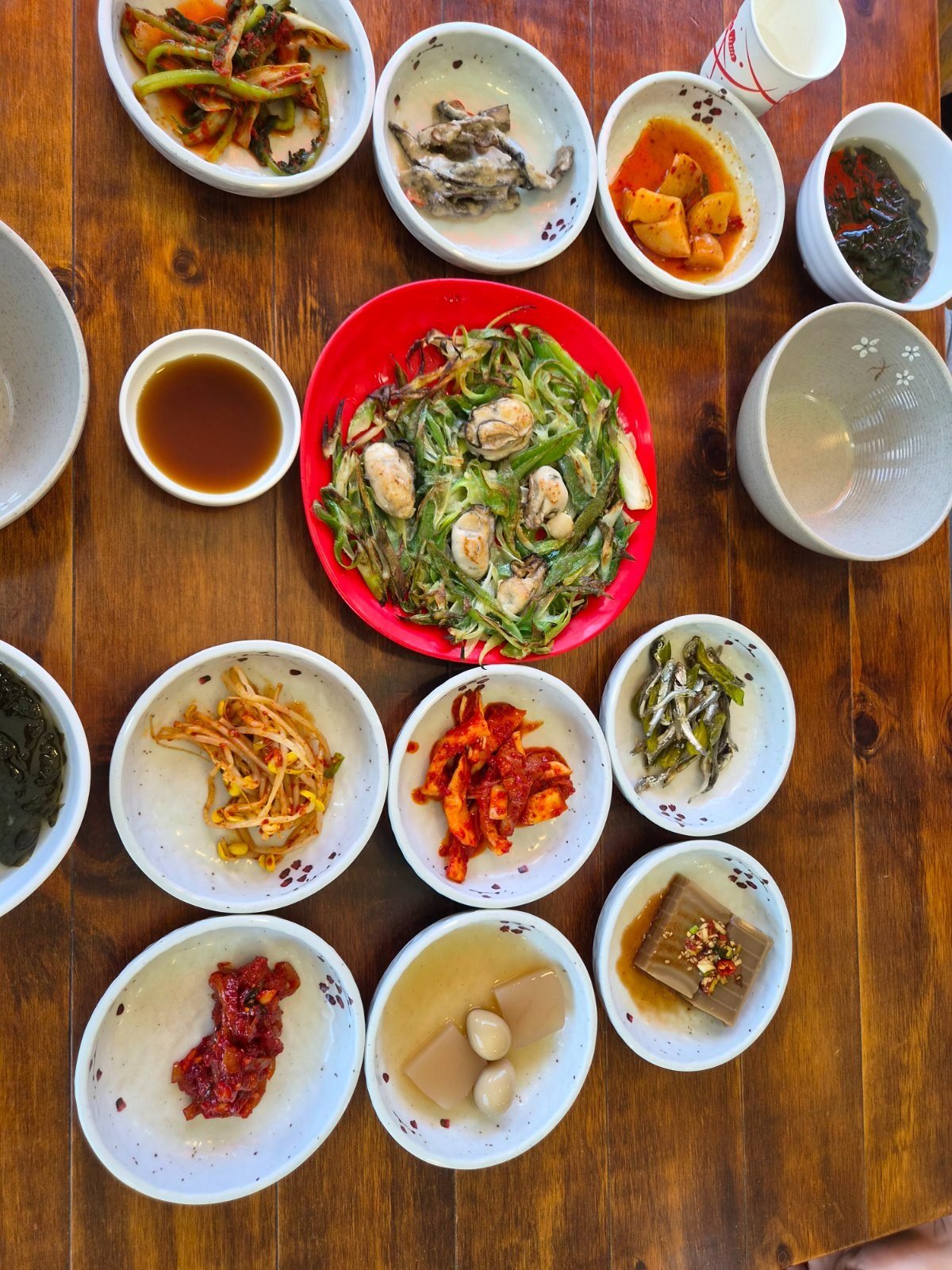
The side dishes land first and there are a lot of them — bean sprouts, salted squid, braised anchovies, acorn jelly, dressed oysters. They are seasoned properly rather than thrown in a bowl, closer to what you would get at a set-menu Korean restaurant in a city than at a beach road place. All of them are free and all of them are refillable.
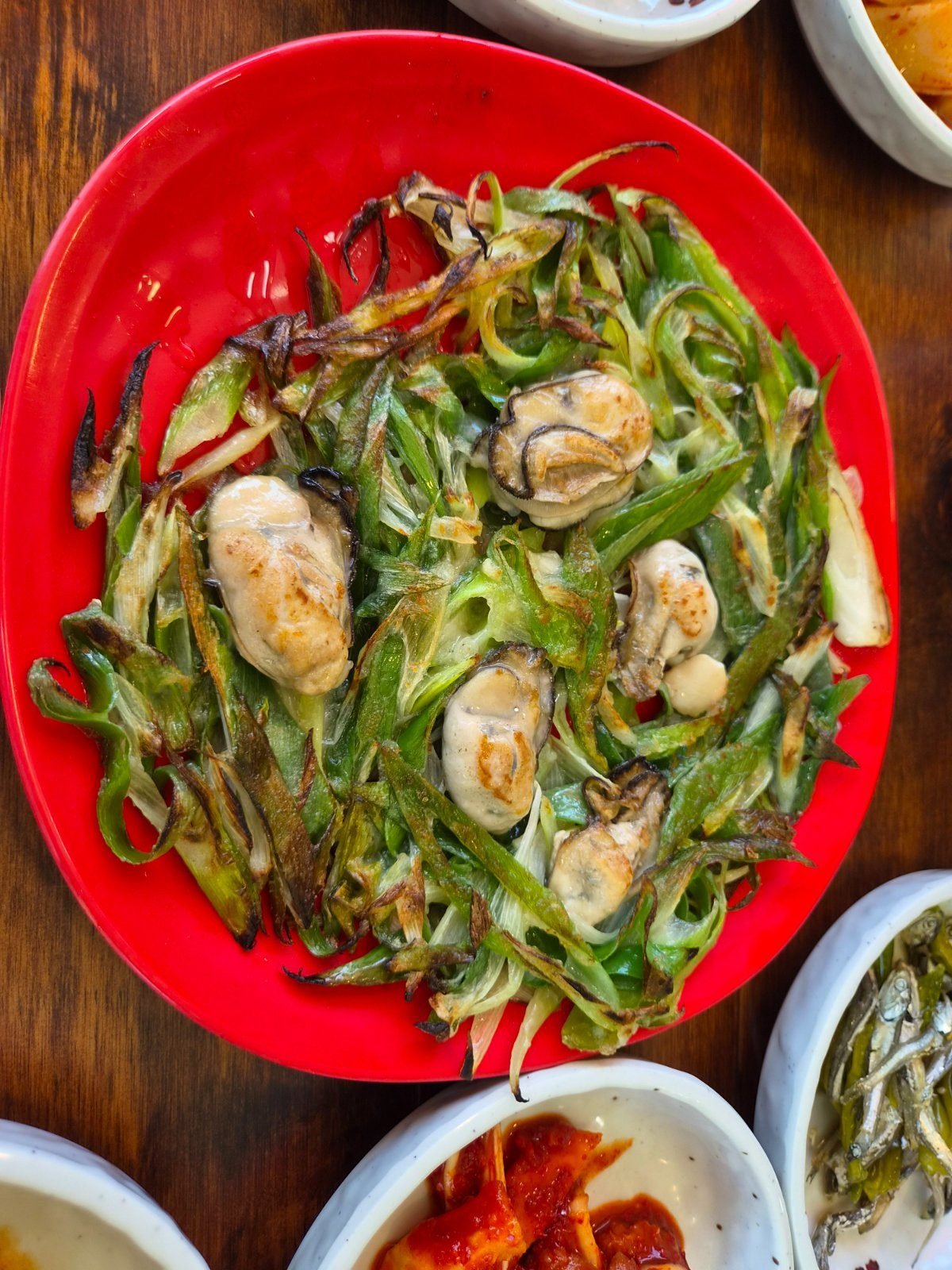
The oyster pancake is the thing I would go back for. It is not the flour-battered version the name suggests. The base is a wide spring onion pancake, and the onion goes sweet where it meets the oil, with the oysters set on top of it. Soy sauce rather than the red vinegar dip works better with the sweetness. The oysters were clean, with none of the metallic edge that puts people off them.
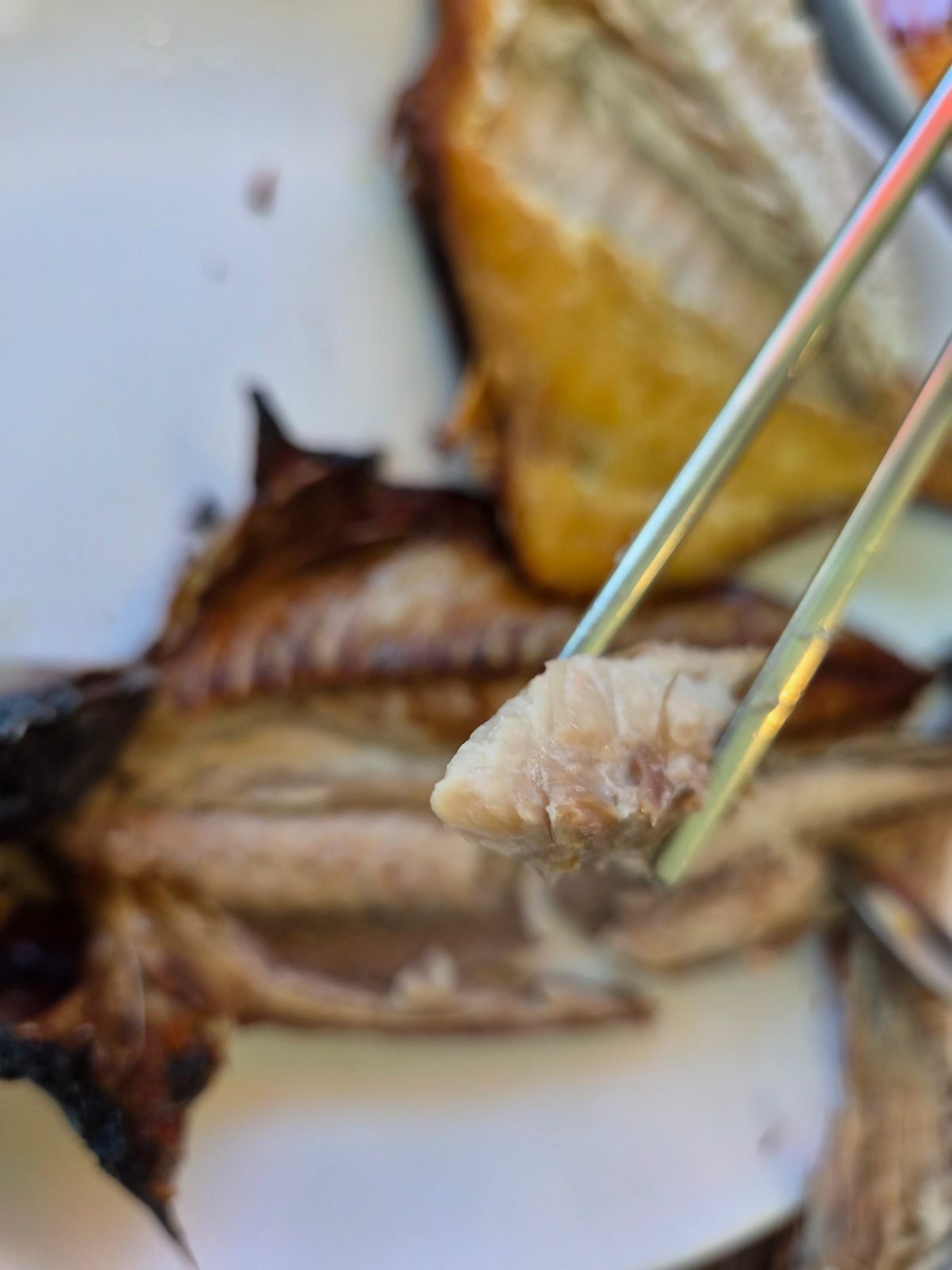
The fish arrives whole, two of them, skin browned and crisp and the flesh underneath still wet. It is grilled without much salt, so what you taste is the fish. The tails and fins are cooked hard and dry, which is deliberate — that is the part people eat when they are worried about a fishy edge, and there is none.
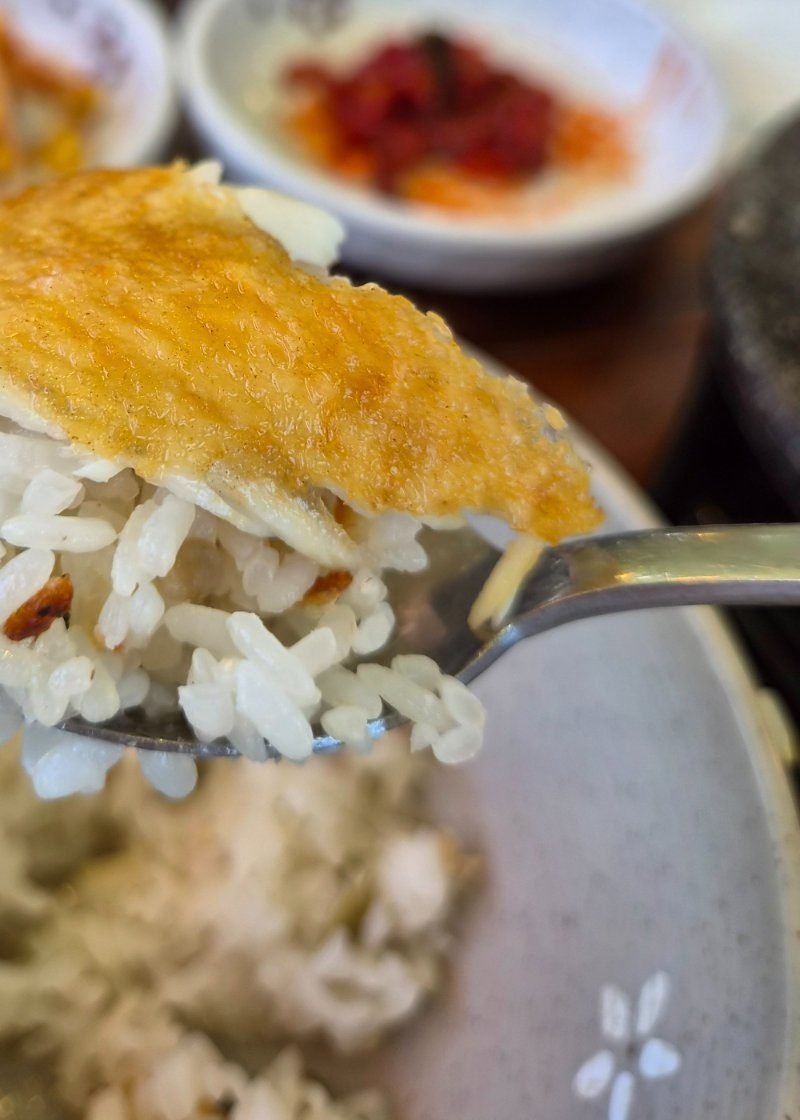
The rice comes in a stone pot with pumpkin seeds scattered over it, and the pot arrives properly hot, which matters for what happens at the end. Move the rice out into your bowl and a browned crust is left stuck to the bottom. Pour water in, leave it a few minutes, and that crust becomes nurungji — a loose, nutty rice porridge you drink at the end of the meal. It is the part of the meal you keep eating after you are full, and it is included.
How far is it from the terminals?
Closer than most people expect, because the road out of Terminal 1 towards the west coast beaches is short and empty. Terminal 2 is a different story, and this is the split English guides never make — they quote one number for both terminals.
| From | Taxi | Fare | Bus |
|---|---|---|---|
| Terminal 1 | about 12 min | ₩9,000 | 20–30 min, ₩1,200–1,900 |
| Terminal 2 | about 20 min | ₩13,800 | 30–40 min, change at Terminal 1 |
| Unseo Station | about 11 min | ₩12,700 | — |
From Terminal 1 the buses leave from stop 7 on the third floor. The 306 runs about fifteen minutes to the 무의도입구 stop, then it is a three-minute walk; the 영종8 and the 무의1 take a little over twenty minutes to 용유역 and leave you a minute away. Those are riding times. Buses on this island are spread far apart and the wait at the stop can be longer than the ride, so open Naver Map and check the next departure before you commit to one. If the next bus is more than fifteen minutes out, take the taxi — at ₩9,000 split between two people it is not worth the gamble. You will want a T-money card for the bus fare either way.
From Terminal 2 there is no direct bus. You ride the airport train one stop to Terminal 1, six minutes, then pick up the same buses. A taxi is the sane choice from T2.
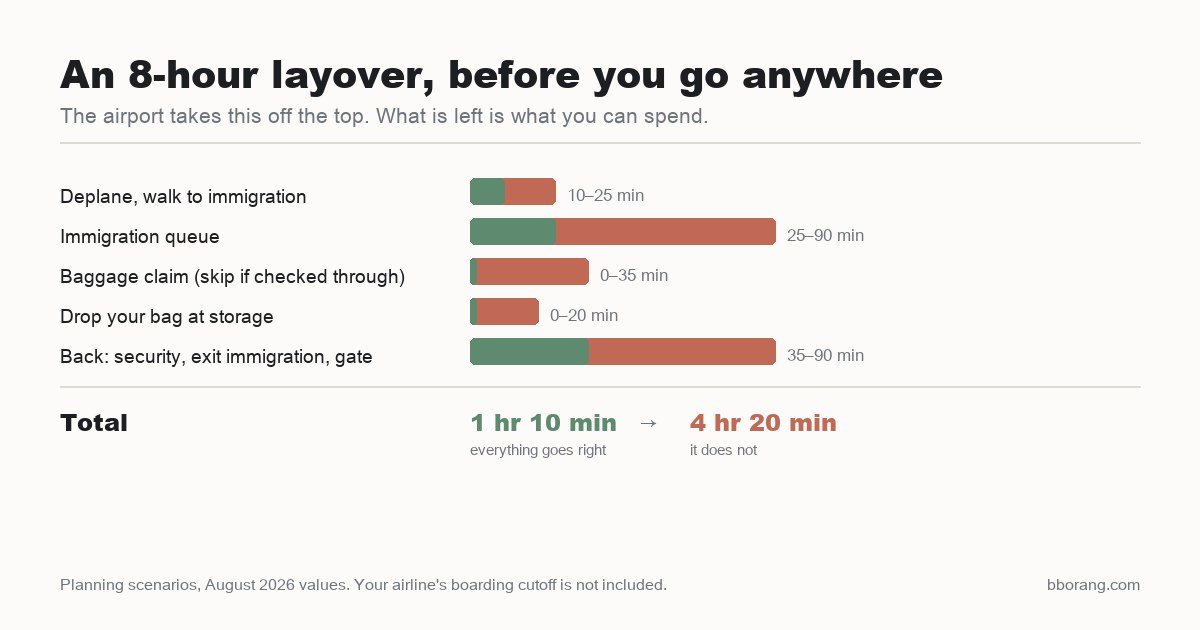
Take a taxi both ways and you are out of the terminal for roughly an hour and a half including the meal. Add the arrival queue on top of that — the foreign passport line at Incheon is the number that decides everything, and it has run past an hour and twenty at summer peak. That is why this belongs in a seven-hour layover rather than a five-hour one. Leave the suitcase behind; the terminal storage counters are cheaper than dragging a bag into a restaurant you will be sitting in for an hour.
The beach is worth knowing about if you have the time, because it is on this same road. Masian Beach and its mudflats are a few minutes further along, so a meal here and an hour on the sand is one taxi trip, not two.
Hours, and the Monday problem
Naver Map lists it as open 08:00 to 20:00 with last orders at 19:30, and closed every Monday. There is no break time — the kitchen runs straight through the afternoon, which is not true of most Korean restaurants and is the single most common way a layover meal plan falls apart.
The 8am opening is the other useful thing. It is the same hour the sundaeguk house in Unseo starts serving, so an early arrival has a real choice rather than a chain café. If you need to eat before eight, the soup house that opens at 6am is the one to aim at instead.
Those hours come from the listing rather than from a sign I photographed, and small restaurants here change them without updating anything. Check on the day before you get in a taxi.
Ordering without Korean
There is no English menu that I know of. The board photograph above is the workaround — the prices in red are the anchor, and pointing at a line on a wall menu is an entirely normal way to order in Korea. The mains are not spicy — the fish is grilled plain and the rice is rice. A couple of the side dishes come out red; leave those in their bowls if you would rather not.
Cards work, foreign ones included. There is no tip and no service charge. Water, cutlery and side dish refills are self-service at most places like this, and refills are free. The listing also notes wifi and a car park.
Copy these into Naver Map rather than typing the romanised name, which will not find it:
- Restaurant: 이리오너라
- Address: 인천 영종구 마시란로 19 1층
- Show a driver: 마시란로 19
For finding it on a map before you fly, the Google pin for Irionora is accurate. For directions and same-day hours, use Naver Map — Google will not route you around Korea.
Worth it?
For two people with a long layover, yes. You get a whole grilled fish each, a table of side dishes that were clearly cooked by somebody who cares, and the nurungji at the end, for ₩17,500 a head. That is a better meal than the same money buys inside the terminal.
Skip it if you do not eat fish — the sets are built around it and the kalguksu, the one non-fish main, needs two people. Skip it if you are counting minutes, because a set meal here is a sit-down hour, not a quick bowl. And skip it on a Monday, when it is shut.
Questions people ask
What is dolsotbap?
Rice cooked and served in a hot stone pot. You eat the rice out of the pot, and the crust left stuck to the bottom is turned into nurungji by pouring in water — a nutty rice porridge you finish the meal with. At Irionora a single stone pot rice is ₩15,000 and comes with a fish.
How far is it from Incheon Airport?
About twelve minutes and ₩9,000 by taxi from Terminal 1, about twenty minutes and ₩13,800 from Terminal 2. By bus from Terminal 1 it is twenty to thirty minutes door to door for ₩1,200 to ₩1,900, depending on which route turns up.
Can I eat here alone?
Yes. The stone pot rice at ₩15,000 and the oyster rice at ₩17,000 are both single orders and both come with a fish and the full run of side dishes. Everything else on the board is priced for two or three.
Is there a break time in the afternoon?
No. The listed hours are 08:00 to 20:00 straight through, last order 19:30. The catch is the weekly closing day instead: it shuts every Monday.
Is there an English menu?
Not that I know of. The menu is one Korean board on the wall with large red prices, and the photograph in this post is enough to order by pointing.
Do I need cash?
No. Cards work, foreign ones included, and there is no tip and no service charge.