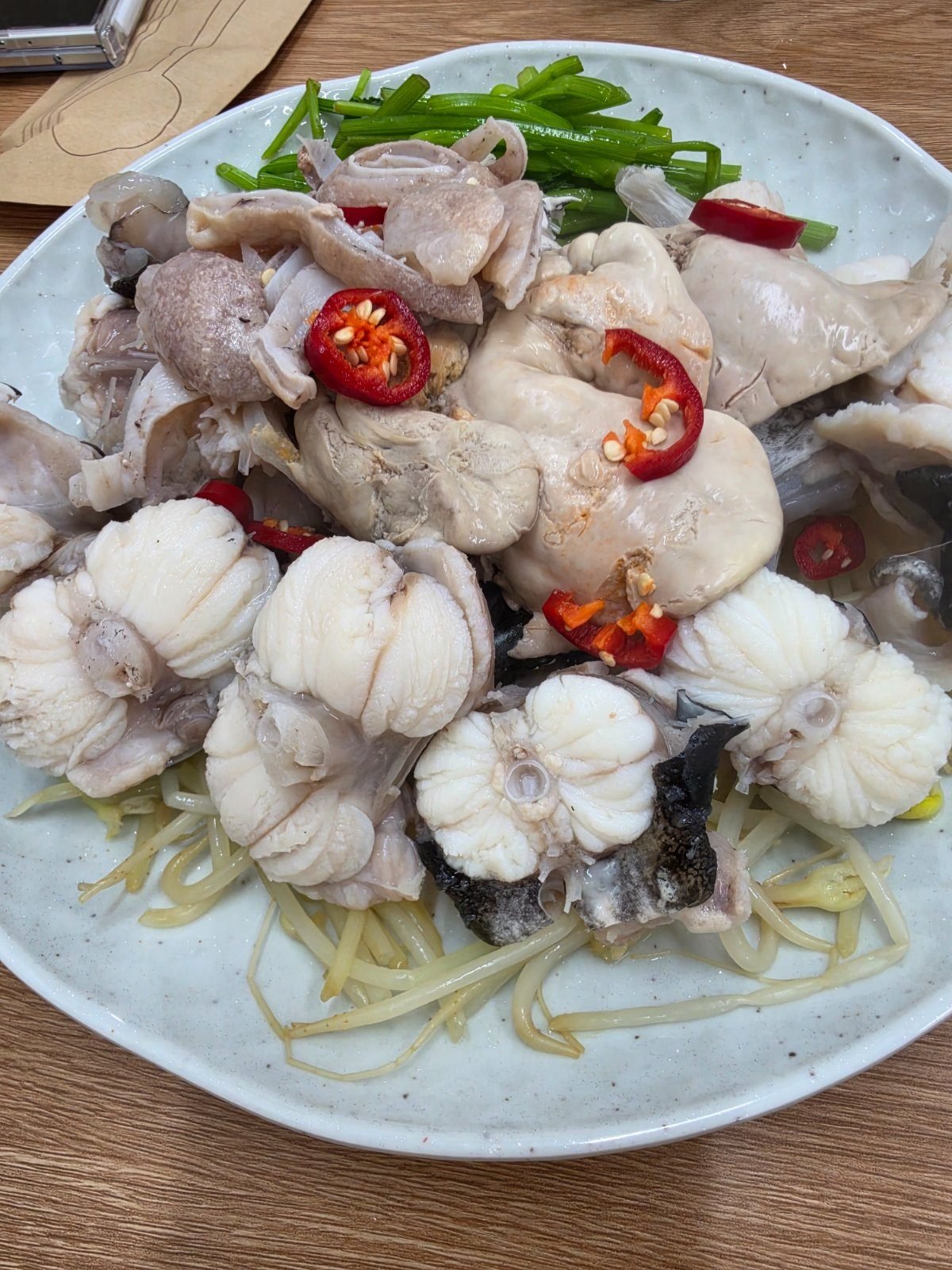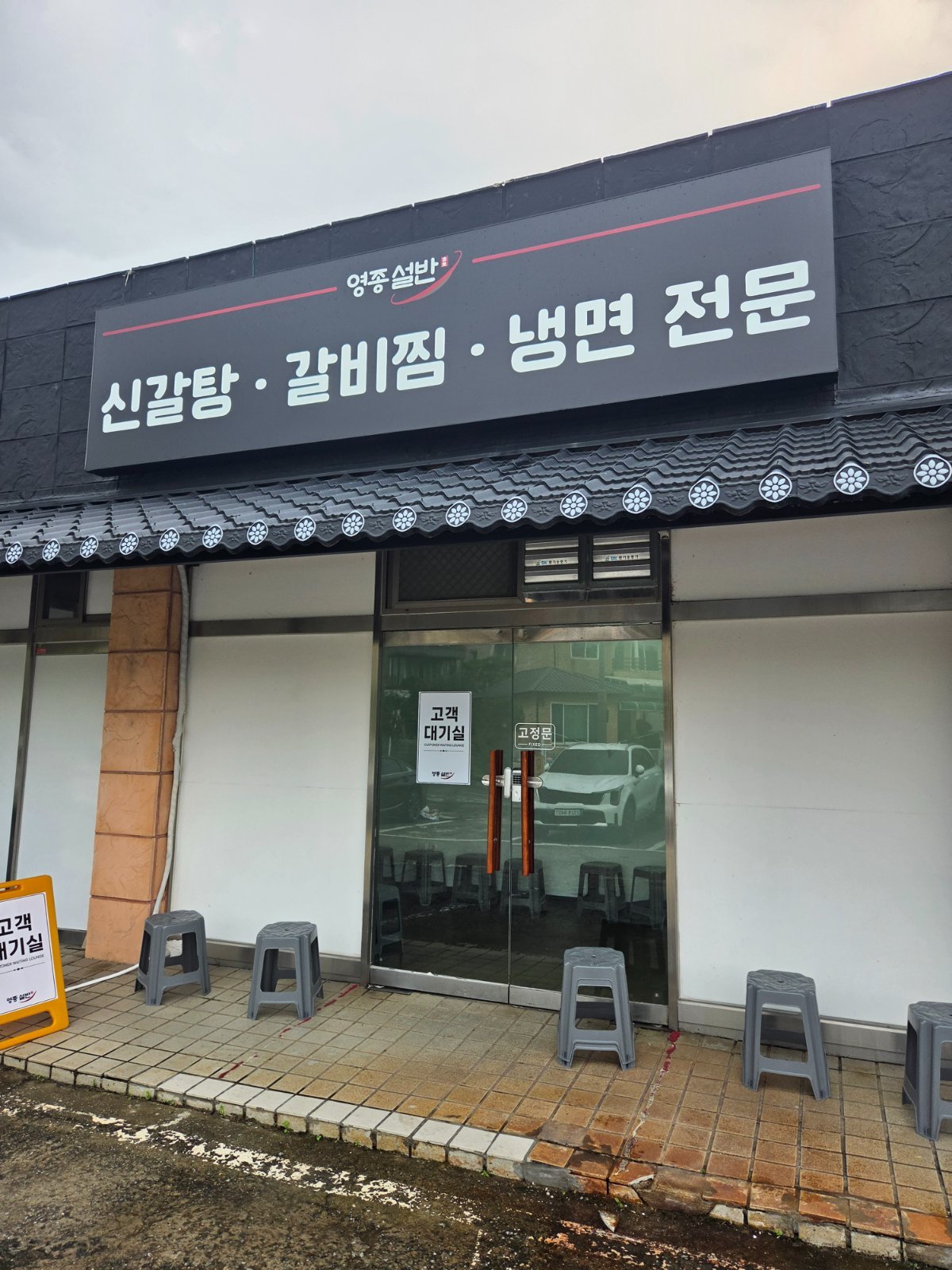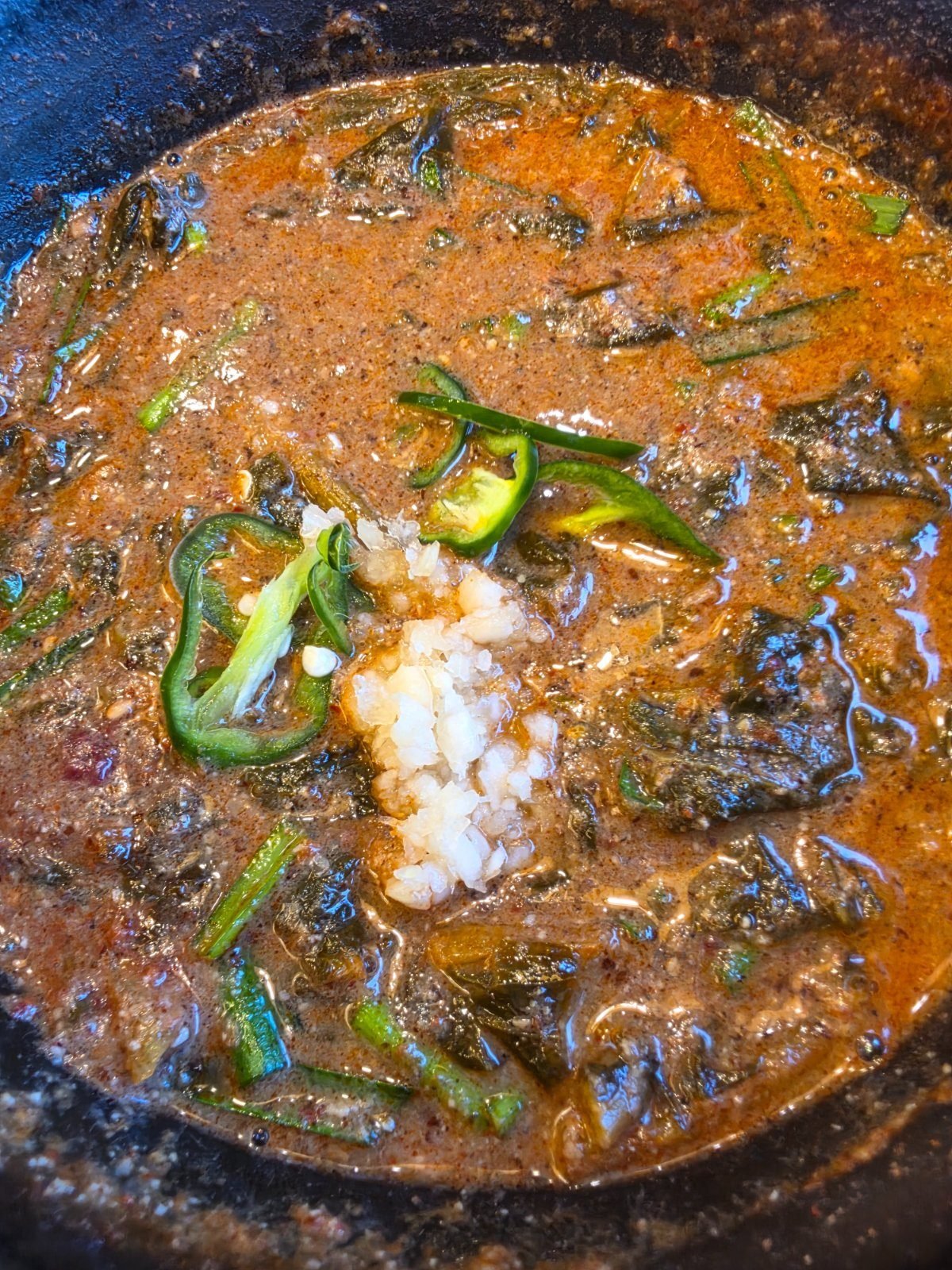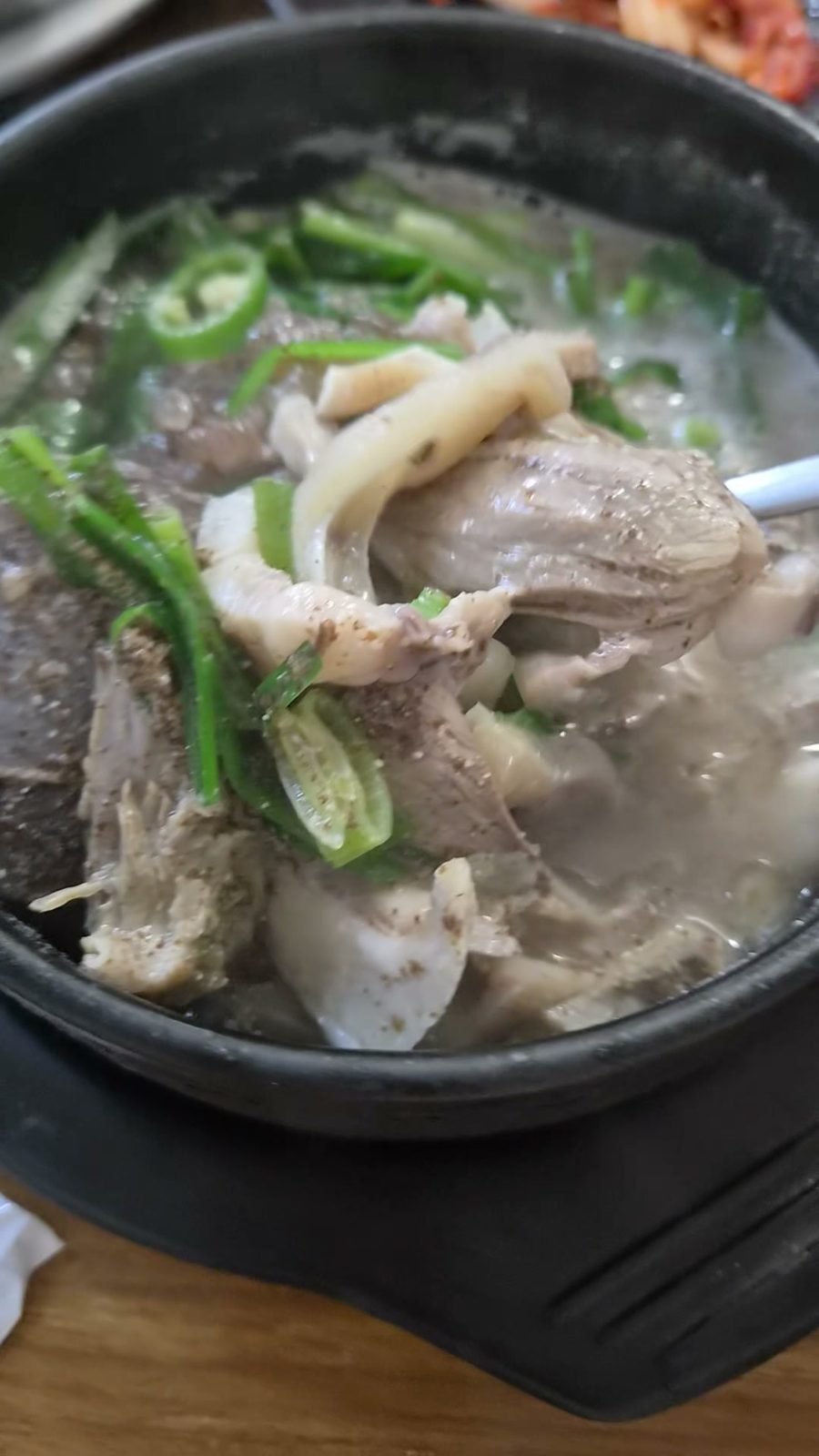
The short answer: sundaeguk is pork blood sausage and head meat in a milky bone broth, and at 돌솥밥순대국 in Unseo the base bowl is ₩10,000. Unseo is two stops from Incheon Airport Terminal 1 on the airport train — eight minutes, ₩1,200. And if the blood sausage is the part you are unsure about, item 5 on the menu board is the same soup with the sausage left out, for the same money. That option is why I would send a first-timer to this restaurant and not to a closer one.
This is the one Korean soup I would not send you into blind. Every price below is read off the menu board on the wall, in August 2026.
What is actually in sundaeguk?
Sundaeguk (순대국) is a pork bone broth with sundae in it. Sundae is a sausage made from pig intestine casing stuffed mostly with glass noodles and pig’s blood, which is why English menus usually call it blood sausage. It is not spicy and it is not sweet. The broth at 돌솥밥순대국 comes out cloudy white, not red — the pot is simmered bones, not chilli.
The other thing floating in the bowl is 머릿고기, head meat, which is the soft sliced pork from around the pig’s head. It tastes like the mild end of pork belly and has a slight gelatin texture. Bones are simmered long enough that the broth reads as savoury and nutty rather than porky, and a heap of chopped green onion goes on top before it reaches the table.
So the honest summary for a first-timer: mild broth, soft pork, and one ingredient — the blood sausage — that some visitors find they do not want. Which brings us to the part nobody tells you.
Can you order sundaeguk without the blood sausage?
Yes, and at this restaurant you do not even have to ask for it as a modification. It is menu item 5, 순대빼고 순대국 — literally “sundaeguk minus the sundae” — and it costs the same ₩10,000 as the standard bowl. You get the broth, the head meat and the rice, without the sausage. Point at the number on the board.
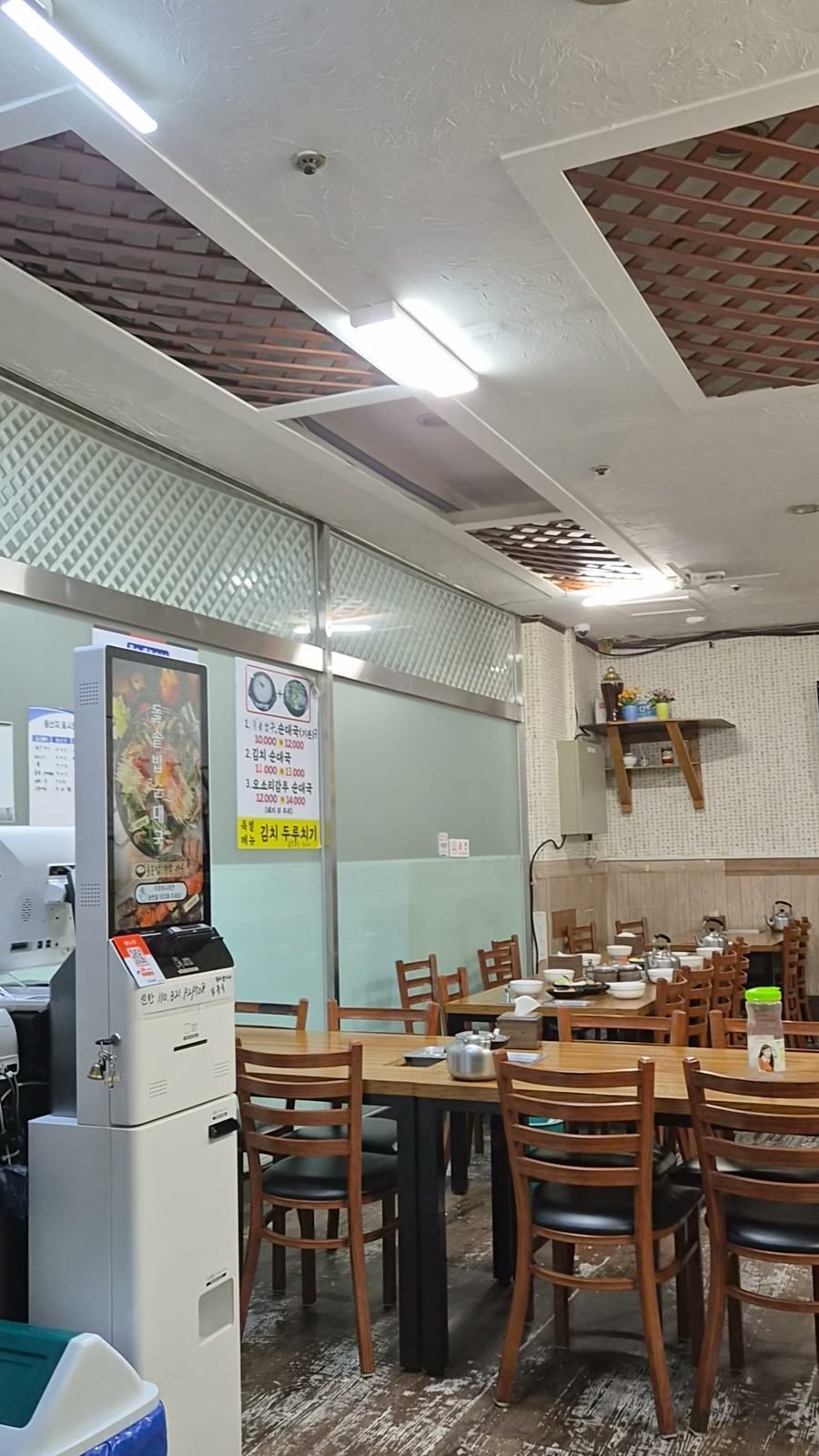
The board splits the same soup six ways, which is unusual even by Korean standards. This is the whole menu, transcribed from the sign in August 2026. 기본 is the standard size and 특 is the large one.
| Menu board | What is in it | 기본 / 특 |
|---|---|---|
| 1. 돌솥밥 순대국 (기본) | The standard bowl: blood sausage and head meat | ₩10,000 / ₩12,000 |
| 2. 김치 순대국 | Same bowl with kimchi cooked into it, so this one is red and sour | ₩11,000 / ₩13,000 |
| 3. 오소리감투 순대국 | Pig’s stomach instead — chewy, no sausage | ₩12,000 / ₩14,000 |
| 4. 순대만 순대국 | Blood sausage only, no head meat | ₩10,000 / ₩12,000 |
| 5. 순대빼고 순대국 | No blood sausage. Broth and head meat only | ₩10,000 / ₩12,000 |
| 6. 곱창만 순대국 | Pork intestine only | ₩10,000 / ₩12,000 |
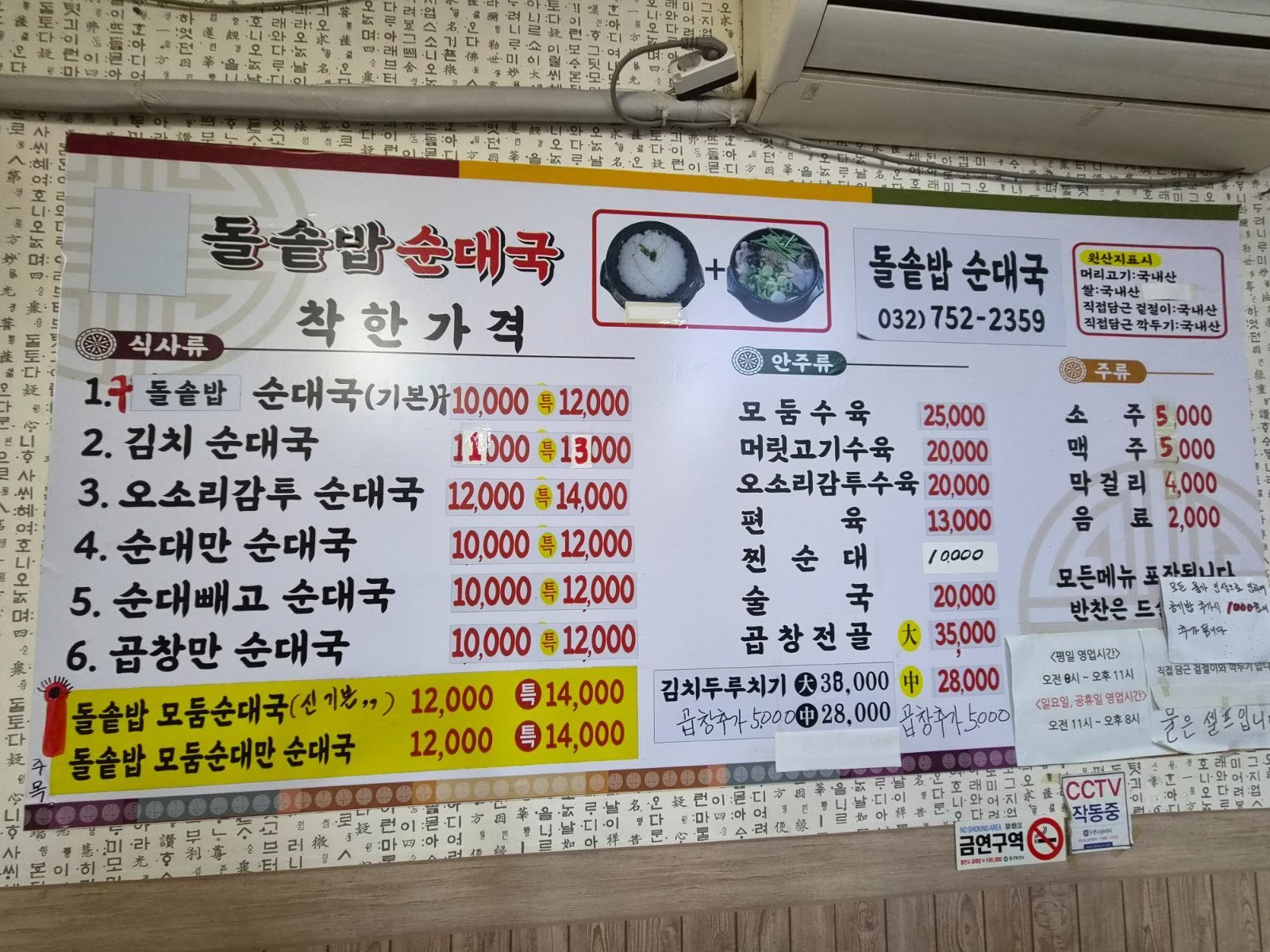
If you want to skip the soup entirely there is a second column of drinking food: 찐순대 steamed blood sausage on its own ₩10,000, 편육 pressed boiled pork ₩13,000, 머릿고기수육 boiled head meat ₩20,000, 모듬수육 mixed boiled pork ₩25,000. The small print on the board lists the head meat, the rice and both house-made kimchis as Korean-grown.
Why does the rice come in a stone pot?
This is the thing that made me go rather than eat sundaeguk somewhere closer to home. Most soup restaurants in Korea hand you a stainless bowl of rice that was cooked hours ago and kept warm. Here the rice arrives in a dolsot, a stone pot, cooked to order. The grains sit loose instead of packing into a lump, and it is hot enough that you can eat it straight off the spoon without dunking it in the soup.
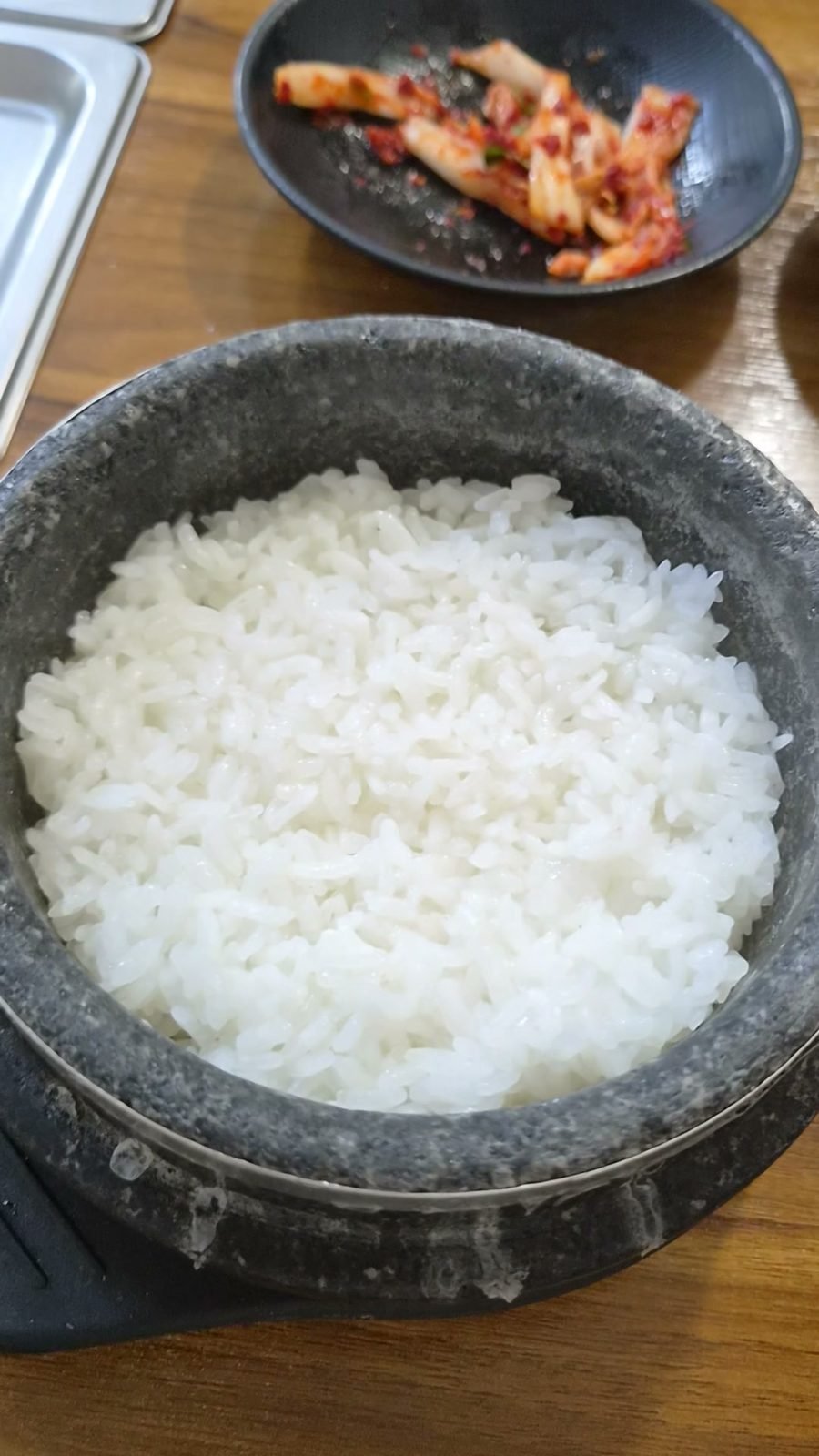
There is a second act to it that most visitors miss. Once you have eaten the rice out, a thin scorched layer is stuck to the bottom of the stone. Pour hot water in, leave it a minute, and scrape — that becomes 숭늉, a toasted rice tea that Koreans drink at the end of a meal. Nobody is going to explain this to you. Alternating spoonfuls of that and the soup is how a ₩10,000 bowl ends up filling.
How do you get there from Incheon Airport?
Take the AREX airport train toward Seoul and get off at Unseo (운서), two stops from Terminal 1 — eight minutes, ₩1,200. From Terminal 2 it is 14 minutes and ₩1,800, because Terminal 2 sits one stop further out. A single-use ticket carries a ₩500 deposit that you get back from the machine at your arrival station; a T-money card is simpler if you already have one.
Out of Unseo Station Exit 1 it is an eight-to-ten minute walk. A taxi from Terminal 1 runs about 14 minutes and ₩12,600, and from Terminal 2 about 13 minutes and ₩11,600 — worth it only if you are dragging a suitcase, and if you are, read what the airport charges to hold your bags before you decide. The train is cheaper than the taxi by a factor of ten and only a few minutes slower.
Paste this into Naver Map, which is the app that actually works for directions and opening hours in Korea:
돌솥밥순대국
인천 영종구 신도시남로141번길 5-12 111호
(운서동, 화평에어빌)
Show the Korean line to a taxi driver rather than the romanised name. Drivers here read 화평에어빌, not “Hwapyeong Air Vill”.
How much layover time does this actually take?
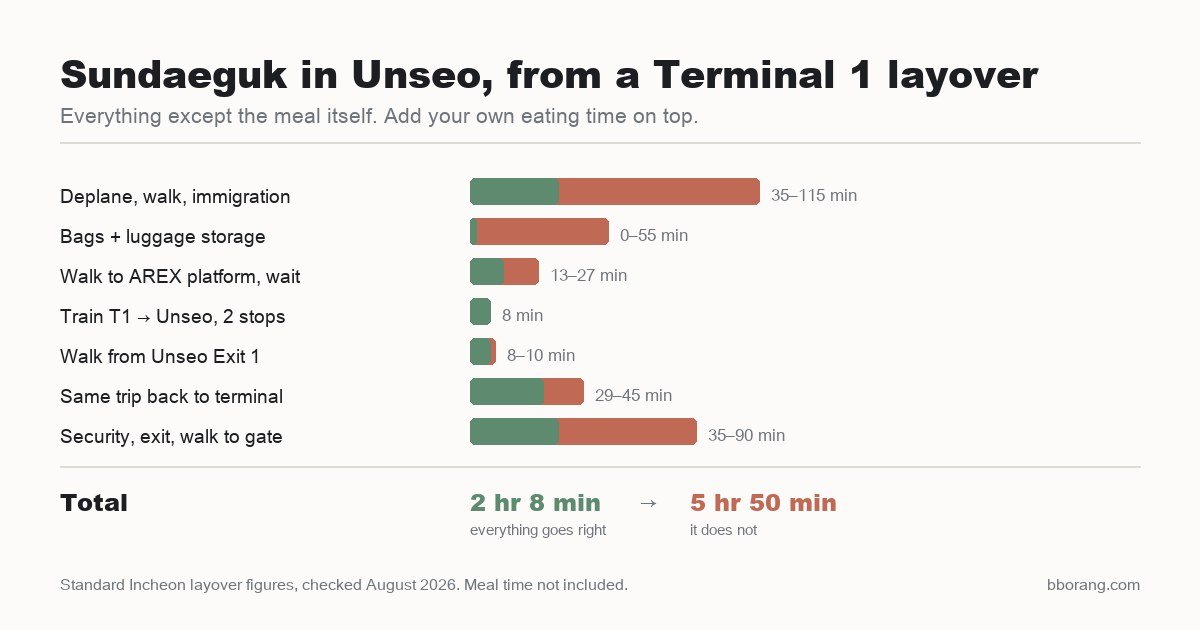
Below is the same arithmetic I use for every restaurant on this island, applied to this one. It covers everything except sitting and eating, because I cannot know how long you will take over a bowl of soup.
| Stage | Good day | Bad day |
|---|---|---|
| Deplane, walk, immigration queue | 35 min | 115 min |
| Baggage claim and luggage storage | 0 | 55 min |
| Walk to the AREX platform, wait for a train | 13 min | 27 min |
| Train, Terminal 1 to Unseo | 8 min | 8 min |
| Unseo Exit 1 to the restaurant on foot | 8 min | 10 min |
| The same trip back to the terminal | 29 min | 45 min |
| Security, exit immigration, walk to the gate | 35 min | 90 min |
| Total, meal not included | 2 hr 8 min | 5 hr 50 min |
My rule for Unseo has not changed: five hours on the ground is the floor, and I would want six. Under five hours, eat inside the terminal. The full argument for and against leaving the airport at all sits in the honest time math on leaving Incheon Airport during a layover, and if you have exactly six hours, see what a six-hour layover at Incheon actually fits.
One timing trap specific to this restaurant. The weekday hours posted on the wall run 8am to 11pm with no break time listed, which is generous — but the last train from Terminal 1 toward Unseo leaves at 23:56, and the kitchen has already closed by then. On Sundays and public holidays it is 11am to 8pm, a much shorter window. Check the day you go.
What should you know before you walk in?
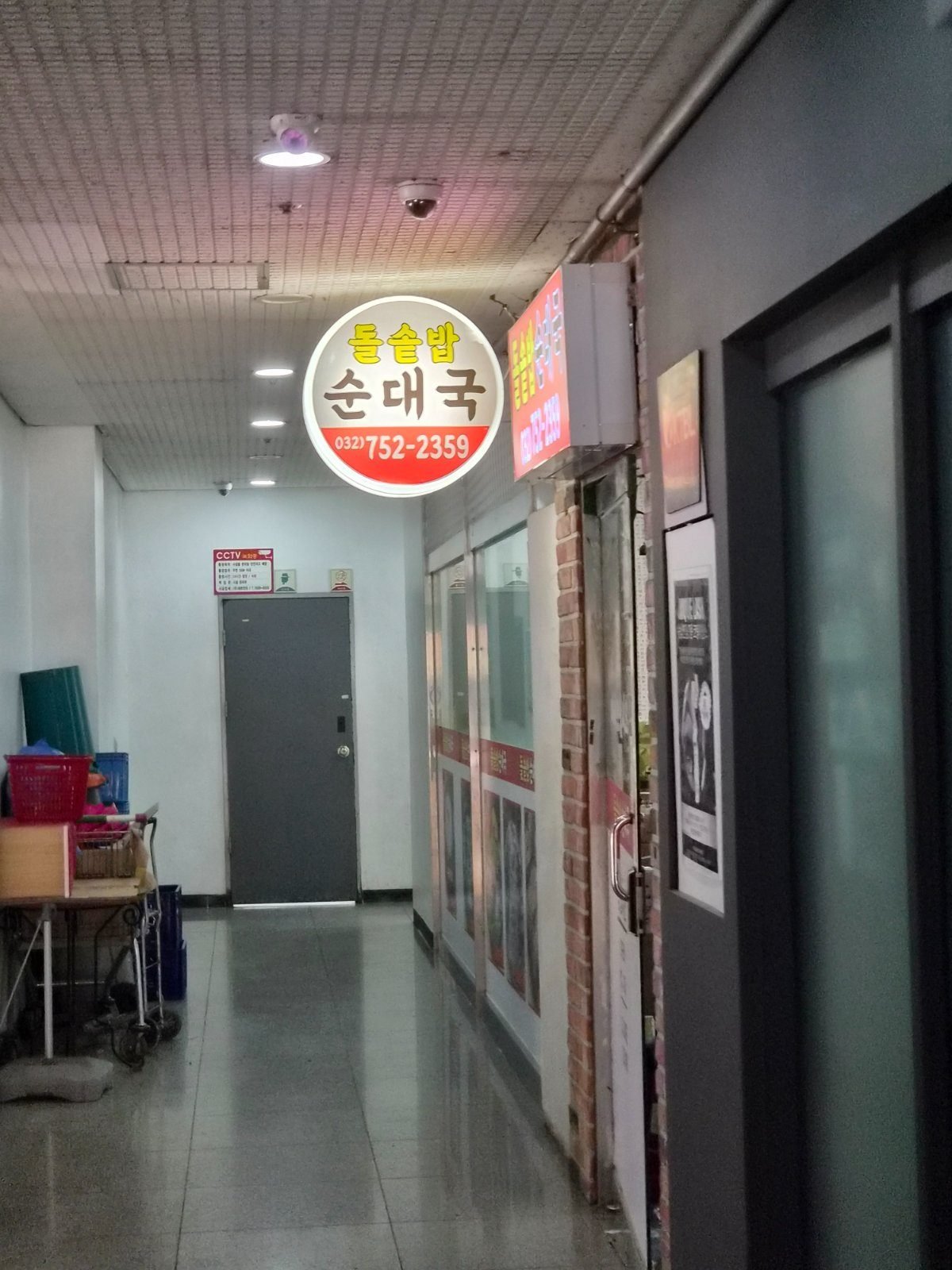
The address is harder than the food. The restaurant is not on the street — it is inside a residential-commercial building called 화평에어빌, down an interior corridor, and the sign only becomes visible once you are already in the hallway. If you are standing outside thinking you have the wrong place, you probably have the right place and the wrong door.
Inside it is a working neighbourhood diner. The dining room is plain wooden tables and chairs, so you will not be sitting on the floor or taking your shoes off. It is not large and it is not styled. That cuts both ways — it is the sort of room that survives on regulars rather than on anyone passing through, which is generally a good sign about the soup, and it is also not a room set up for foreign visitors.
The side dishes work in two directions and this confuses people. The 깍두기 — cubed radish kimchi, fully fermented and sour — is brought to your table by the staff. The cabbage kimchi is not: it sits in a tub with tongs and you go and take as much as you want. Both are made in house, and both are free and refillable, as side dishes are everywhere in Korea.
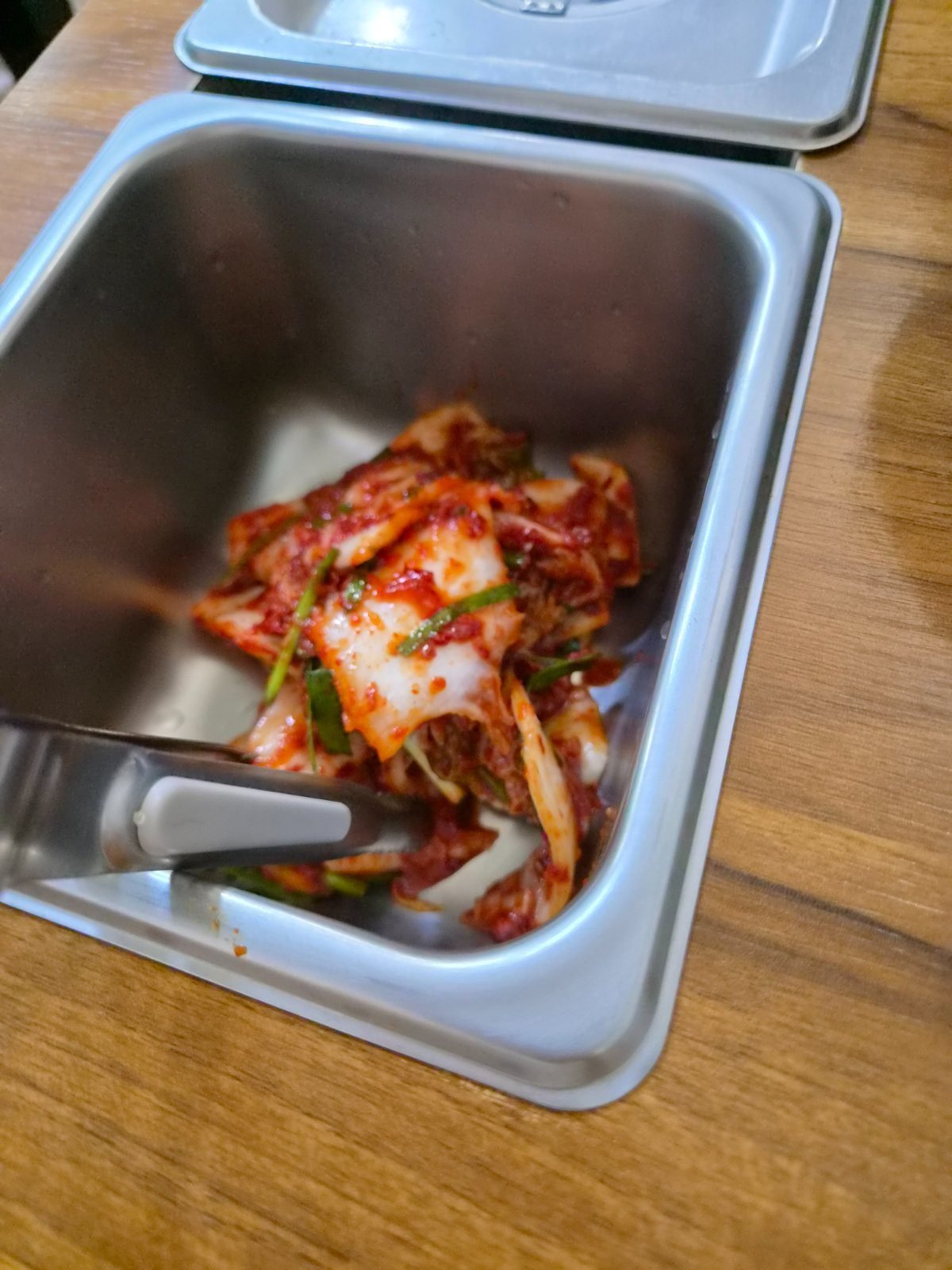
Now the criticism. That cabbage kimchi is made fresh rather than aged, which makes it crisp, but the seasoning is on the strong side — enough that some people will read it as plain salty. Cut it small and eat it with a spoonful of broth and it lands properly. The kkakdugi, being the sour aged one, was the one I kept going back to.
Is it worth it, or should you eat somewhere else in Unseo?
Come here if you specifically want to eat sundaeguk, or if you want a stone pot of rice cooked to order for ₩10,000 — that is a genuinely good price in 2026, when a plain bowl of sundaeguk in Seoul is usually more. I ate alone and it was a comfortable room to do that in, which is true of Korean soup restaurants generally.
Do not come here if it is your first Korean meal ever and you are nervous about it. Pork offal and blood sausage is a lot to open with, even with the get-out on item 5. Unseo has two better first meals, both closer to the station than this one. If you want the mildest possible bowl, there is a clear beef gomtang restaurant a ten-minute walk from Unseo Station with a photo menu by the door — nothing in that bowl needs explaining. If you are landing before dawn, the Chinese restaurant two minutes from Unseo Station is open 24 hours and serves single portions of sweet and sour pork.
And if you have been in Korea a week already and have been meaning to try sundaeguk but did not want to guess at the menu, this is a good place to stop guessing.
Frequently asked questions
Is sundaeguk spicy?
The standard bowl is not. It is a white pork bone broth with no chilli paste in it. The one to avoid if you do not want heat is item 2, 김치 순대국, where kimchi is cooked into the soup and turns it red and sour.
Does the restaurant have an English menu?
The board on the wall is in Korean. Every soup is numbered one to six with the price printed beside it, so pointing at a number works without a word of Korean. The table further up this page is that board translated, in the same order.
How much does a bowl of sundaeguk cost near Incheon Airport?
At 돌솥밥순대국 in Unseo the standard bowl is ₩10,000 and the large is ₩12,000, as of August 2026. That includes the stone pot of rice and unlimited side dishes, and there is no tipping and no service charge in Korea.
Can I pay by card?
Yes. Cards are accepted essentially everywhere in Korea, including small neighbourhood restaurants like this one, and foreign Visa and Mastercard are normally fine. You do not need to find an ATM before you leave the airport.
Is five hours enough to eat here on a layover?
It is the minimum, not the comfortable number. On a good day the round trip and all the airport processing runs about two hours and ten minutes without the meal; on a bad immigration day it approaches six. With five hours you should be watching the clock the whole time. With six you can relax.