Short answer: stay inside the airport on a layover under five hours. With more time, consider this meal only if the time left after arrival formalities covers the outing and your airline’s check-in and boarding deadlines.
Every layover guide for Incheon sends you to Seoul. That’s a sixty-minute train ride each way, which eats two hours of your layover before you’ve done anything at all. What nobody mentions is that there is a whole island around the airport, and the second train stop out of Terminal 1 drops you in a normal Korean neighbourhood where normal Korean people eat.
I live here. This is where I’d send you for one proper bowl of Korean food and a train back.
The time math
This is a planning example, not a worst-case limit. It does not separately account for deplaning, every walk and wait, collecting stored bags, or reaching the gate before boarding closes.
| Step | Time |
|---|---|
| Immigration (arrivals) | 25–90 min |
| Store your bags | 10 min |
| Terminal 1 → Unseo Station (AREX) | 8 min |
| Walk to the restaurant | 10 min |
| Sit down, eat, pay | 40 min |
| Walk back + train to terminal | 20 min |
| Security + departure immigration | 60 min |
| Total | 2 h 53 m – 3 h 58 m |
The table totals do not make five hours a guaranteed minimum. Work backwards from your airline’s deadlines and add time for the steps omitted above. For a Terminal 2 departure, use the actual route to T2 rather than adding a fixed fifteen minutes to every leg.
About that immigration number
This is the single biggest thing people get wrong about Incheon.
ICAO recommends airports clear arriving passengers within 45 minutes. Incheon regularly misses that for foreign nationals. In peak summer 2026, reported waits for the foreigner queue ran past 1 hour 20 minutes, and during the February holiday period they reached 1 hour 54 minutes. Korean nationals go through in minutes; the foreigner line is a different experience entirely.
So don’t budget thirty minutes because a blog told you Incheon is efficient. Budget an hour and be pleasantly surprised.
Before anything else, check that you can even enter. Leaving the transit area means clearing immigration as an arriving visitor — visa-free entry, K-ETA or a visa, depending on your passport. Confirm your own situation before you plan around this.
Deal with your luggage first
If your bags are not checked through, decide whether to store them before leaving the terminal and allow time to retrieve them on the way back.
This guide does not have a verified location for a self-service coin locker in either terminal. Do not plan around finding one; use the staffed luggage-storage guide and confirm the counter’s hours and price for your bag.
Staffed counters are the safer bet for a layover, and both terminals have one open 24 hours: ZIMCARRY on the third floor of Terminal 1, near check-in counter N, and Hanjin on the third floor of Terminal 2, west side. Hanjin charges ₩5,000 for up to four hours for a bag under 180 cm, or ₩5,000–7,000 for a full day depending on size. Four hours is the number that matters here — you’re not storing overnight.
Getting there
Take the AREX all-stop train — not the Express, which skips this station.
| From | Time | Adult transport-card fare |
|---|---|---|
| Terminal 1 | 7–8 min | ₩1,200 |
| Terminal 2 | 14–15 min | ₩1,800 |
The fares above are for an adult using a transport card. Under AREX’s passenger terms, Article 15 (checked 2 October 2026), an adult single-journey ticket adds ₩100 to the transport-card fare plus a refundable ₩500 deposit. Do not treat the listed card fare as the amount paid at the ticket machine. Unseo is two stops from Terminal 1 towards Seoul; the airport cargo terminal comes first. From Unseo station it is about a ten-minute walk.
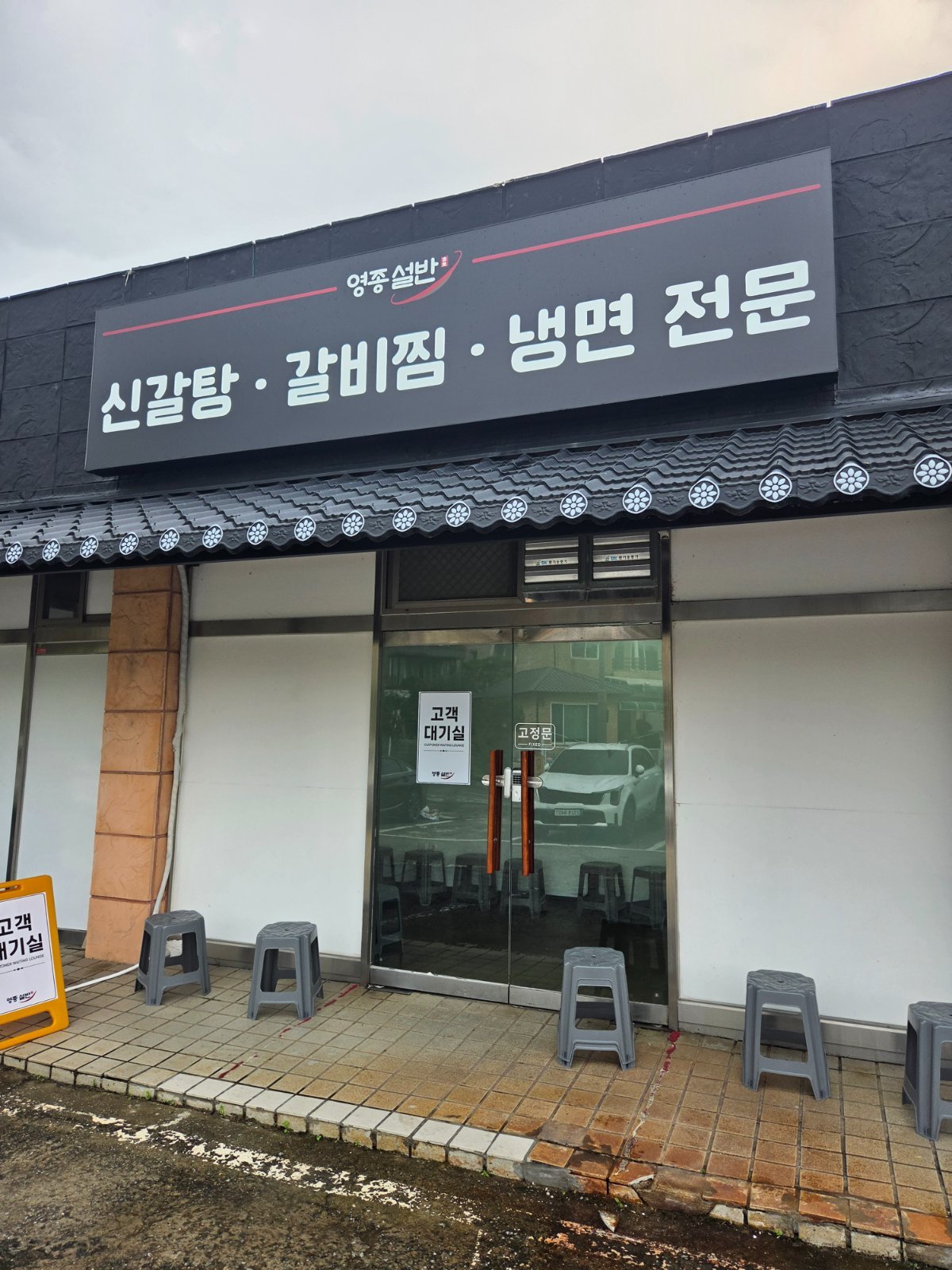
Address: 인천광역시 영종구 화랑목로100번길 54, 101호
54, Hwarangmok-ro 100beon-gil, Yeongjong-gu, Incheon — Unit 101
Show the Korean line to a taxi driver if you’d rather not walk.
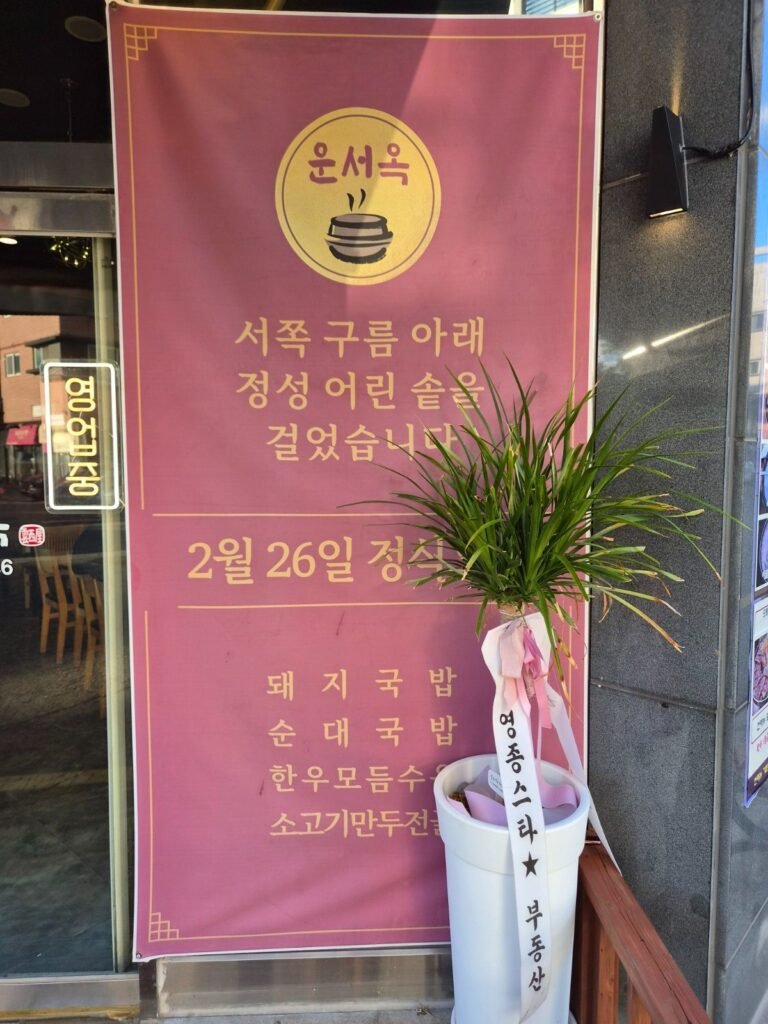
What the place actually is
Unseook (운서옥) is a gukbap house — Korean rice-and-soup. It opened recently, so the room is clean and bright, the tables are well spaced, and nobody blinks at someone eating alone.
That last part matters more than it sounds. Plenty of Korean restaurants are built around groups sharing grilled meat, and a solo traveller ends up awkward. Not here. One bowl, one person, in and out.
The reason I’d send a first-time visitor here specifically is that it serves both ends of the Korean soup spectrum under one roof.
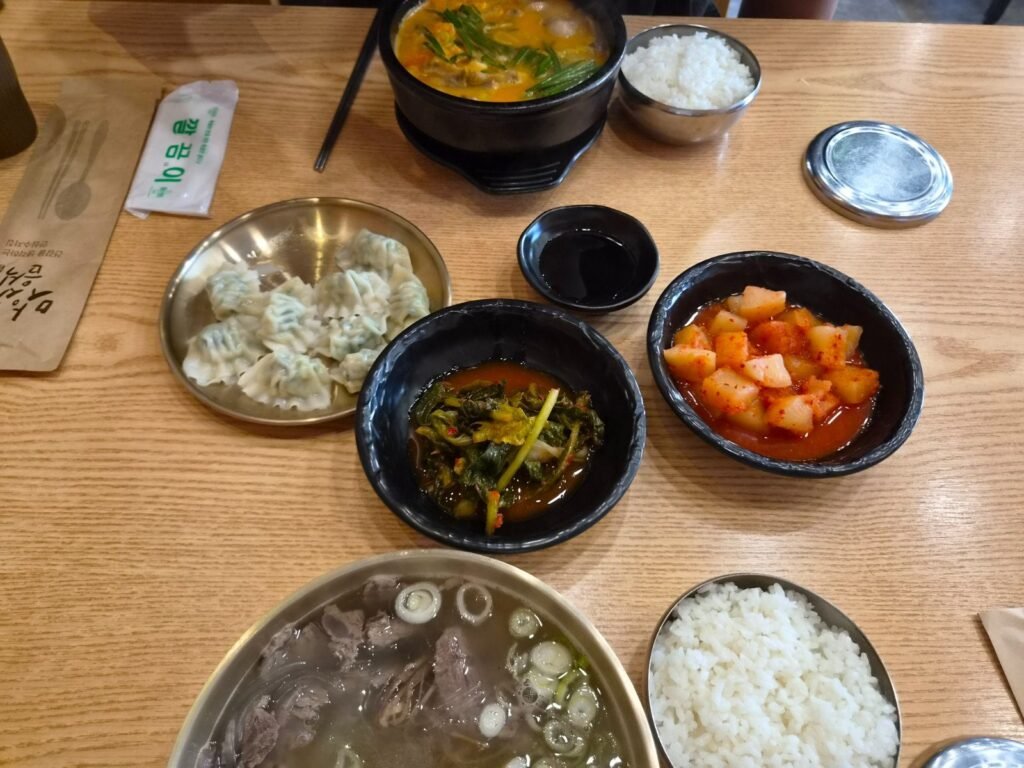
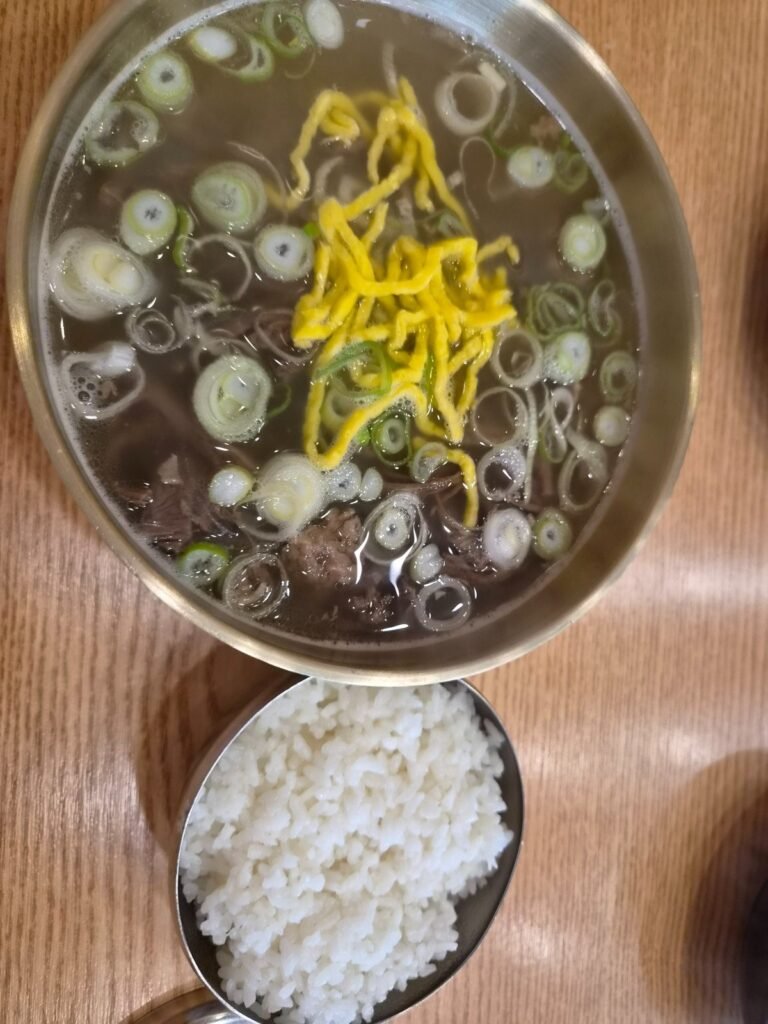
If you want mild: gomtang — a clear beef broth, no chilli at all. It arrives pale and clean-looking with egg garnish and spring onion on top. The beef comes both hand-torn along the grain and thin-sliced, tender enough that you barely chew. This is what Koreans eat when their stomach needs looking after. If you’ve been told Korean food is all spicy, this is the counter-argument.
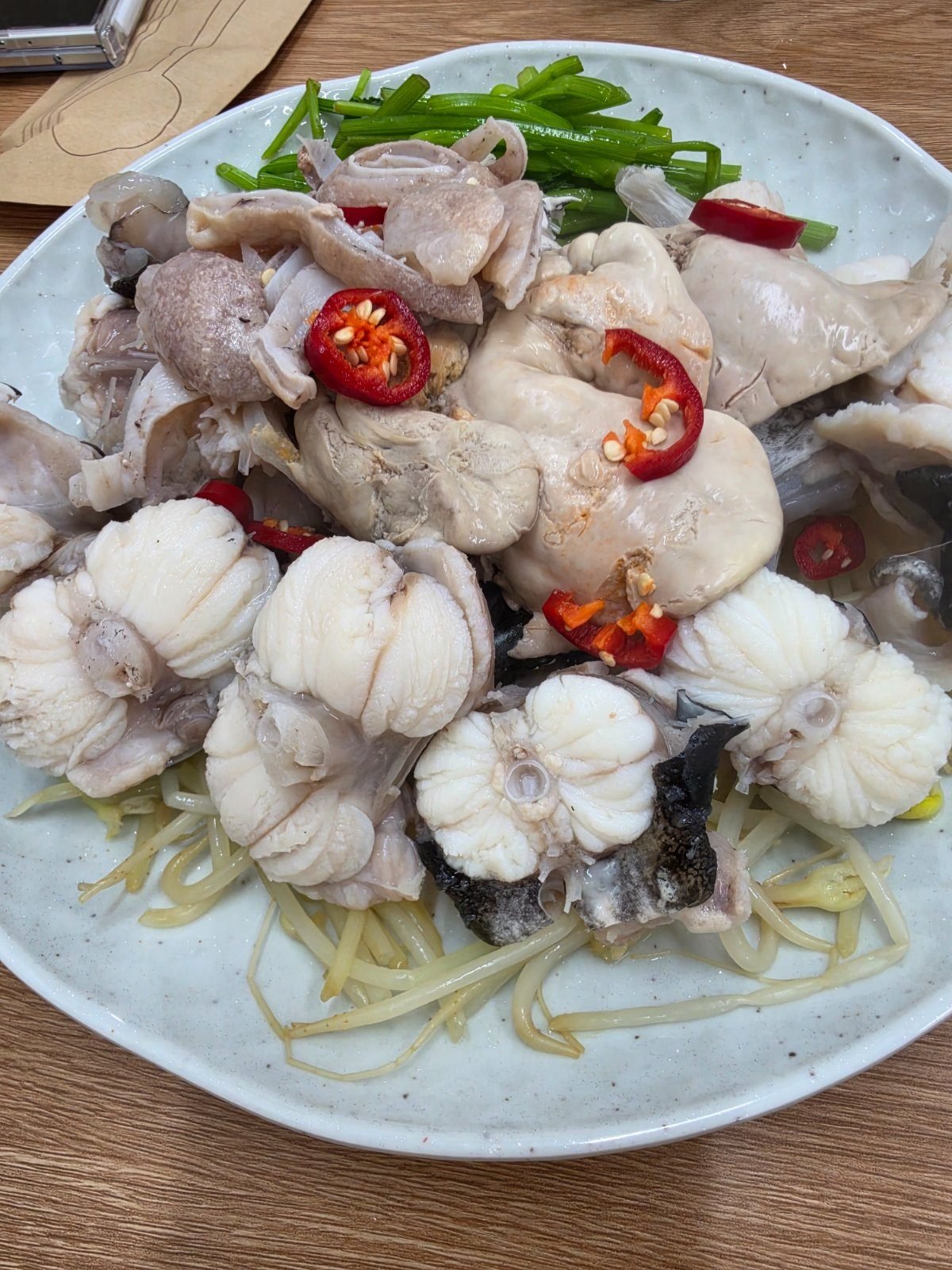
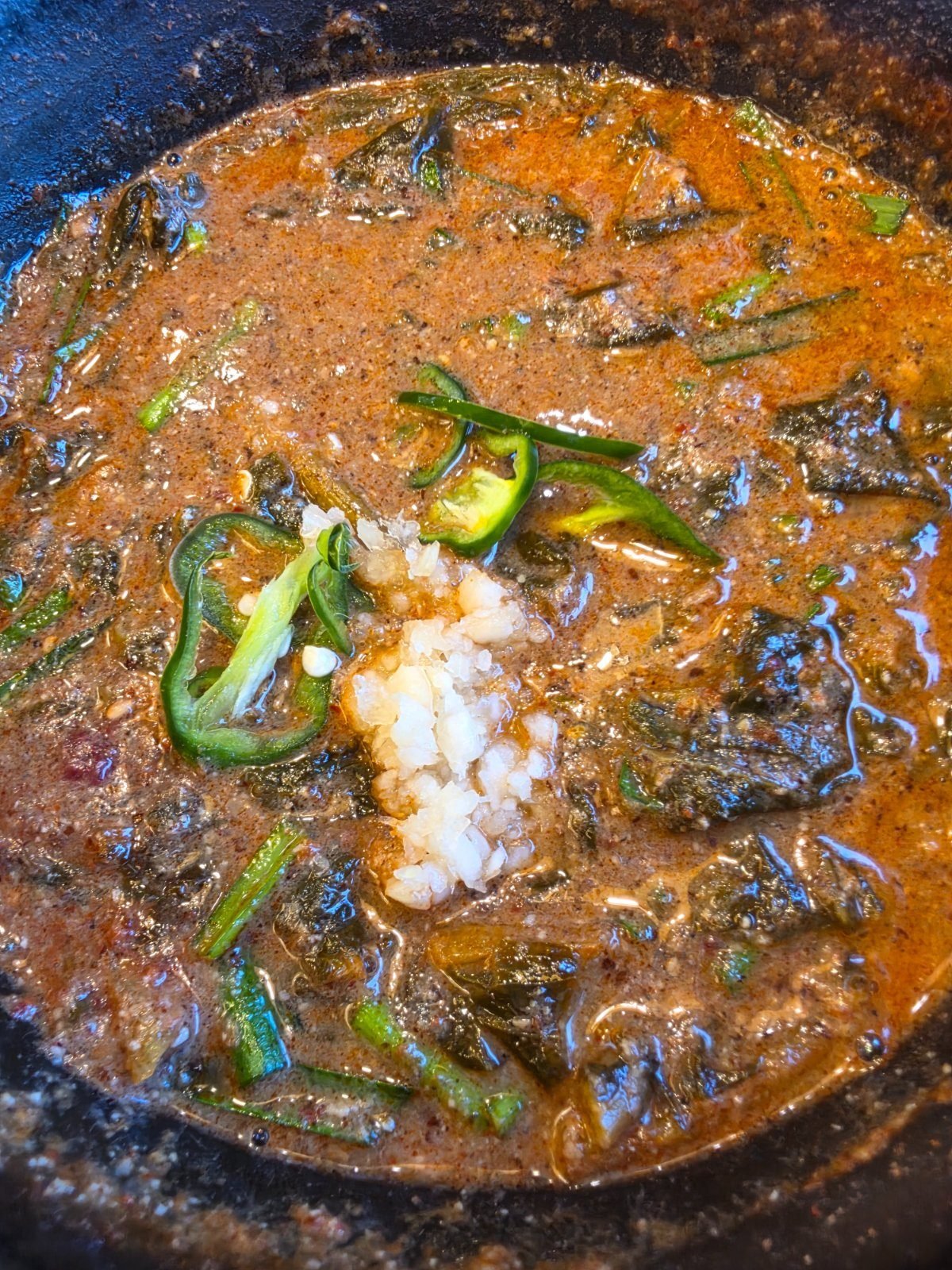
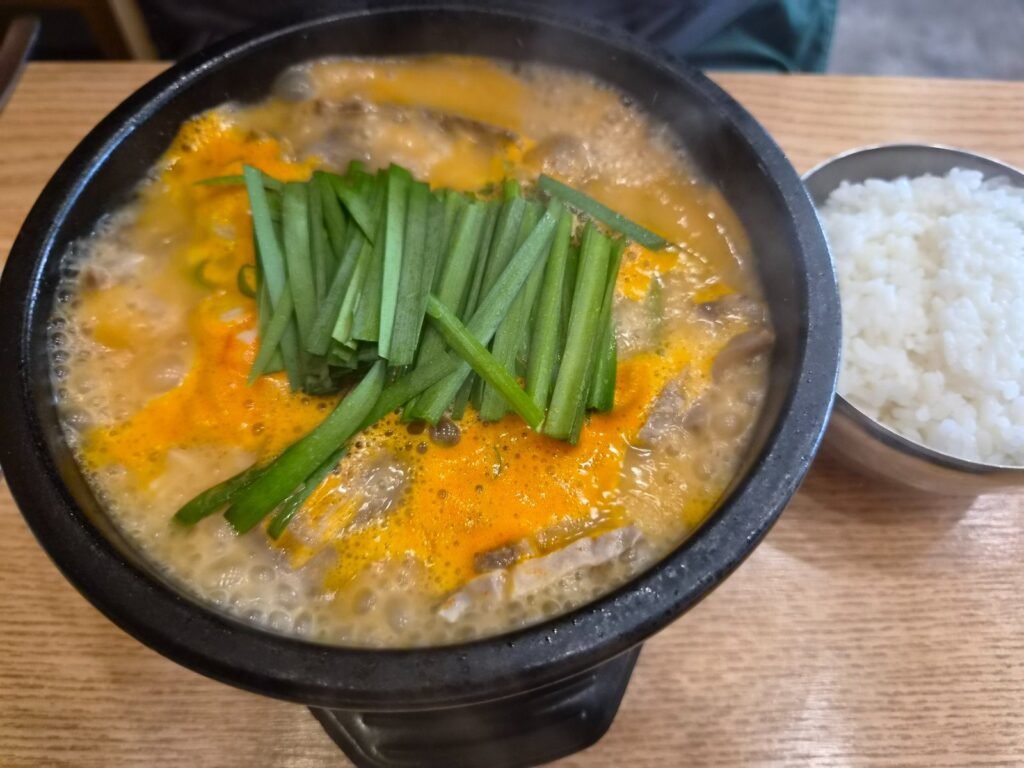
If you want heat: the eolkeun spicy pork gukbap — red broth under a pile of garlic chives, deep rather than merely hot. Be warned, it’s salty; I tipped plenty of rice in to balance it. Noodles come in it too.
Two people who disagree about spice can both order well here, which is rarer than it should be.
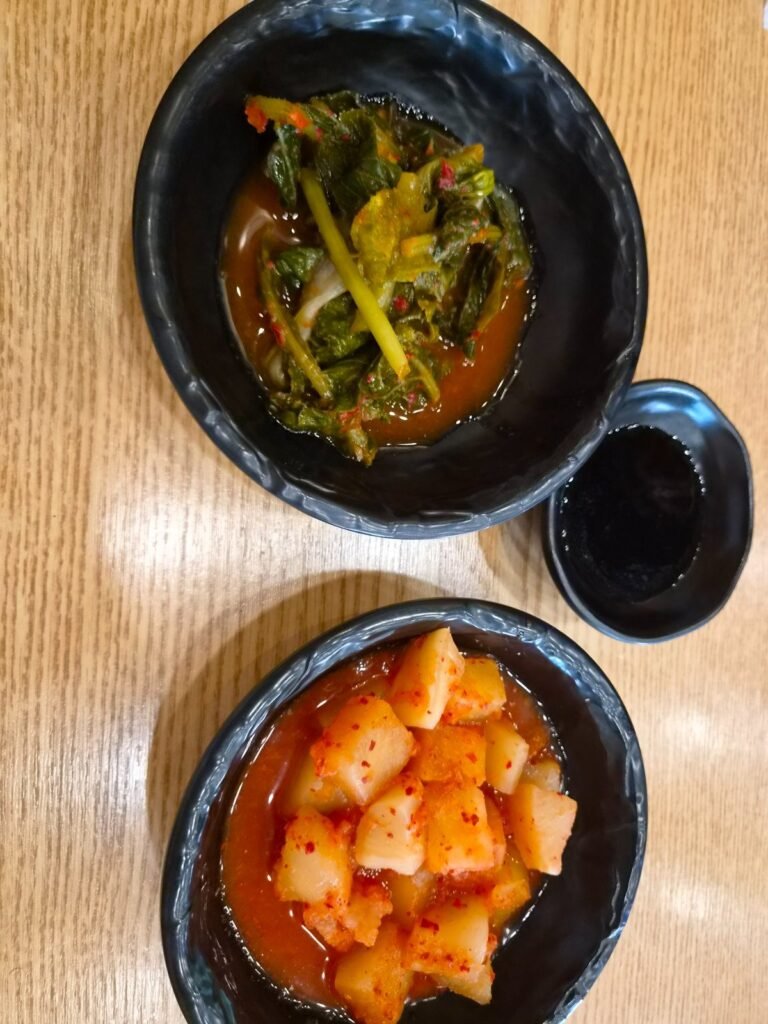
The side dishes are the standard pickled set, but with young summer radish kimchi instead of the usual cabbage — lighter, cooler, and it works with the clear broth. Refills are free. That’s true at every Korean restaurant and nobody will tell you, so just ask.
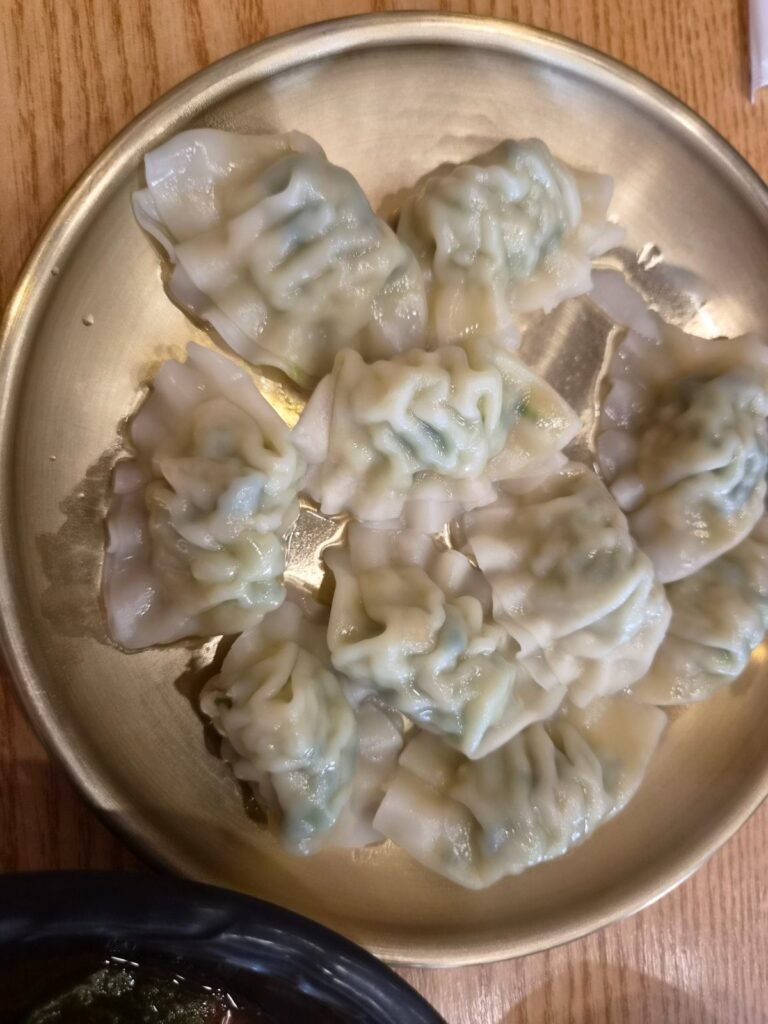
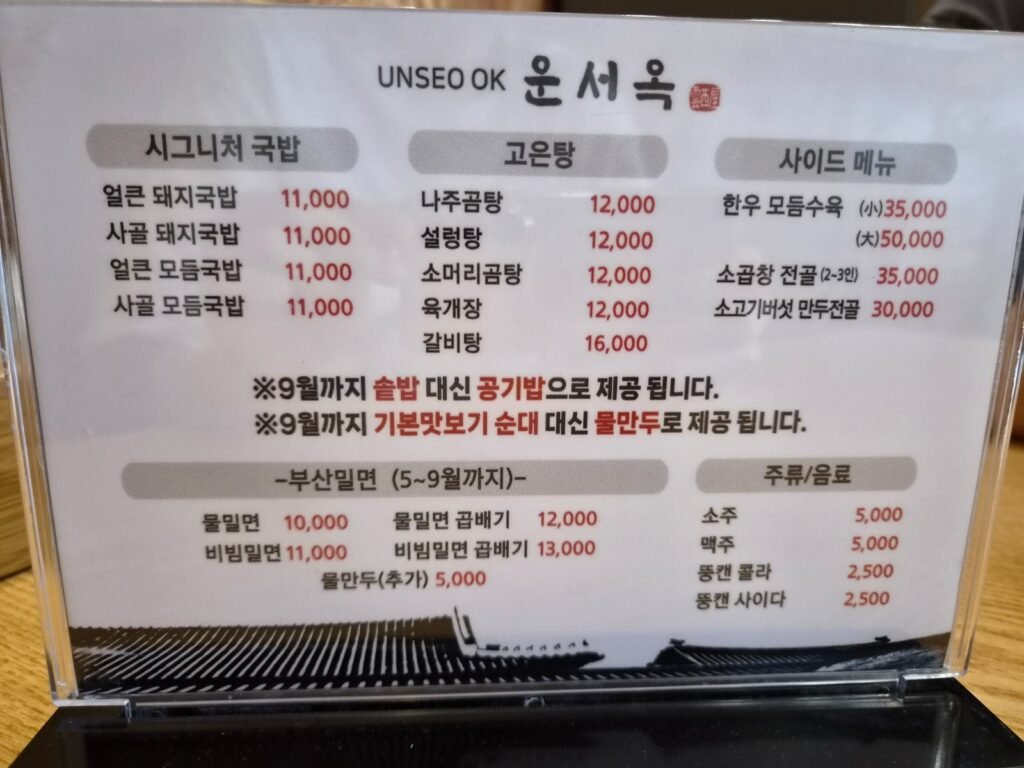
A plate of water dumplings currently comes free with your order. The restaurant says this changes to a taster portion of sundae (blood sausage) from September, so which one lands on your table depends on when you go.
What it costs
| Dish | Price |
|---|---|
| Spicy pork gukbap / clear pork gukbap / mixed | ₩11,000 |
| Naju gomtang, seolleongtang, ox-head gomtang, yukgaejang | ₩12,000 |
| Galbitang (short rib soup) | ₩16,000 |
Checked August 2026. Roughly $8–12. There are bigger sharing dishes too — beef platters, tripe hotpot, dumpling hotpot — but those are for groups with time, not for you.
Ordering without Korean
The wall has photographs of the dishes alongside the menu. Point at one. That’s the whole procedure — no app, no translation, no stress.
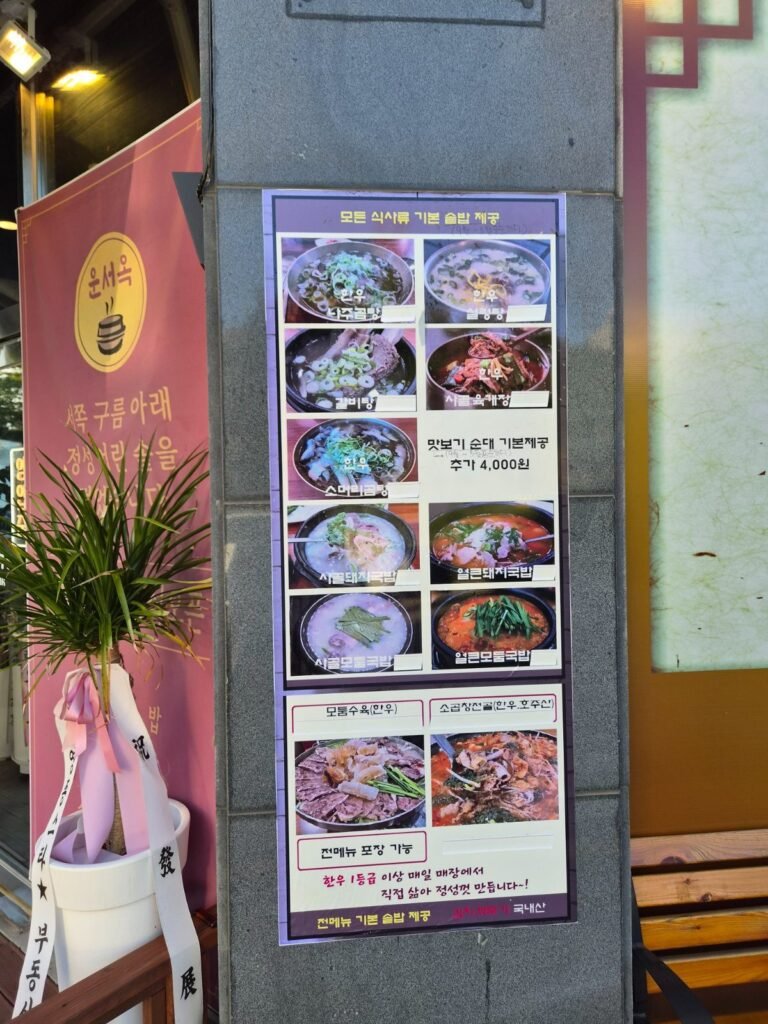
Two words make it smoother. 곰탕 (gom-tang) is the clear, non-spicy one. 얼큰 (eol-keun) is the spicy one. Say either and hold up one finger.
Payment. Cards work. Korea runs on cards to a degree that surprises visitors — restaurants, market stalls, taxis, buses. You do not need to find an ATM before you eat.
The traps
The 3–4 PM break. The kitchen closes from 15:00 to 16:00 and the doors shut. This catches out more visitors at Korean restaurants than anything else, and if you’ve just spent an hour in immigration to get here, arriving at 15:10 is a genuinely bad afternoon. Land in that window and pick somewhere else.
Hours are 10:30 to 22:00, with that break in the middle. Korean opening hours change often, so if your plan depends on it, check Naver Map on the day — that’s what Koreans use, and it’s more current than Google. Download it while you are still on the airport wifi; it provides live bus departure information in Korea, and buses on Yeongjong run infrequently enough that the wait can be longer than the ride.
If your flight leaves from Terminal 2, plan the return route to that terminal. The train times in the table above are for the rail journey only; terminal walking, waiting and departure procedures need separate allowances. A universal fifteen-minute addition is not a reliable way to calculate the trip.
Verdict
Go if you have at least five hours between flights, can enter Korea, and still have enough time after arrival formalities for the meal, any baggage errands and your return deadlines. Five hours alone is not a go-ahead.
Skip it if you have under five hours, you’re arriving between 14:30 and 16:00, your passport needs a visa you don’t have, or it’s a red-eye and you’d rather sleep in a lounge. There’s no shame in the lounge.
Honest limitation: this is a neighbourhood soup restaurant, not a destination. You’re going for a good ₩12,000 bowl and the small pleasure of standing somewhere Korean people actually live for an hour. If you want a sight, take the airport’s free transit tour instead.
If you want the opposite of mild: a ten-minute walk away in the same neighbourhood there is a sundaeguk restaurant that serves pork blood sausage with stone-pot rice for ₩10,000, and its menu lets you order the same soup with the sausage left out. Unseook is the bowl that needs no explaining; that one is the bowl that does.
Common questions
Can I leave Incheon Airport during a layover? Yes, if you clear immigration, which depends on your nationality and visa status. Your bags stay checked through to your final destination on most itineraries, but confirm that with your airline before you leave.
How long does immigration take at Incheon? Plan on 25 minutes for the foreign passport queue on a good day and 90 on a bad one — that swing of over an hour is the biggest single unknown in the trip. Reported waits ran past 1 hour 20 minutes at the summer 2026 peak, and reached 1 hour 54 over the February 2026 holiday period. The full breakdown is in what the foreigner queue at Incheon actually runs.
Is four hours enough to leave the airport at Incheon? My recommendation is to stay inside on a four-hour connection, including for Unseo. A quick train ride does not remove immigration, waiting, the return journey or your airline’s boarding deadline.
Is there Korean food near Incheon Airport that isn’t in the terminal? Yes. Unseo Station, two stops from Terminal 1, is an ordinary Korean neighbourhood with ordinary Korean restaurants at ordinary prices.