The short answer
Masian Beach is on the west side of Yeongjong, the island the airport sits on. It is a wide tidal-flat beach with a long sunset and, at low tide, an organised mudflat where you can dig clams for a fixed fee. Entry to the beach itself costs nothing.
Masian Beach is a twelve-minute taxi ride from Terminal 1 and twenty minutes from Terminal 2. There is no train to it. Give yourself eight hours minimum, and check the tide before you commit — at high tide there is no mudflat and half the reason to come is under water.
This is the trip for the long layover: the one where you have most of a day and you would rather see the coast than get on another train into Seoul.
What is actually there
A shallow beach that goes a long way out when the tide drops, a strip of cafes and restaurants behind it, and the mudflat site. It is not a resort. There is no promenade of shops and no swimming season worth planning around. What it has is space, sea air and a west-facing horizon.
- The beach. Free. Park, walk out, walk back.
- Mudflat digging. A run site with set hours: ₩10,000 for adults, ₩5,000 for primary-school children, ₩3,000 for younger ones. Boots ₩2,000 and a hand hoe ₩1,000 to rent, plus a ₩10,000 deposit on the vest. You are limited to two kilos of shellfish per person.
- Sunset. West-facing, over water, with the tidal flats catching the light. This is the thing people actually come for.
- Parking. First six hours free, then ₩2,000 per half hour. A layover visit will not get near that.
The mudflat runs on the tide, not the clock. The site publishes the day’s window and it moves by roughly an hour every day. If you turn up at the wrong time you get a beach and no digging. Check before you leave the airport, not after you arrive.
Getting there
Taxi — the practical answer
A taxi to Masian Beach takes twelve minutes from Terminal 1 and twenty from Terminal 2. The two terminals are not the same distance from the beach, and most guides quote one number for both. Getting back is the part to think about. Use a hailing app, or agree a return time with the driver who brought you, rather than planning to flag one down.
| From | Taxi | Local bus |
|---|---|---|
| Terminal 1 | about 12 min | 30–40 min |
| Terminal 2 | about 20 min | 40–50 min |
The maglev — free, real, and almost useless
Incheon Airport has a maglev train. It runs from Terminal 1 out towards the west of the island, six stations over about six kilometres, and it is free to ride. It stopped running in 2022 and most English-language pages still say so; it started again in October 2025.
Before you build a day around it: it runs 10am to 5pm, roughly one train every 35 minutes, and not at all on Mondays. It also stops at Yongyu station, which is not the beach — you still need a taxi or a bus for the last stretch. Ride it because a free maglev is a strange and good thing to have found at an airport, not because it is transport.
Bus
The local bus to Masian Beach takes roughly thirty to forty minutes from Terminal 1 and forty to fifty from Terminal 2, against about twelve and twenty by taxi. Those figures include the walk to and from the stop. What they do not include is the wait. Buses on Yeongjong run infrequently, so the wait at the stop can be longer than the ride. Treat the bus numbers here as a rough guide and check the next departure before you commit to it.
I am not printing route numbers, because they change and a wrong timetable is worse than none. Put the destination into Naver Map on the day — it gives live departure times for Korean buses, and Google Maps does not do Korean transit properly. Download it while you are still on the airport wifi, not when you are standing at a bus stop on the island wondering where your data went. The destination to type is 마시안해변; Google will at least show you the beach itself at Masian Beach on Google Maps.
The time math
Two columns. Plan against the right-hand one.
| Step | Good day | Bad day |
|---|---|---|
| Deplane and walk to immigration | 10 min | 25 min |
| Immigration queue | 25 min | 90 min |
| Bags and storage | 0 min | 55 min |
| Find a taxi | 10 min | 25 min |
| Drive to Masian | 25 min | 40 min |
| Beach, mudflat, food | 3 hr | 3 hr |
| Drive back | 25 min | 40 min |
| Security, immigration, gate | 60 min | 2 hr |
| Total | ~6 hr | ~9 hr 45 |
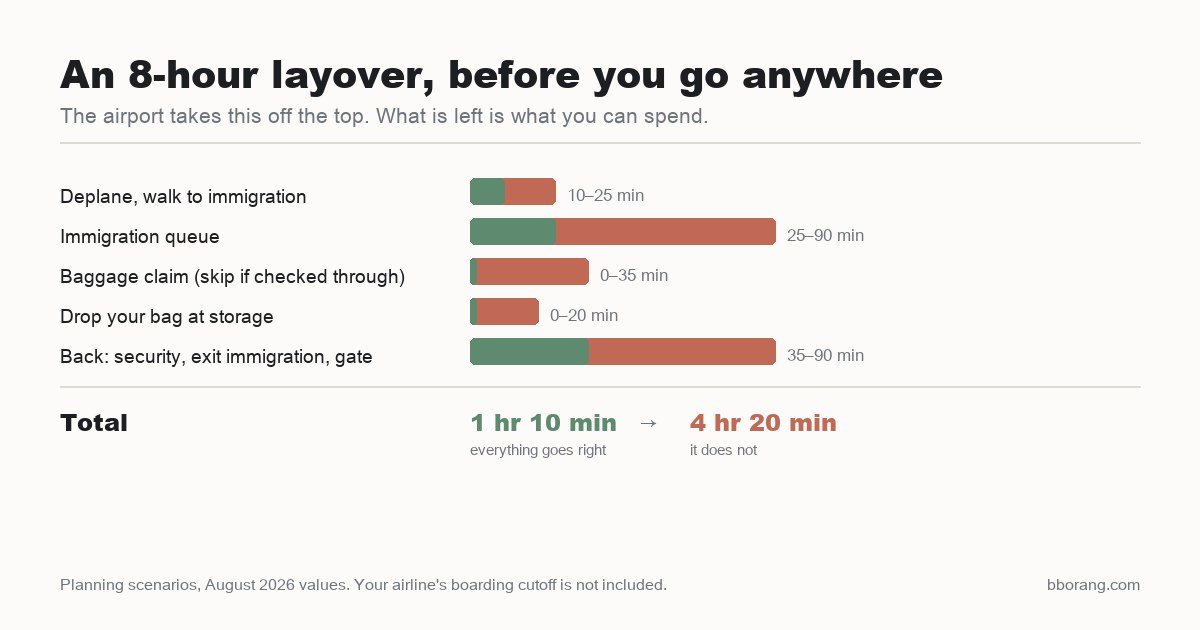
Six hours if nothing goes wrong, which is not a thing you are owed. Eight is the floor and ten is comfortable. The eight-hour version of this arithmetic leaves sixteen minutes spare on a slow arrival, which is where that floor comes from. The variable that ruins this is the immigration queue — foreign-national queues at Incheon have run past 1 hour 20 at summer peak. the full arrival timeline from gate to train, and if you are carrying checked bags, storing them costs you time before you even leave.
Eating there: Masian 300
There is a row of places behind the beach. The one I keep going back to is a burger shop called Masian 300, and I want to be straight about what that means: this is not Korean food. If you came to Korea for Korean food and you have one meal in you, go and eat soup near Unseo station instead. This is the beach lunch.
In Korean the shop is 마시안300, at 인천광역시 영종구 마시란로 300. Copy the Korean rather than the romanisation — Korean map apps do not match romanised names. On Google it is here: Masian 300 on Google Maps.
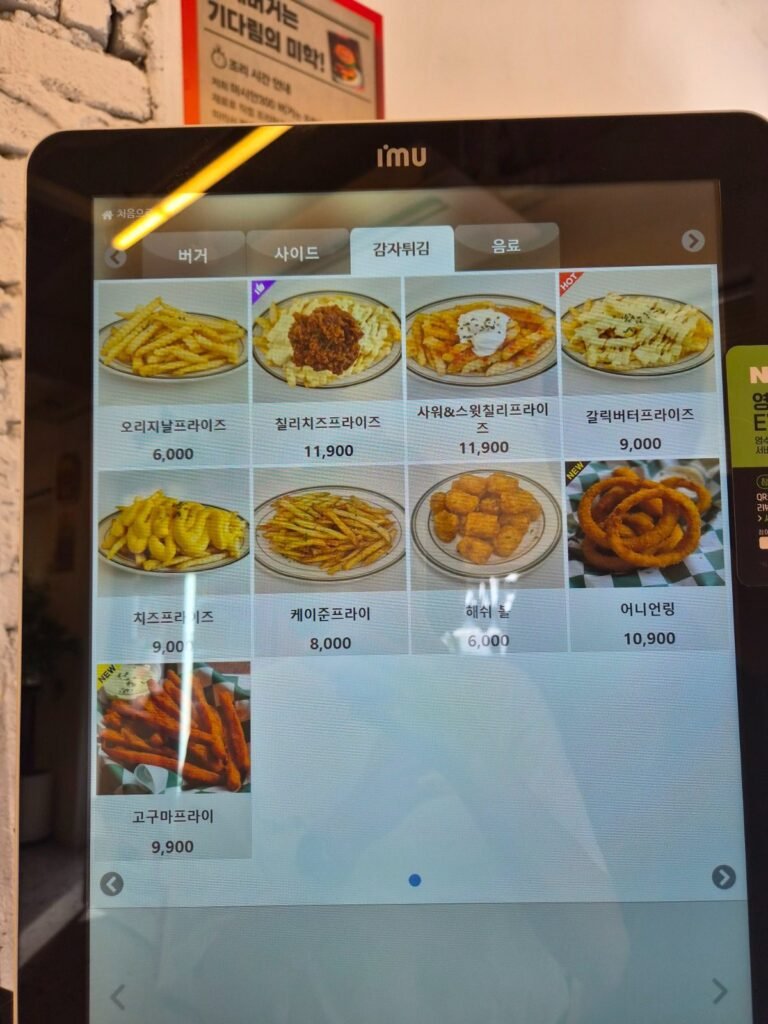
Ordering is done at a screen inside. It is in Korean, but every item has a photograph, so pointing and tapping gets you there without a word of the language.
The thing to know before you order is the wait. Patties go on the grill when you order, which is the right way to do it and also means you are sitting there for a while.
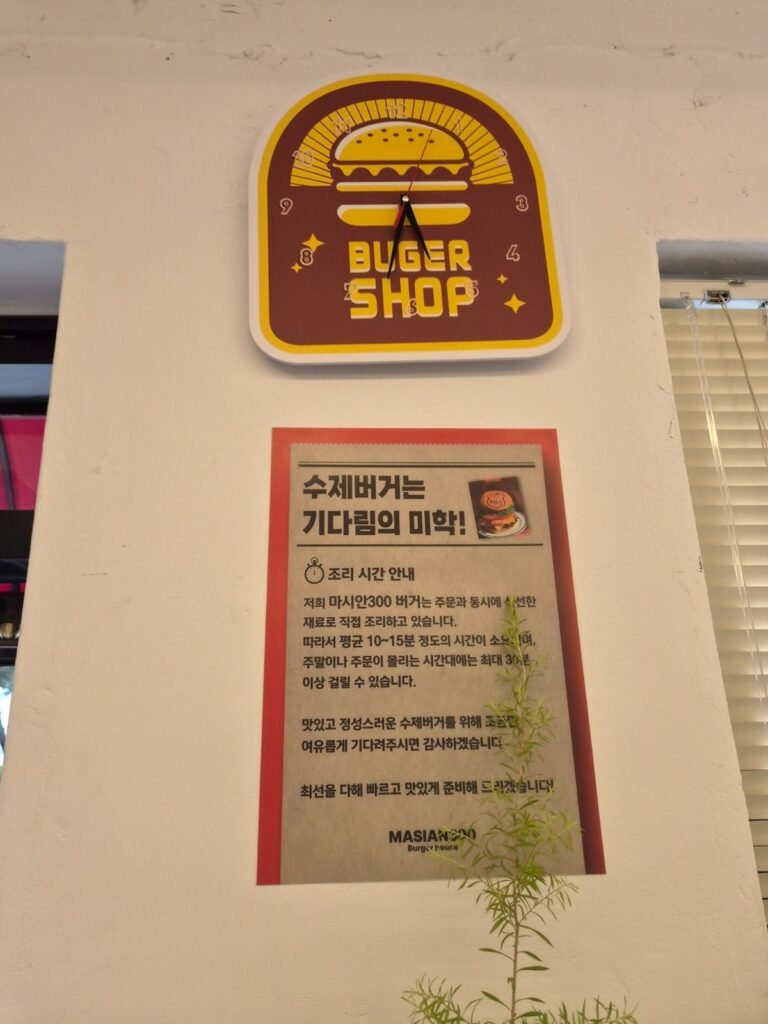
Ten to fifteen minutes on a quiet weekday. Over thirty when it is busy. On a layover that is not a footnote — it is the difference between a relaxed lunch and watching the clock.
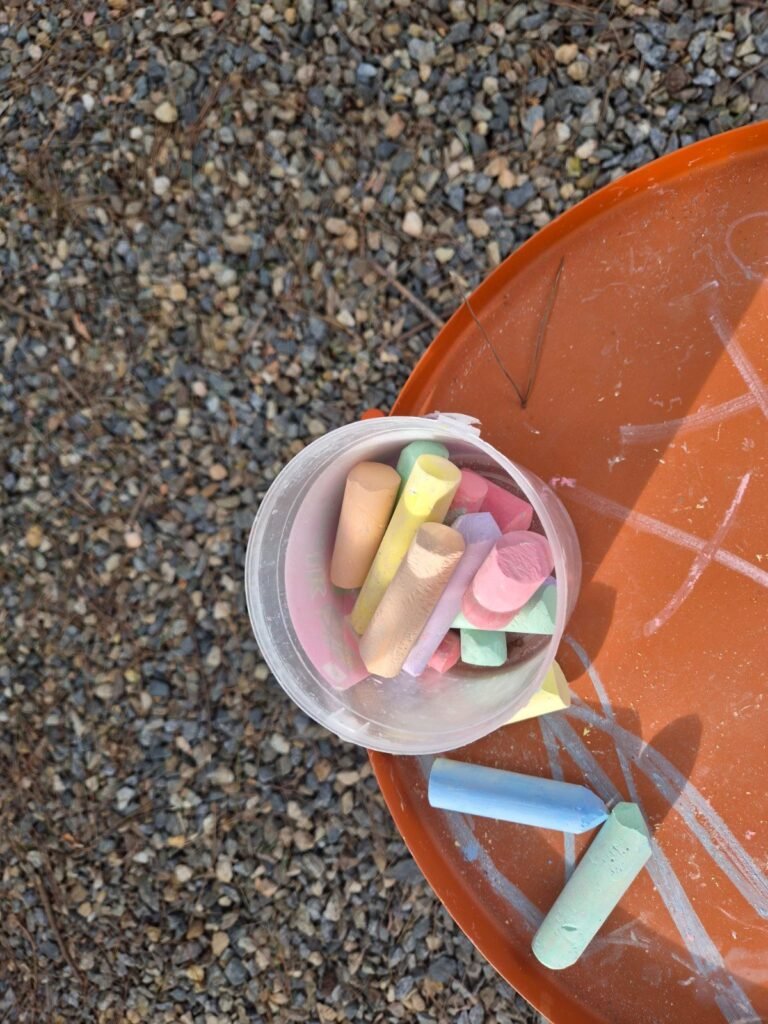
Sit outside. There are indoor tables but the yard is the reason to be here: gravel, pine trees, wooden tables under parasols, and a pot of chalk on each one because you are encouraged to draw on the wall and the floor.
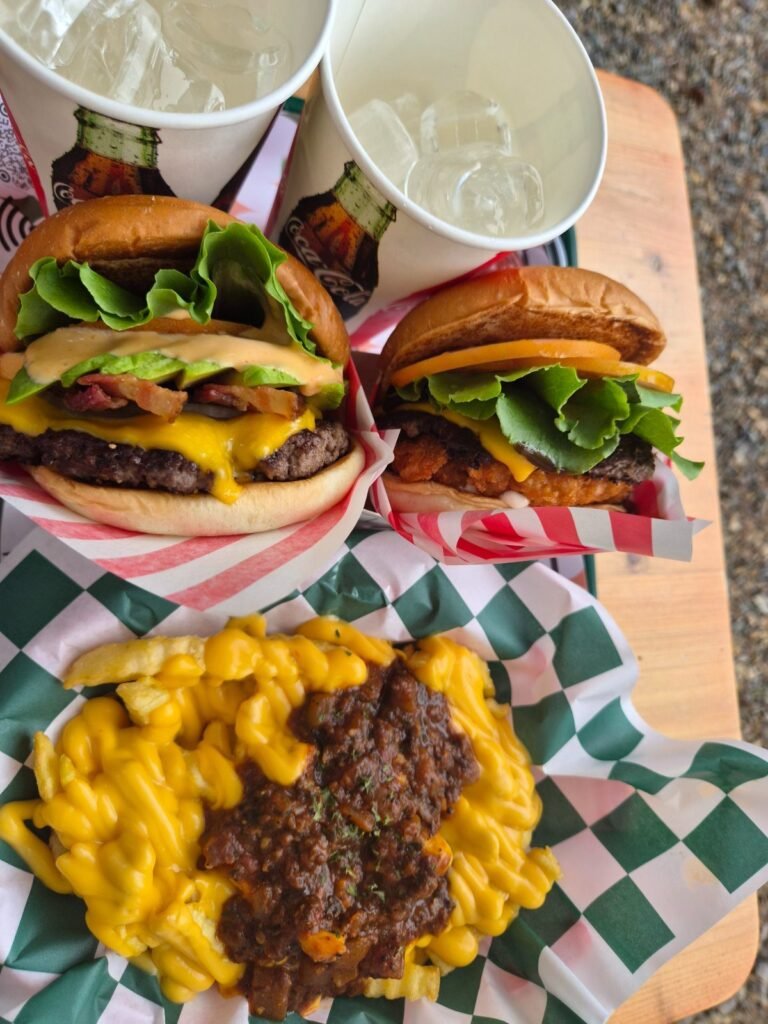
The wagyu-and-shrimp burger is the one worth ordering — the patty has actual prawn in it and the texture is the point. Sides are where the bill climbs: plain fries are ₩6,000, but the chilli cheese ones are ₩11,900. Eat them straight away — they soften fast under the sauce.

They also do coffee, so you can stay put and watch the tide instead of moving on.
Traps
- The tide decides the day. Check the mudflat window before you leave the airport. High tide means no digging, and no amount of planning fixes it once you are there.
- Mondays. The maglev does not run. Neither does it on the day of Seollal or Chuseok.
- Getting back. Book the return through a hailing app rather than assuming you can flag one down on the road.
- The burger wait. Order the moment you sit down, not after you have walked the beach.
- Weather. A tidal flat is open ground. Once you walk out there is nothing to shelter under, so check the forecast before you commit to the afternoon.
The honest verdict
Go if: you have eight hours or more, the tide is out, and you want air and horizon rather than another city. It is twelve minutes from the gate you flew into and it looks nothing like an airport.
Do not go if: you have under eight hours, the tide is in, it is raining, or a burger at the beach is not what you came to Korea for.
Prices and opening hours were accurate when this was written. Tide times change daily and the mudflat site posts its own schedule. Check on Naver Map on the day — it is the map app Koreans actually use and it has an English mode.